
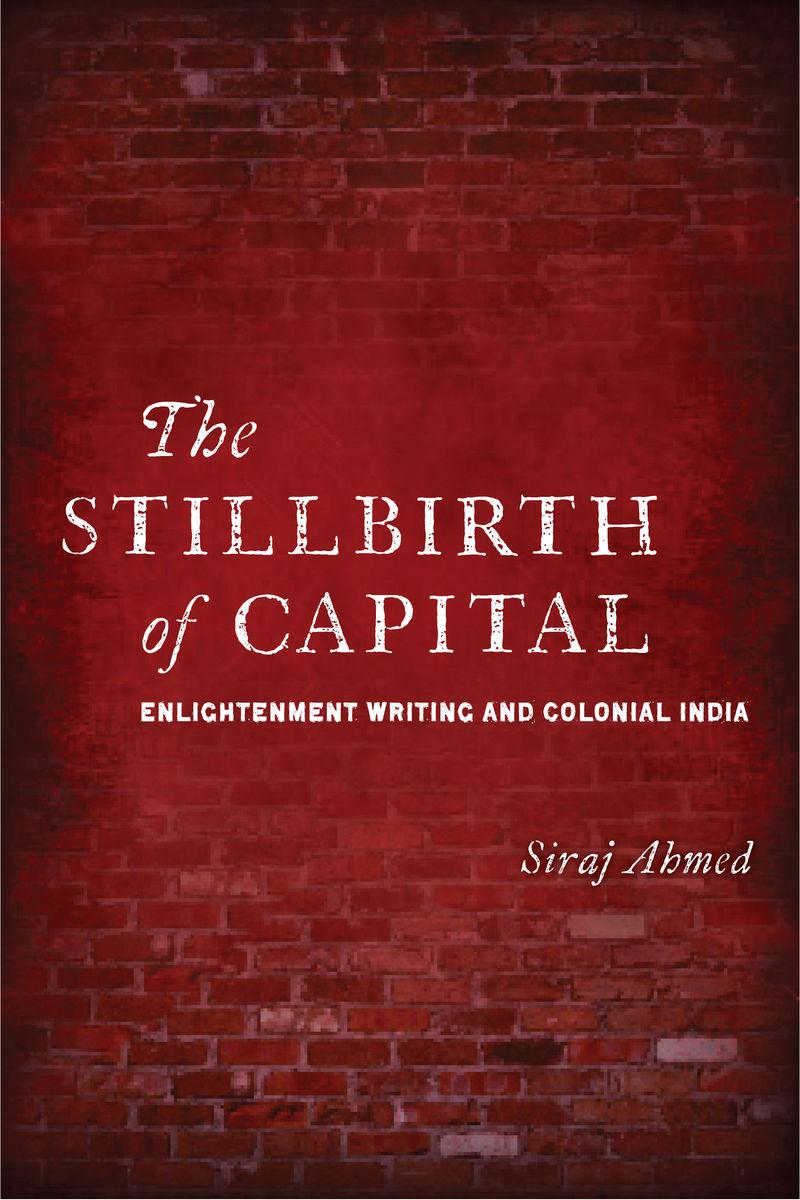
This book targets one of the humanities' most widely held premises: namely, that the European Enlightenment laid the groundwork for modern imperialism. It argues instead that the Enlightenment's vision of empire calls our own historical and theoretical paradigms into question. While eighteenth-century British India has not received nearly the same attention as nineteenth- and twentieth-century empires, it is the place where colonial rule and Enlightenment reason first became entwined. The Stillbirth of Capital makes its case by examining every work about British India written by a major author from 1670 to 1815, a period that coincides not only with the Enlightenment but also with the institution of a global economy.
In contrast to both Marxist and liberal scholars, figures such as Dryden, Defoe, Voltaire, Sterne, Smith, Bentham, Burke, Sheridan, and Scott locate modernity's roots not in the birth of capital but rather in the collusion of sovereign power and monopoly commerce, which used Indian Ocean wealth to finance the unfathomable costs of modern war. Ahmed reveals the pertinence of eighteenth-century writing to our own moment of danger, when the military alliance of hegemonic states and private corporations has become even more far-reaching than it was in centuries past.
Maksa helposti kortilla, Klarnalla, Apple Paylla tai Google Paylla. Etkö ole tyytyväinen? Sinulla on aina 14 päivän palautusoikeus. Lue lisää ehdoistamme. Jos sinulla on kysyttävää, lähetä meille sähköpostia osoitteeseen hello@memmo.org.
Memmo tekee opiskelusta helpompaa – missä päin maailmaa ikinä oletkin. Meillä yhdistät kurssikirjat ja fiksut opiskelutyökalut yhteen paikkaan: tiivistelmät, visat, podcastit ja muistikortit. Ja sitten Ted, opiskelukaverisi, joka vastaa kaikkeen, mitä ikinä mietitkin. Yli 50 000 opiskelijaa opiskelee jo täällä – rakennettu auttamaan sinua oppimaan nopeammin ja stressaamaan vähemmän.