
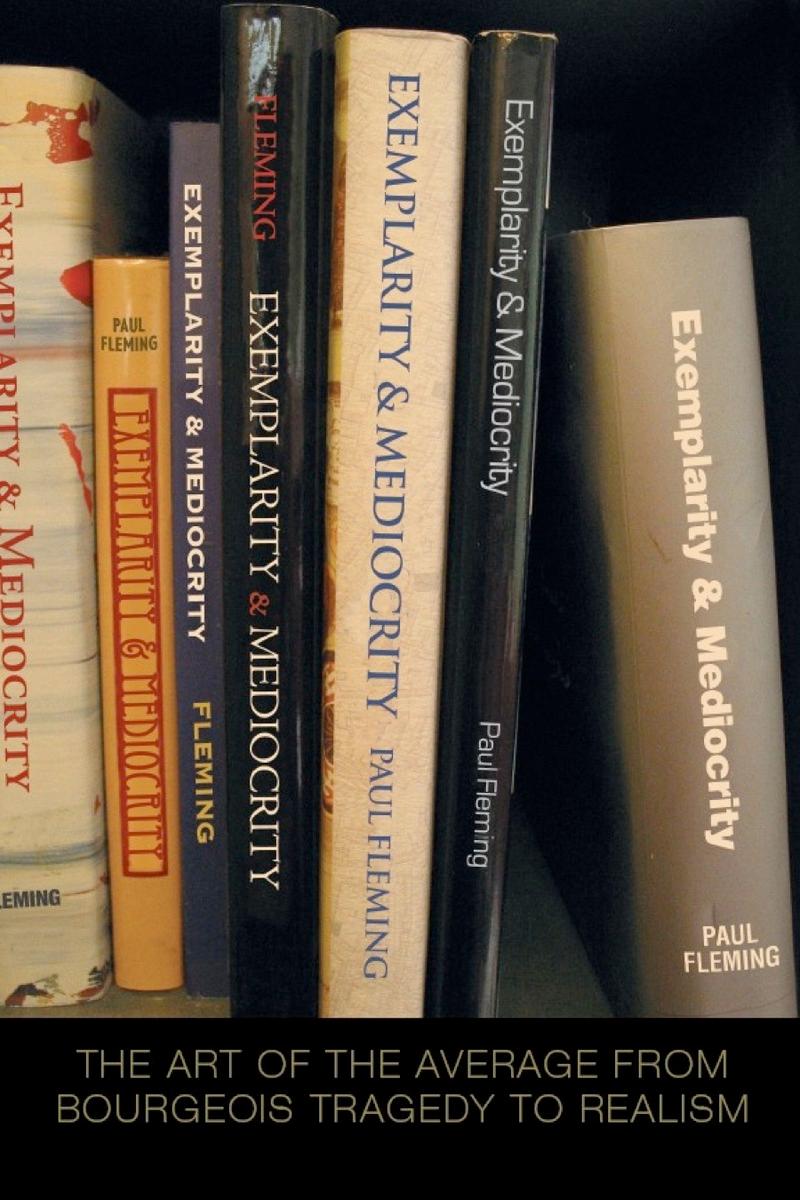
Following Hegel's analysis of art's increasing difficulty to both engage and extricate itself from prosaic reality, Paul Fleming investigates the strategies employed by German literature from 1750 to 1850 for increasingly attuning itself to quotidian life—common heroes, everyday life, non-extraordinary events—while also avoiding all notions of mediocrity. He focuses on three sites of this tension: the average audience (Lessing), the average artist (Goethe and Schiller), and the everyday, or average life (Grillparzer and Stifter).
The book's title, Exemplarity and Mediocrity, describes both a disjunctive and a conjunctive relation. Read disjunctively, modern art must display the "exemplary originality" (Kant) that only genius can provide and is thus fundamentally opposed to mediocrity as that which does not stand out or lacks distinctiveness; in the conjunctive sense, modern art turns to non-exceptional life in order to transform it—without forsaking its commonness—thereby producing exemplary forms of mediocrity that both represent the non-exceptional and, insofar as they stand outside the group they represent, are something other than mediocre.
Maksa helposti kortilla, Klarnalla, Apple Paylla tai Google Paylla. Etkö ole tyytyväinen? Sinulla on aina 14 päivän palautusoikeus. Lue lisää ehdoistamme. Jos sinulla on kysyttävää, lähetä meille sähköpostia osoitteeseen hello@memmo.org.
Memmo tekee opiskelusta helpompaa – missä päin maailmaa ikinä oletkin. Meillä yhdistät kurssikirjat ja fiksut opiskelutyökalut yhteen paikkaan: tiivistelmät, visat, podcastit ja muistikortit. Ja sitten Ted, opiskelukaverisi, joka vastaa kaikkeen, mitä ikinä mietitkin. Yli 50 000 opiskelijaa opiskelee jo täällä – rakennettu auttamaan sinua oppimaan nopeammin ja stressaamaan vähemmän.