
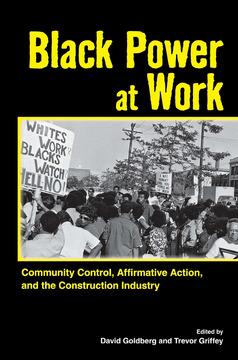
Black Power at Work chronicles the history of direct action campaigns to open up the construction industry to black workers in the 1960s and 1970s. The book's case studies of local movements in Brooklyn, Newark, the Bay Area, Detroit, Chicago, and Seattle show how struggles against racism in the construction industry shaped the emergence of Black Power politics outside the U.S. South. In the process, "community control" of the construction industry—especially government War on Poverty and post-rebellion urban reconstruction projects— became central to community organizing for black economic self-determination and political autonomy.
The history of Black Power's community organizing tradition shines a light on more recent debates about job training and placement for unemployed, underemployed, and underrepresented workers. Politicians responded to Black Power protests at federal construction projects by creating modern affirmative action and minority set-aside programs in the late 1960s and early 1970s, but these programs relied on "voluntary" compliance by contractors and unions, government enforcement was inadequate, and they were not connected to jobs programs. Forty years later, the struggle to have construction jobs serve as a pathway out of poverty for inner city residents remains an unfinished part of the struggle for racial justice and labor union reform in the United States.
Maksa helposti kortilla, Klarnalla, Apple Paylla tai Google Paylla. Etkö ole tyytyväinen? Sinulla on aina 14 päivän palautusoikeus. Lue lisää ehdoistamme. Jos sinulla on kysyttävää, lähetä meille sähköpostia osoitteeseen hello@memmo.org.
Memmo tekee opiskelusta helpompaa – missä päin maailmaa ikinä oletkin. Meillä yhdistät kurssikirjat ja fiksut opiskelutyökalut yhteen paikkaan: tiivistelmät, visat, podcastit ja muistikortit. Ja sitten Ted, opiskelukaverisi, joka vastaa kaikkeen, mitä ikinä mietitkin. Yli 50 000 opiskelijaa opiskelee jo täällä – rakennettu auttamaan sinua oppimaan nopeammin ja stressaamaan vähemmän.