
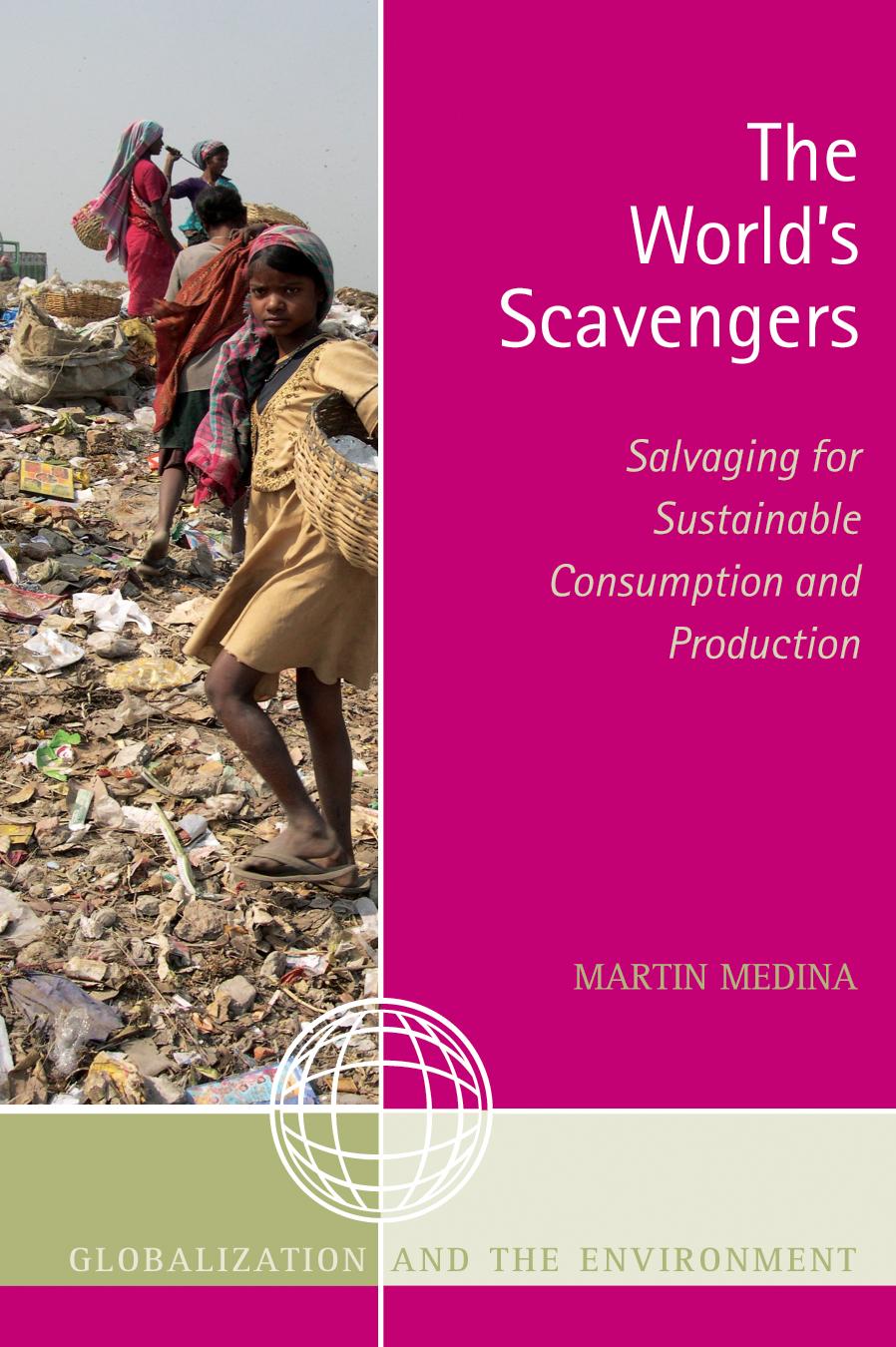
Medina tells us that up to 2% of the urban population in developing countries survives by salvaging materials from waste for recycling, which represents up to 64 million scavengers in the world today. Despite these numbers, we know little about the impact of scavenging on global capitalism development. The author examines its historical evolution and its linkages with formal and informal sector productive activities in capitalist and non-capitalist societies, in case studies from Mexico, Brazil, Colombia, Argentina, Egypt, the Philippines, and India. His new book radically alters popular perceptions on scavenging, demonstrating that many widely-held beliefs are wrong: scavenging is not primarily the activity of the poor nor is it a strictly marginal activity; the economic impact of scavenging is significant and can increase industrial competitiveness; and scavenging can be compatible with a sustainable waste management system. Scavenging represents an adaptive response to poverty, yet at the same time it can be a resource to cities, whose contributions should be recognized and understood.
Sivuja: 318
Kategoria: Ekonomi & Utveckling
e-ISBN: 9780759113800
Lähetyspaino: 1.2 kg
Toimitusaika: 1-2 päivää
Maksa helposti kortilla, Klarnalla, Apple Paylla tai Google Paylla. Etkö ole tyytyväinen? Sinulla on aina 14 päivän palautusoikeus. Lue lisää ehdoistamme. Jos sinulla on kysyttävää, lähetä meille sähköpostia osoitteeseen hello@memmo.org.
Memmo tekee opiskelusta helpompaa – missä päin maailmaa ikinä oletkin. Meillä yhdistät kurssikirjat ja fiksut opiskelutyökalut yhteen paikkaan: tiivistelmät, visat, podcastit ja muistikortit. Ja sitten Ted, opiskelukaverisi, joka vastaa kaikkeen, mitä ikinä mietitkin. Yli 50 000 opiskelijaa opiskelee jo täällä – rakennettu auttamaan sinua oppimaan nopeammin ja stressaamaan vähemmän.