
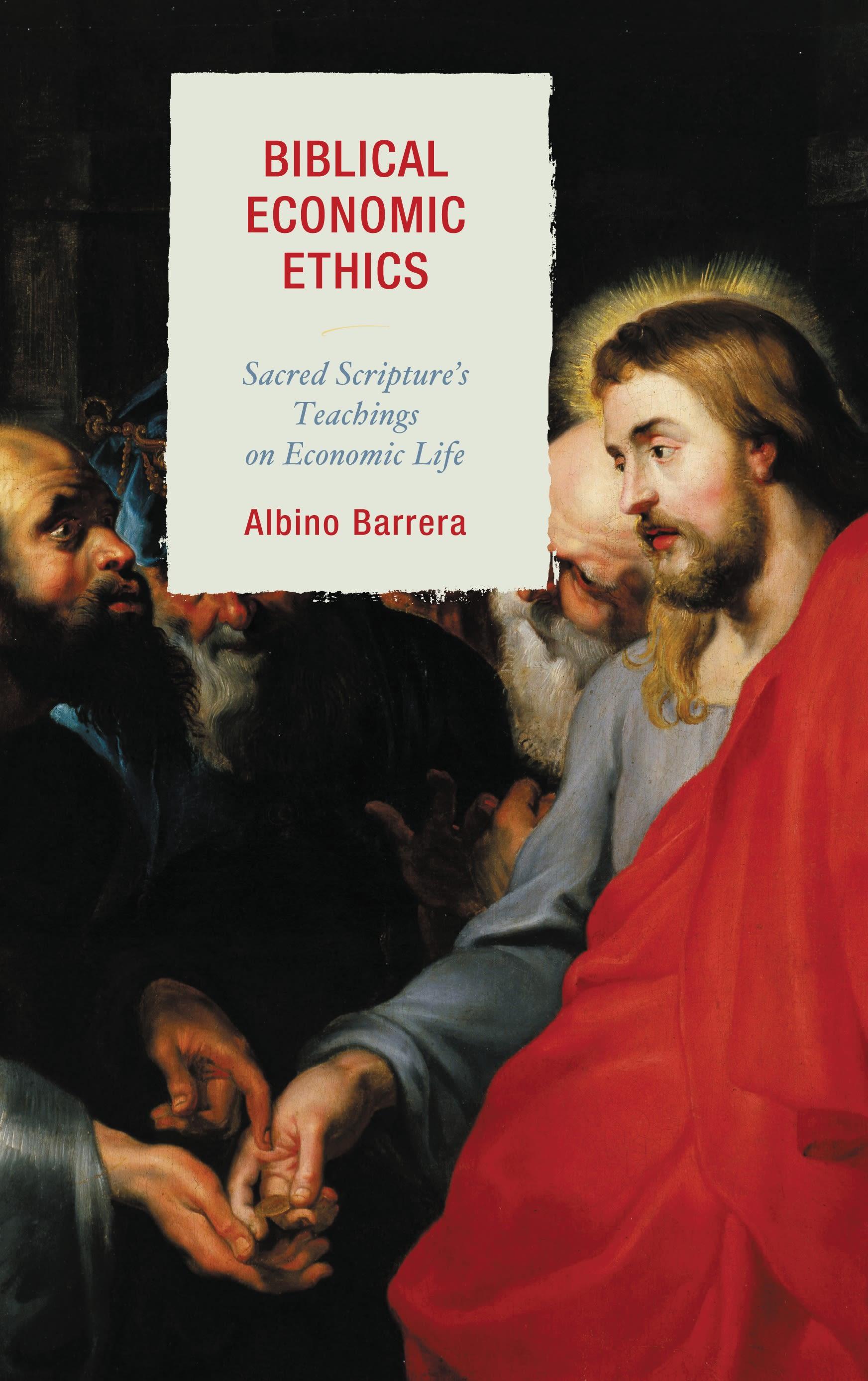
Written in non-technical language accessible to non-specialist readers, this book is a theological synthesis of the findings of scripture scholars and ethicists on what the Bible teaches about economic life. It proposes a biblical theology of economic life that addresses three questions, namely:
What do the individual books of Sacred Scripture say about proper economic conduct? How do these teachings fit within the larger theology and ethics of the books in which they are found?Are there recurring themes, underlying patterns, or issues running across these different sections of the Bible when read together as a single canon?
The economic norms of the Old and New Testament exhibit both continuity and change. Despite their diverse social settings and theological visions, the books of the Bible nonetheless share recurring themes: care for the poor, generosity, wariness over the idolatry of wealth, the inseparability of genuine worship and upright moral conduct, and the acknowledgment of an underlying divine order in economic life.
Contrary to most people’s first impression that the Bible offers merely random economic teachings without rhyme or reason, there is, in fact, a specific vision undergirding these scriptural norms. Moreover, far from being burdensome impositions of do’s and don’ts, this book finds that the Bible’s economic norms are, in fact, an invitation to participate in God’s providence. To this end, we have been granted a threefold benefaction—the gift of divine friendship, the gift of one another, and the gift of the earth. Thus, biblical economic ethics is best characterized as a chronicle of how God provides for humanity through people’s mutual solicitude and hard work. The economic ordinances, aphorisms, and admonitions of the Old and New Testament turn out to be an unmerited divine invitation to participate in God’s governance of the world.
Our economic conduct provides us with a unique opportunity to shine forth in our creation in the image and likeness of God. Often extremely demanding, hard, and even fraught with temptations and distractions, economic life nevertheless is, at its core, an occasion for humans to grow in holiness, charity, and perfection.
What do the individual books of Sacred Scripture say about proper economic conduct? How do these teachings fit within the larger theology and ethics of the books in which they are found?Are there recurring themes, underlying patterns, or issues running across these different sections of the Bible when read together as a single canon?
The economic norms of the Old and New Testament exhibit both continuity and change. Despite their diverse social settings and theological visions, the books of the Bible nonetheless share recurring themes: care for the poor, generosity, wariness over the idolatry of wealth, the inseparability of genuine worship and upright moral conduct, and the acknowledgment of an underlying divine order in economic life.
Contrary to most people’s first impression that the Bible offers merely random economic teachings without rhyme or reason, there is, in fact, a specific vision undergirding these scriptural norms. Moreover, far from being burdensome impositions of do’s and don’ts, this book finds that the Bible’s economic norms are, in fact, an invitation to participate in God’s providence. To this end, we have been granted a threefold benefaction—the gift of divine friendship, the gift of one another, and the gift of the earth. Thus, biblical economic ethics is best characterized as a chronicle of how God provides for humanity through people’s mutual solicitude and hard work. The economic ordinances, aphorisms, and admonitions of the Old and New Testament turn out to be an unmerited divine invitation to participate in God’s governance of the world.
Our economic conduct provides us with a unique opportunity to shine forth in our creation in the image and likeness of God. Often extremely demanding, hard, and even fraught with temptations and distractions, economic life nevertheless is, at its core, an occasion for humans to grow in holiness, charity, and perfection.
Sivuja: 378
Kategoria: Religion & Teologi
e-ISBN: 9780739182307
Lähetyspaino: 1.2 kg
Toimitusaika: 1-2 päivää
Maksa helposti kortilla, Klarnalla, Apple Paylla tai Google Paylla. Etkö ole tyytyväinen? Sinulla on aina 14 päivän palautusoikeus. Lue lisää ehdoistamme. Jos sinulla on kysyttävää, lähetä meille sähköpostia osoitteeseen hello@memmo.org.
Memmo tekee opiskelusta helpompaa – missä päin maailmaa ikinä oletkin. Meillä yhdistät kurssikirjat ja fiksut opiskelutyökalut yhteen paikkaan: tiivistelmät, visat, podcastit ja muistikortit. Ja sitten Ted, opiskelukaverisi, joka vastaa kaikkeen, mitä ikinä mietitkin. Yli 50 000 opiskelijaa opiskelee jo täällä – rakennettu auttamaan sinua oppimaan nopeammin ja stressaamaan vähemmän.