
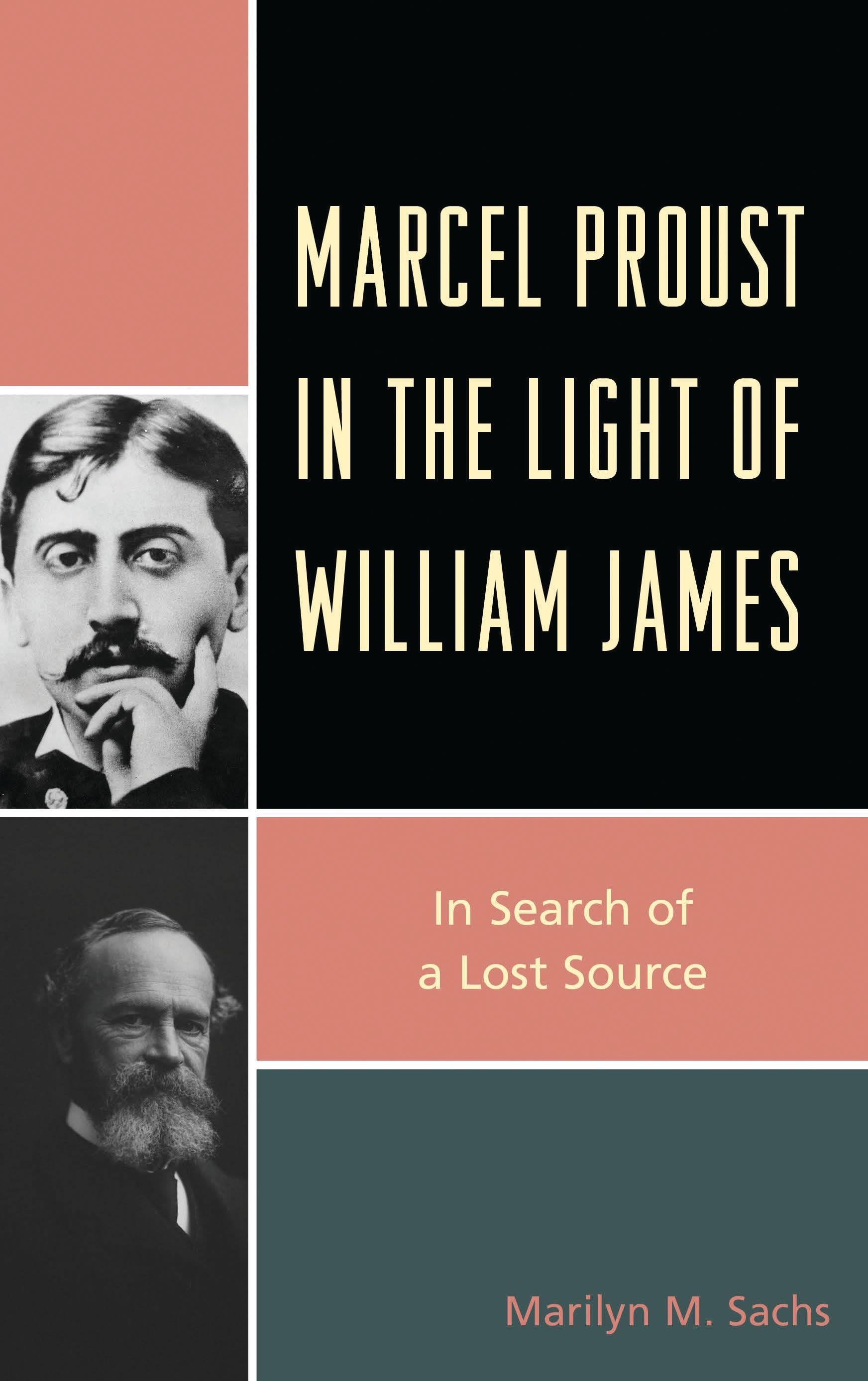
For a century now, scholars have searched for the “source” of Marcel Proust’s startlingly innovative novel À la recherche du temps perdu. Some have pointed to Henri Bergson, Sigmund Freud, or Paul Sollier. Others have referenced the novels of Henry James. But no one has focused on the more significant influence of the writings of Henry’s older brother, the psychologist and Harvard professor William James. A close comparison reveals the degree to which Proust’s novel stems from James’s psychological and philosophical theories.
William James was a prominent member of the scientific, medical and philosophical communities in Proust’s Paris and was close friends with two men well known to Proust. His works were translated into French and reviewed in French journals and newspapers. This book discloses how Proust likely became familiar with William James and illustrates how James’s writings were key to Proust’s ability to craft the book he had been trying to write, extending even to his use of similar language and imagery and a narrative schema that arguably mimics James’s descriptions of consciousness, perception, and memory. Proust’s hero assiduously explores the vague, uncertain, relational aspects of experience, the trials and comforts of habit, the salvational potential of memory, the “moral” aspects of personal history teeming with impression and desire—these are the truths of human psychology and behavior theorized by William James and made fictional flesh in Proust’s rendition of lived experience.
William James was a prominent member of the scientific, medical and philosophical communities in Proust’s Paris and was close friends with two men well known to Proust. His works were translated into French and reviewed in French journals and newspapers. This book discloses how Proust likely became familiar with William James and illustrates how James’s writings were key to Proust’s ability to craft the book he had been trying to write, extending even to his use of similar language and imagery and a narrative schema that arguably mimics James’s descriptions of consciousness, perception, and memory. Proust’s hero assiduously explores the vague, uncertain, relational aspects of experience, the trials and comforts of habit, the salvational potential of memory, the “moral” aspects of personal history teeming with impression and desire—these are the truths of human psychology and behavior theorized by William James and made fictional flesh in Proust’s rendition of lived experience.
Maksa helposti kortilla, Klarnalla, Apple Paylla tai Google Paylla. Etkö ole tyytyväinen? Sinulla on aina 14 päivän palautusoikeus. Lue lisää ehdoistamme. Jos sinulla on kysyttävää, lähetä meille sähköpostia osoitteeseen hello@memmo.org.
Memmo tekee opiskelusta helpompaa – missä päin maailmaa ikinä oletkin. Meillä yhdistät kurssikirjat ja fiksut opiskelutyökalut yhteen paikkaan: tiivistelmät, visat, podcastit ja muistikortit. Ja sitten Ted, opiskelukaverisi, joka vastaa kaikkeen, mitä ikinä mietitkin. Yli 50 000 opiskelijaa opiskelee jo täällä – rakennettu auttamaan sinua oppimaan nopeammin ja stressaamaan vähemmän.