
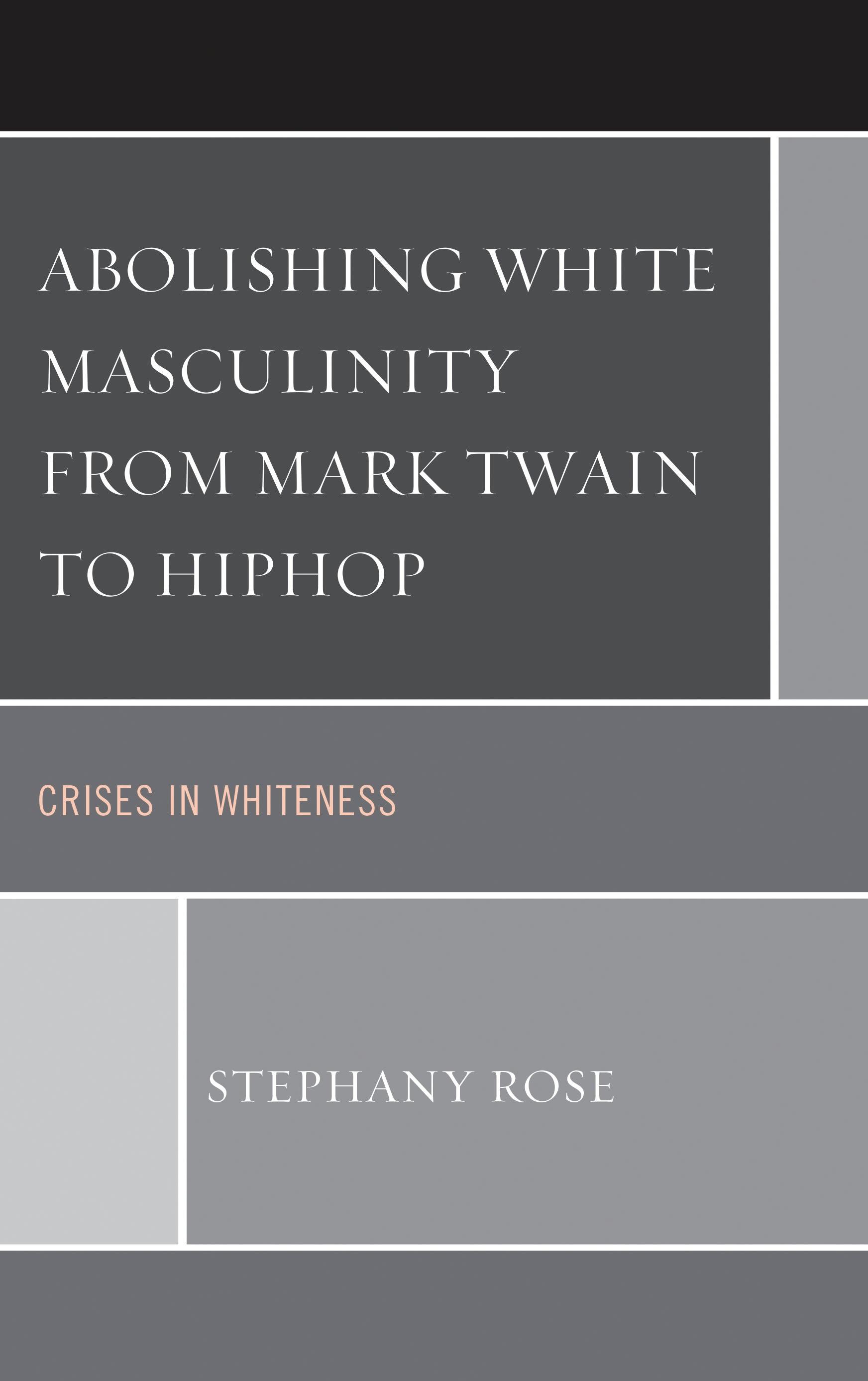
Abolishing White Masculinity from Mark Twain to Hiphop examines white American male literature for its social commentary on the construction of whiteness in the United States. Whiteness has always been a contested racial identity in the U.S., one in a state of construction and reconstruction throughout critical cultural and historical moments. This text examines how white American male writers have grappled with understanding themselves and their audiences as white beings.
Abolishing White Masculinity from Mark Twain to Hiphop specifically brings a critical whiteness approach to American literary criticism and strengthens the growing interdisciplinary field of critical whiteness studies in the humanities. Critical whiteness studies shifts the attention from solely examining people and perspectives of color in race discourse to addressing whiteness as an essential component of race ideology. The primary contribution of this perspective is in how whites construct and see whiteness, for the larger purpose of exploring the possibilities of how they may come to no longer construct and see themselves through whiteness. Understanding this is at the heart of contemporary discussions of post-raciality.
Abolishing White Masculinity from Mark Twain to Hiphop uses the following texts as canonical case studies: Puddn’head Wilson and Those Extraordinary Twins by Mark Twain, The Great Gatsby and The Beautiful and the Damned by F. Scott Fitzgerald, and Angry Black White Boy and The End of the Jews by Adam Mansbach. Each underscores the dialectic of formation, deformation, and reformation of whiteness at specific socio-historical moments based upon anxieties about race possessed by whites and highlighted by white fictionists. The selected writers ultimately serve dually as co-constructors of whiteness and social critics of their times through their literature.
Abolishing White Masculinity from Mark Twain to Hiphop specifically brings a critical whiteness approach to American literary criticism and strengthens the growing interdisciplinary field of critical whiteness studies in the humanities. Critical whiteness studies shifts the attention from solely examining people and perspectives of color in race discourse to addressing whiteness as an essential component of race ideology. The primary contribution of this perspective is in how whites construct and see whiteness, for the larger purpose of exploring the possibilities of how they may come to no longer construct and see themselves through whiteness. Understanding this is at the heart of contemporary discussions of post-raciality.
Abolishing White Masculinity from Mark Twain to Hiphop uses the following texts as canonical case studies: Puddn’head Wilson and Those Extraordinary Twins by Mark Twain, The Great Gatsby and The Beautiful and the Damned by F. Scott Fitzgerald, and Angry Black White Boy and The End of the Jews by Adam Mansbach. Each underscores the dialectic of formation, deformation, and reformation of whiteness at specific socio-historical moments based upon anxieties about race possessed by whites and highlighted by white fictionists. The selected writers ultimately serve dually as co-constructors of whiteness and social critics of their times through their literature.
Sivuja: 212
Kategoria: Kultur-, Genus- & Postkoloniala studier
e-ISBN: 9780739181232
Lähetyspaino: 1.2 kg
Toimitusaika: 1-2 päivää
Maksa helposti kortilla, Klarnalla, Apple Paylla tai Google Paylla. Etkö ole tyytyväinen? Sinulla on aina 14 päivän palautusoikeus. Lue lisää ehdoistamme. Jos sinulla on kysyttävää, lähetä meille sähköpostia osoitteeseen hello@memmo.org.
Memmo tekee opiskelusta helpompaa – missä päin maailmaa ikinä oletkin. Meillä yhdistät kurssikirjat ja fiksut opiskelutyökalut yhteen paikkaan: tiivistelmät, visat, podcastit ja muistikortit. Ja sitten Ted, opiskelukaverisi, joka vastaa kaikkeen, mitä ikinä mietitkin. Yli 50 000 opiskelijaa opiskelee jo täällä – rakennettu auttamaan sinua oppimaan nopeammin ja stressaamaan vähemmän.