
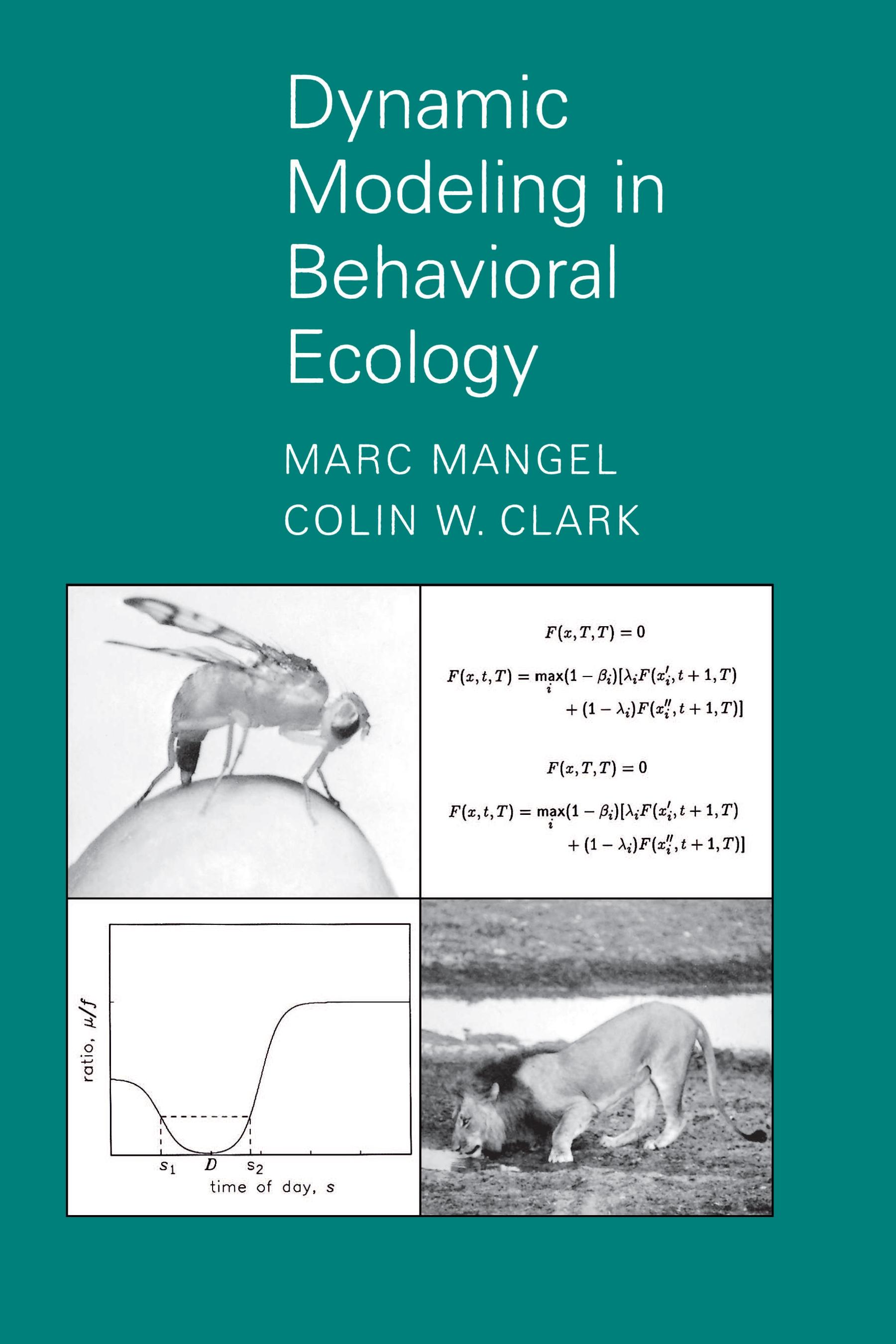
This book describes a powerful and flexible technique for the modeling of behavior, based on evolutionary principles. The technique employs stochastic dynamic programming and permits the analysis of behavioral adaptations wherein organisms respond to changes in their environment and in their own current physiological state. Models can be constructed to reflect sequential decisions concerned simultaneously with foraging, reproduction, predator avoidance, and other activities.
The authors show how to construct and use dynamic behavioral models. Part I covers the mathematical background and computer programming, and then uses a paradigm of foraging under risk of predation to exemplify the general modeling technique. Part II consists of five "applied" chapters illustrating the scope of the dynamic modeling approach. They treat hunting behavior in lions, reproduction in insects, migrations of aquatic organisms, clutch size and parental care in birds, and movement of spiders and raptors. Advanced topics, including the study of dynamic evolutionarily stable strategies, are discussed in Part III.
Maksa helposti kortilla, Klarnalla, Apple Paylla tai Google Paylla. Etkö ole tyytyväinen? Sinulla on aina 14 päivän palautusoikeus. Lue lisää ehdoistamme. Jos sinulla on kysyttävää, lähetä meille sähköpostia osoitteeseen hello@memmo.org.
Memmo tekee opiskelusta helpompaa – missä päin maailmaa ikinä oletkin. Meillä yhdistät kurssikirjat ja fiksut opiskelutyökalut yhteen paikkaan: tiivistelmät, visat, podcastit ja muistikortit. Ja sitten Ted, opiskelukaverisi, joka vastaa kaikkeen, mitä ikinä mietitkin. Yli 50 000 opiskelijaa opiskelee jo täällä – rakennettu auttamaan sinua oppimaan nopeammin ja stressaamaan vähemmän.