
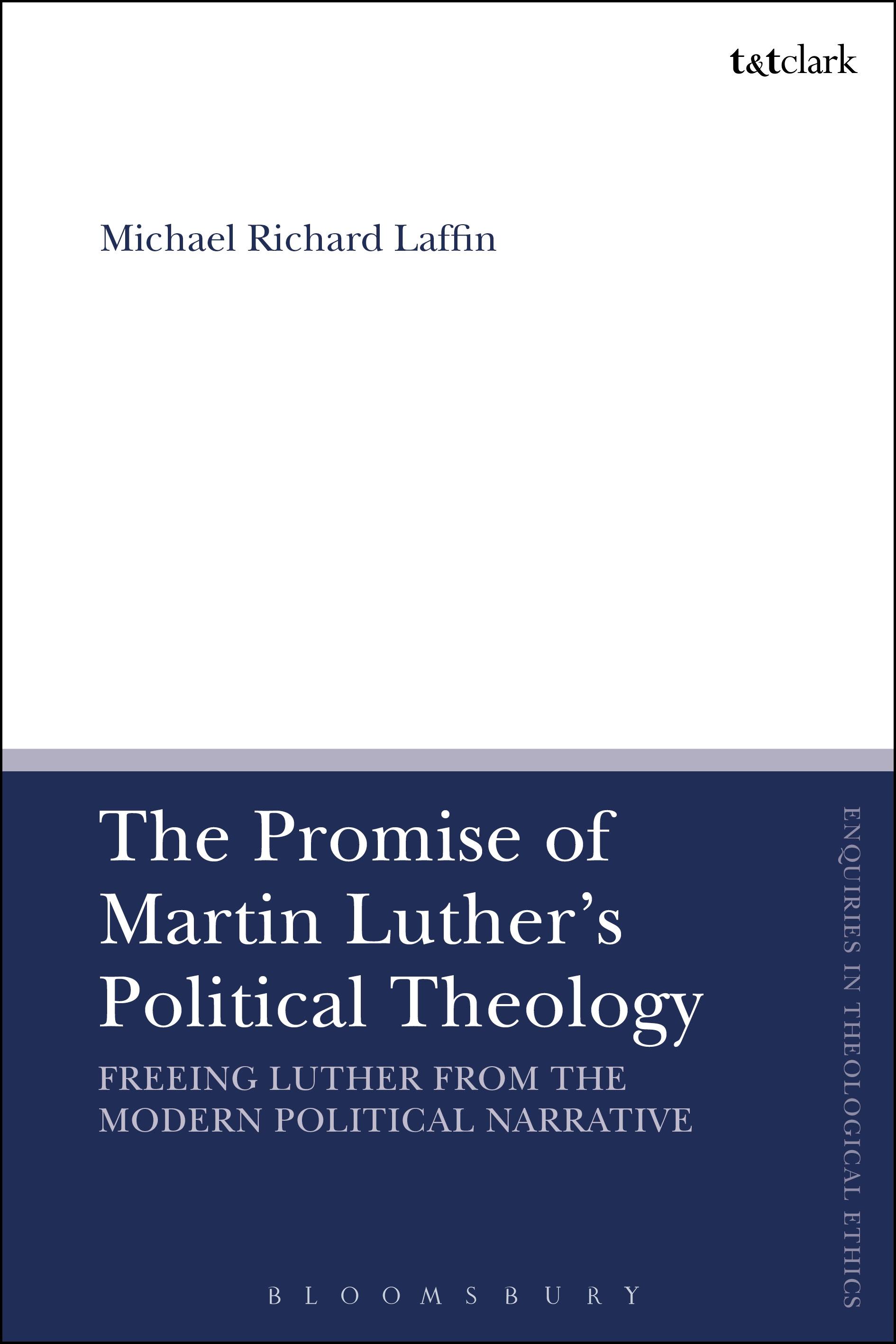
Michael Laffin demonstrates the promise of Martin Luther's thought for contemporary political theology by showing how Luther has been over-determined in standard genealogies of modernity which frequently deafen us to his unique contribution.
Laffin argues that contemporary theologians have typically followed a narrative derived from the work of a previous generation of political historians and philosophers, which tend to screen out or distort the Reformers' contribution to political theory. Common to these narratives are charges against Luther for his perceived univocal and nominal ontology resulting in a privatized and spiritualized Christianity, thus falsely dividing the world into autonomous spheres. Additionally, the narratives claim that Luther follows in the wake of voluntarism, leading to an insistence on human passivity that leaves no room for pagan virtue. Thus, politics is reduced to an authoritarian imposition of order.
In contrast to the dominant narratives of political modernity, Laffin re-examines these narratives by focusing on the political significance of areas in Luther's corpus often neglected in contemporary accounts of his political thought, especially his commentaries on Scripture and writings on the sacraments. Attention to these writings brings forth the crucial themes of the two ecclesiae and the three institutions. Constructively, these themes are deployed in critical engagement with contemporary political theology, particularly as represented in Radical Orthodoxy and the new-Augustinianism.
Laffin argues that contemporary theologians have typically followed a narrative derived from the work of a previous generation of political historians and philosophers, which tend to screen out or distort the Reformers' contribution to political theory. Common to these narratives are charges against Luther for his perceived univocal and nominal ontology resulting in a privatized and spiritualized Christianity, thus falsely dividing the world into autonomous spheres. Additionally, the narratives claim that Luther follows in the wake of voluntarism, leading to an insistence on human passivity that leaves no room for pagan virtue. Thus, politics is reduced to an authoritarian imposition of order.
In contrast to the dominant narratives of political modernity, Laffin re-examines these narratives by focusing on the political significance of areas in Luther's corpus often neglected in contemporary accounts of his political thought, especially his commentaries on Scripture and writings on the sacraments. Attention to these writings brings forth the crucial themes of the two ecclesiae and the three institutions. Constructively, these themes are deployed in critical engagement with contemporary political theology, particularly as represented in Radical Orthodoxy and the new-Augustinianism.
Maksa helposti kortilla, Klarnalla, Apple Paylla tai Google Paylla. Etkö ole tyytyväinen? Sinulla on aina 14 päivän palautusoikeus. Lue lisää ehdoistamme. Jos sinulla on kysyttävää, lähetä meille sähköpostia osoitteeseen hello@memmo.org.
Memmo tekee opiskelusta helpompaa – missä päin maailmaa ikinä oletkin. Meillä yhdistät kurssikirjat ja fiksut opiskelutyökalut yhteen paikkaan: tiivistelmät, visat, podcastit ja muistikortit. Ja sitten Ted, opiskelukaverisi, joka vastaa kaikkeen, mitä ikinä mietitkin. Yli 50 000 opiskelijaa opiskelee jo täällä – rakennettu auttamaan sinua oppimaan nopeammin ja stressaamaan vähemmän.