
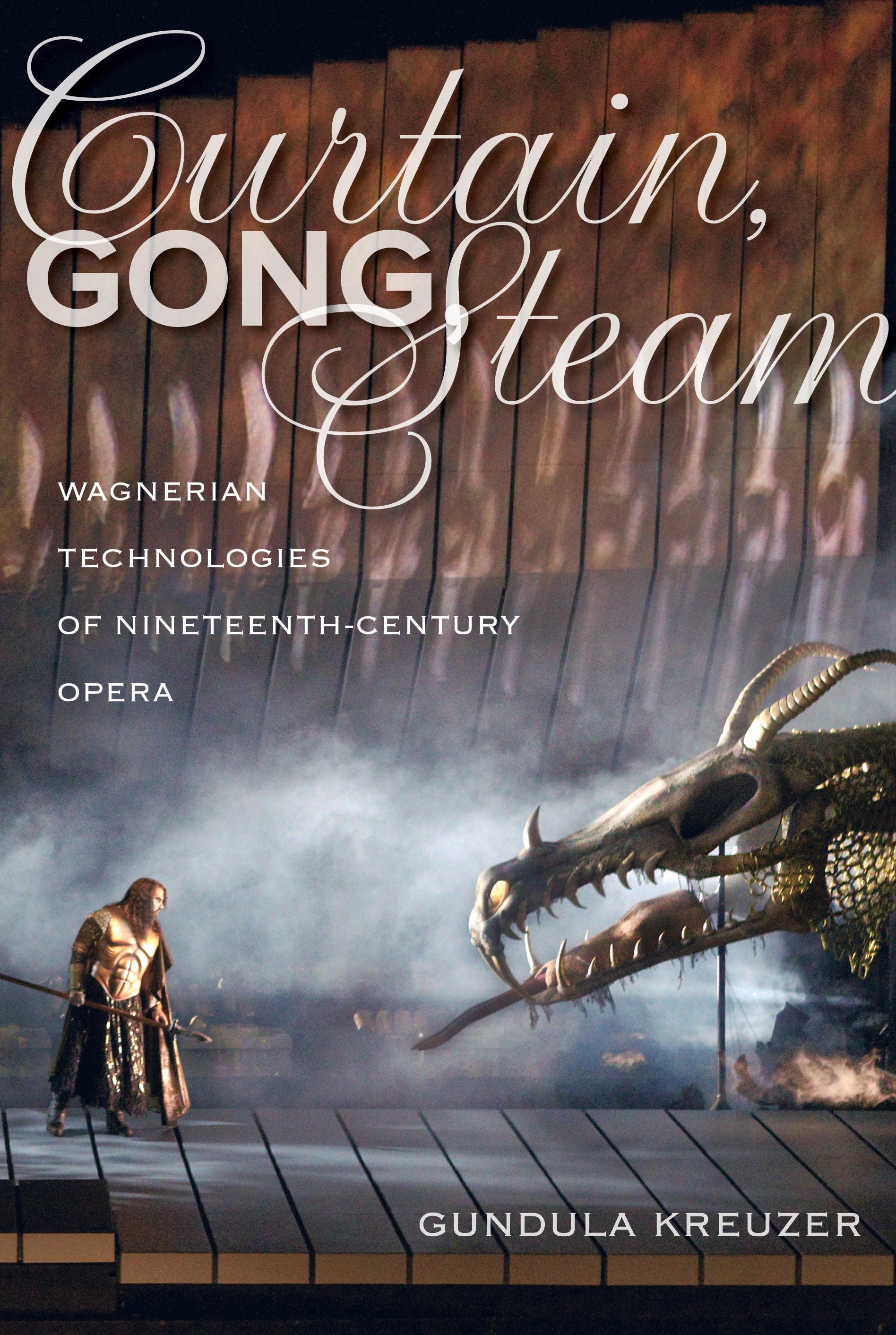
In this innovative book, Gundula Kreuzer argues for the foundational role of technologies in the conception, production, and study of nineteenth-century opera. She shows how composers increasingly incorporated novel audiovisual effects in their works and how the uses and meanings of the required apparatuses changed through the twentieth century, sometimes still resonating in stagings, performance art, and popular culture today. Focusing on devices (which she dubs “Wagnerian technologies”) intended to amalgamate opera’s various media while veiling their mechanics, Kreuzer offers a practical counternarrative to Wagner’s idealist theories of total illusionism. At the same time, Curtain, Gong, Steam’s multifaceted exploration of the three titular technologies repositions Wagner as catalyst more than inventor in the history of operatic production. With its broad chronological and geographical scope, this book deepens our understanding of the material and mechanical conditions of historical operatic practice as well as of individual works, both well known and obscure.
Maksa helposti kortilla, Klarnalla, Apple Paylla tai Google Paylla. Etkö ole tyytyväinen? Sinulla on aina 14 päivän palautusoikeus. Lue lisää ehdoistamme. Jos sinulla on kysyttävää, lähetä meille sähköpostia osoitteeseen hello@memmo.org.
Memmo tekee opiskelusta helpompaa – missä päin maailmaa ikinä oletkin. Meillä yhdistät kurssikirjat ja fiksut opiskelutyökalut yhteen paikkaan: tiivistelmät, visat, podcastit ja muistikortit. Ja sitten Ted, opiskelukaverisi, joka vastaa kaikkeen, mitä ikinä mietitkin. Yli 50 000 opiskelijaa opiskelee jo täällä – rakennettu auttamaan sinua oppimaan nopeammin ja stressaamaan vähemmän.
Saatat pitää myös näistä
Osta kirja0