
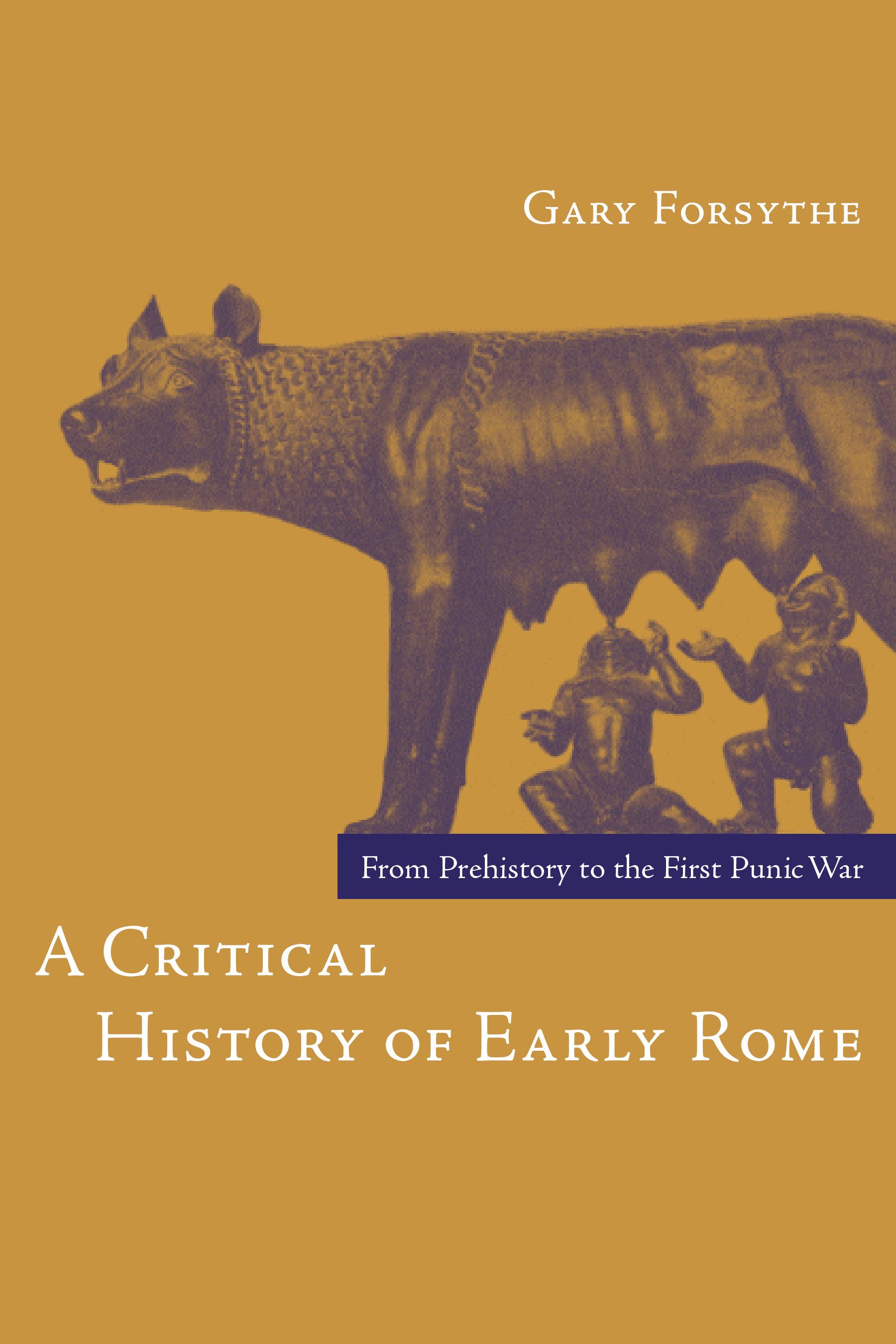
During the period from Rome's Stone Age beginnings on the Tiber River to its conquest of the Italian peninsula in 264 B.C., the Romans in large measure developed the social, political, and military structure that would be the foundation of their spectacular imperial success. In this comprehensive and clearly written account, Gary Forsythe draws extensively from historical, archaeological, linguistic, epigraphic, religious, and legal evidence as he traces Rome's early development within a multicultural environment of Latins, Sabines, Etruscans, Greeks, and Phoenicians. His study charts the development of the classical republican institutions that would eventually enable Rome to create its vast empire, and provides fascinating discussions of topics including Roman prehistory, religion, and language.
In addition to its value as an authoritative synthesis of current research, A Critical History of Early Rome offers a revisionist interpretation of Rome's early history through its innovative use of ancient sources. The history of this period is notoriously difficult to uncover because there are no extant written records, and because the later historiography that affords the only narrative accounts of Rome's early days is shaped by the issues, conflicts, and ways of thinking of its own time. This book provides a groundbreaking examination of those surviving ancient sources in light of their underlying biases, thereby reconstructing early Roman history upon a more solid evidentiary foundation.
In addition to its value as an authoritative synthesis of current research, A Critical History of Early Rome offers a revisionist interpretation of Rome's early history through its innovative use of ancient sources. The history of this period is notoriously difficult to uncover because there are no extant written records, and because the later historiography that affords the only narrative accounts of Rome's early days is shaped by the issues, conflicts, and ways of thinking of its own time. This book provides a groundbreaking examination of those surviving ancient sources in light of their underlying biases, thereby reconstructing early Roman history upon a more solid evidentiary foundation.
Maksa helposti kortilla, Klarnalla, Apple Paylla tai Google Paylla. Etkö ole tyytyväinen? Sinulla on aina 14 päivän palautusoikeus. Lue lisää ehdoistamme. Jos sinulla on kysyttävää, lähetä meille sähköpostia osoitteeseen hello@memmo.org.
Memmo tekee opiskelusta helpompaa – missä päin maailmaa ikinä oletkin. Meillä yhdistät kurssikirjat ja fiksut opiskelutyökalut yhteen paikkaan: tiivistelmät, visat, podcastit ja muistikortit. Ja sitten Ted, opiskelukaverisi, joka vastaa kaikkeen, mitä ikinä mietitkin. Yli 50 000 opiskelijaa opiskelee jo täällä – rakennettu auttamaan sinua oppimaan nopeammin ja stressaamaan vähemmän.
Saatat pitää myös näistä
Osta kirja0