
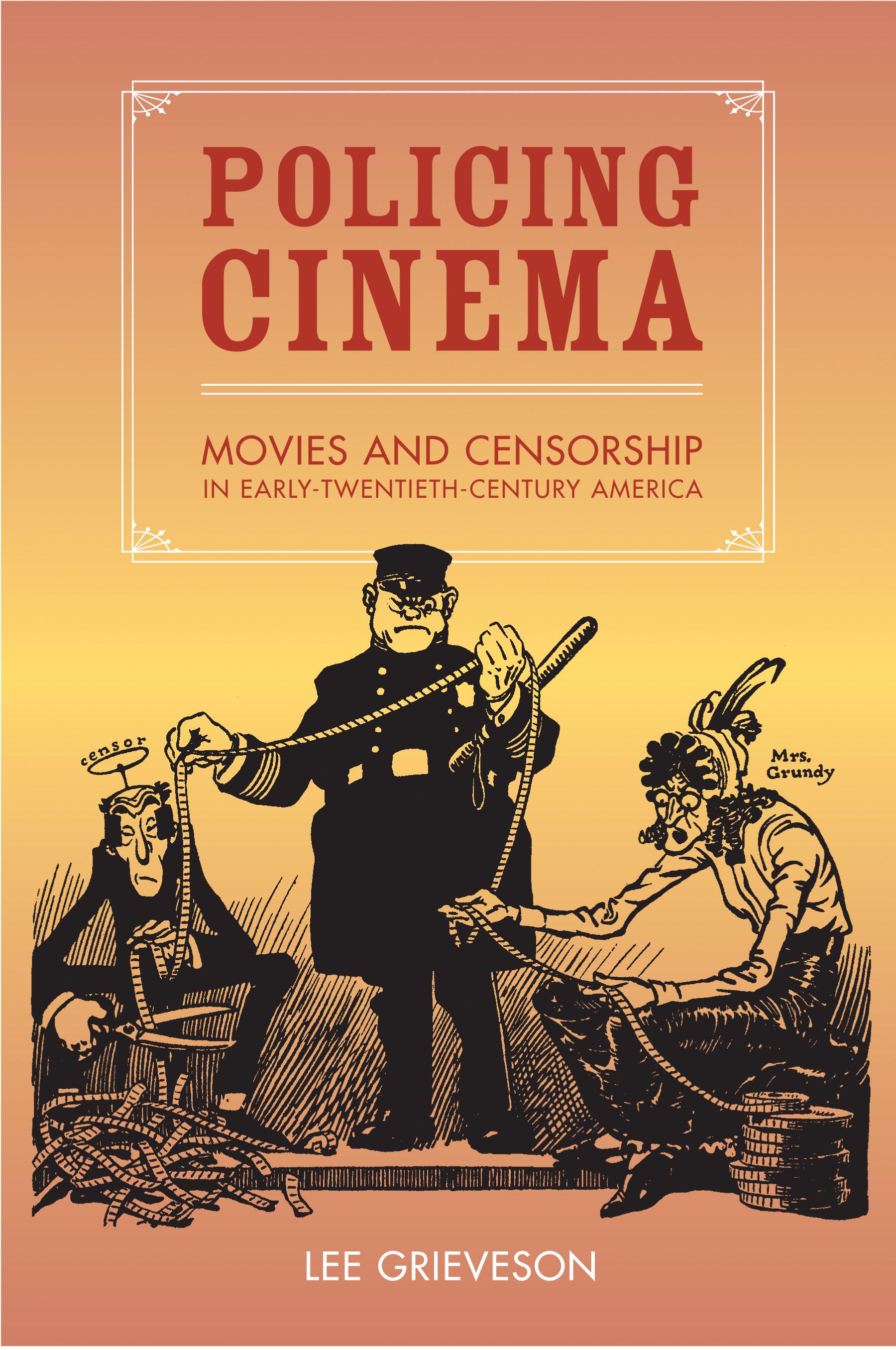
White slave films, dramas documenting sex scandals, filmed prize fights featuring the controversial African-American boxer Jack Johnson, D.W. Griffith’s The Birth of a Nation—all became objects of public concern after 1906, when the proliferation of nickelodeons brought moving pictures to a broad mass public. Lee Grieveson draws on extensive original research to examine the controversies over these films and over cinema more generally. He situates these contestations in the context of regulatory concerns about populations and governance in an early-twentieth-century America grappling with the powerful forces of modernity, in particular, immigration, class formation and conflict, and changing gender roles.
Tracing the discourses and practices of cultural and political elites and the responses of the nascent film industry, Grieveson reveals how these interactions had profound effects on the shaping of film content, form, and, more fundamentally, the proposed social function of cinema: how cinema should function in society, the uses to which it might be put, and thus what it could or would be. Policing Cinema develops new perspectives for the understanding of censorship and regulation and the complex relations between governance and culture. In this work, Grieveson offers a compelling analysis of the forces that shaped American cinema and its role in society.
Tracing the discourses and practices of cultural and political elites and the responses of the nascent film industry, Grieveson reveals how these interactions had profound effects on the shaping of film content, form, and, more fundamentally, the proposed social function of cinema: how cinema should function in society, the uses to which it might be put, and thus what it could or would be. Policing Cinema develops new perspectives for the understanding of censorship and regulation and the complex relations between governance and culture. In this work, Grieveson offers a compelling analysis of the forces that shaped American cinema and its role in society.
Maksa helposti kortilla, Klarnalla, Apple Paylla tai Google Paylla. Etkö ole tyytyväinen? Sinulla on aina 14 päivän palautusoikeus. Lue lisää ehdoistamme. Jos sinulla on kysyttävää, lähetä meille sähköpostia osoitteeseen hello@memmo.org.
Memmo tekee opiskelusta helpompaa – missä päin maailmaa ikinä oletkin. Meillä yhdistät kurssikirjat ja fiksut opiskelutyökalut yhteen paikkaan: tiivistelmät, visat, podcastit ja muistikortit. Ja sitten Ted, opiskelukaverisi, joka vastaa kaikkeen, mitä ikinä mietitkin. Yli 50 000 opiskelijaa opiskelee jo täällä – rakennettu auttamaan sinua oppimaan nopeammin ja stressaamaan vähemmän.
Saatat pitää myös näistä
Osta kirja0