
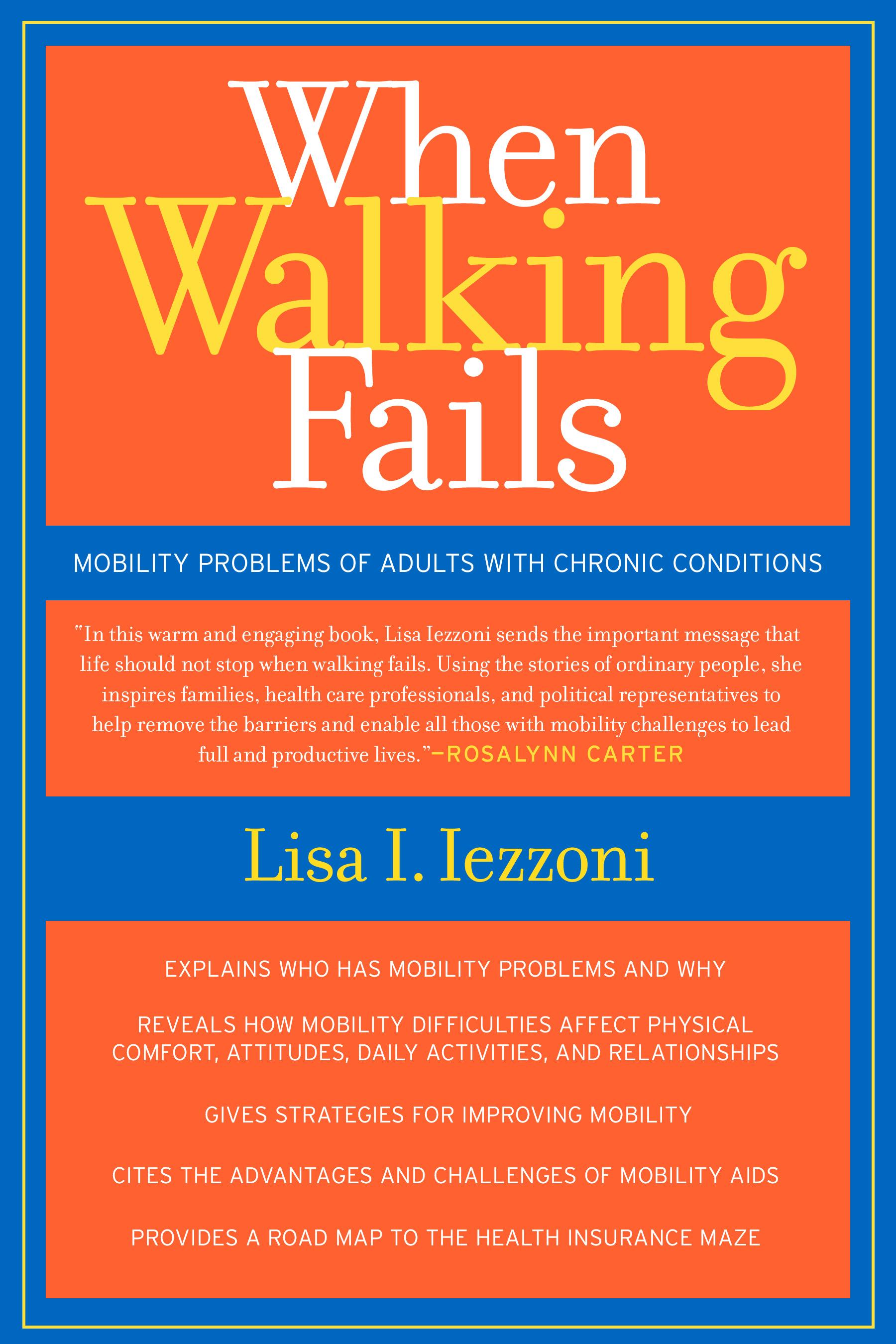
Roughly one in ten adult Americans find their walking slowed by progressive chronic conditions like arthritis, back problems, heart and lung diseases, and diabetes. In this passionate and deeply informed book, Lisa I. Iezzoni describes the personal experiences of and societal responses to adults whose mobility makes it difficult for them to live as they wish—partly because of physical and emotional conditions and partly because of persisting societal and environmental barriers.
Basing her conclusions on personal experience, a wealth of survey data, and extensive interviews with dozens of people from a wide social spectrum, Iezzoni explains who has mobility problems and why; how mobility difficulties affect people's physical comfort, attitudes, daily activities, and relationships with family and friends throughout their communities; strategies for improving mobility; and how the health care system addresses mobility difficulties, providing and financing services and assistive technologies.
Iezzoni claims that, although strategies exist to improve mobility, many people do not know where to turn for advice. She addresses the need to inform policymakers about areas where changes will better accommodate people with difficulty walking. This straightforward and engaging narrative clearly demonstrates that improving people's ability to move freely and independently will enhance overall health and quality of life, not only for these persons, but also for society as a whole.
Basing her conclusions on personal experience, a wealth of survey data, and extensive interviews with dozens of people from a wide social spectrum, Iezzoni explains who has mobility problems and why; how mobility difficulties affect people's physical comfort, attitudes, daily activities, and relationships with family and friends throughout their communities; strategies for improving mobility; and how the health care system addresses mobility difficulties, providing and financing services and assistive technologies.
Iezzoni claims that, although strategies exist to improve mobility, many people do not know where to turn for advice. She addresses the need to inform policymakers about areas where changes will better accommodate people with difficulty walking. This straightforward and engaging narrative clearly demonstrates that improving people's ability to move freely and independently will enhance overall health and quality of life, not only for these persons, but also for society as a whole.
Maksa helposti kortilla, Klarnalla, Apple Paylla tai Google Paylla. Etkö ole tyytyväinen? Sinulla on aina 14 päivän palautusoikeus. Lue lisää ehdoistamme. Jos sinulla on kysyttävää, lähetä meille sähköpostia osoitteeseen hello@memmo.org.
Memmo tekee opiskelusta helpompaa – missä päin maailmaa ikinä oletkin. Meillä yhdistät kurssikirjat ja fiksut opiskelutyökalut yhteen paikkaan: tiivistelmät, visat, podcastit ja muistikortit. Ja sitten Ted, opiskelukaverisi, joka vastaa kaikkeen, mitä ikinä mietitkin. Yli 50 000 opiskelijaa opiskelee jo täällä – rakennettu auttamaan sinua oppimaan nopeammin ja stressaamaan vähemmän.
Saatat pitää myös näistä
Osta kirja0