
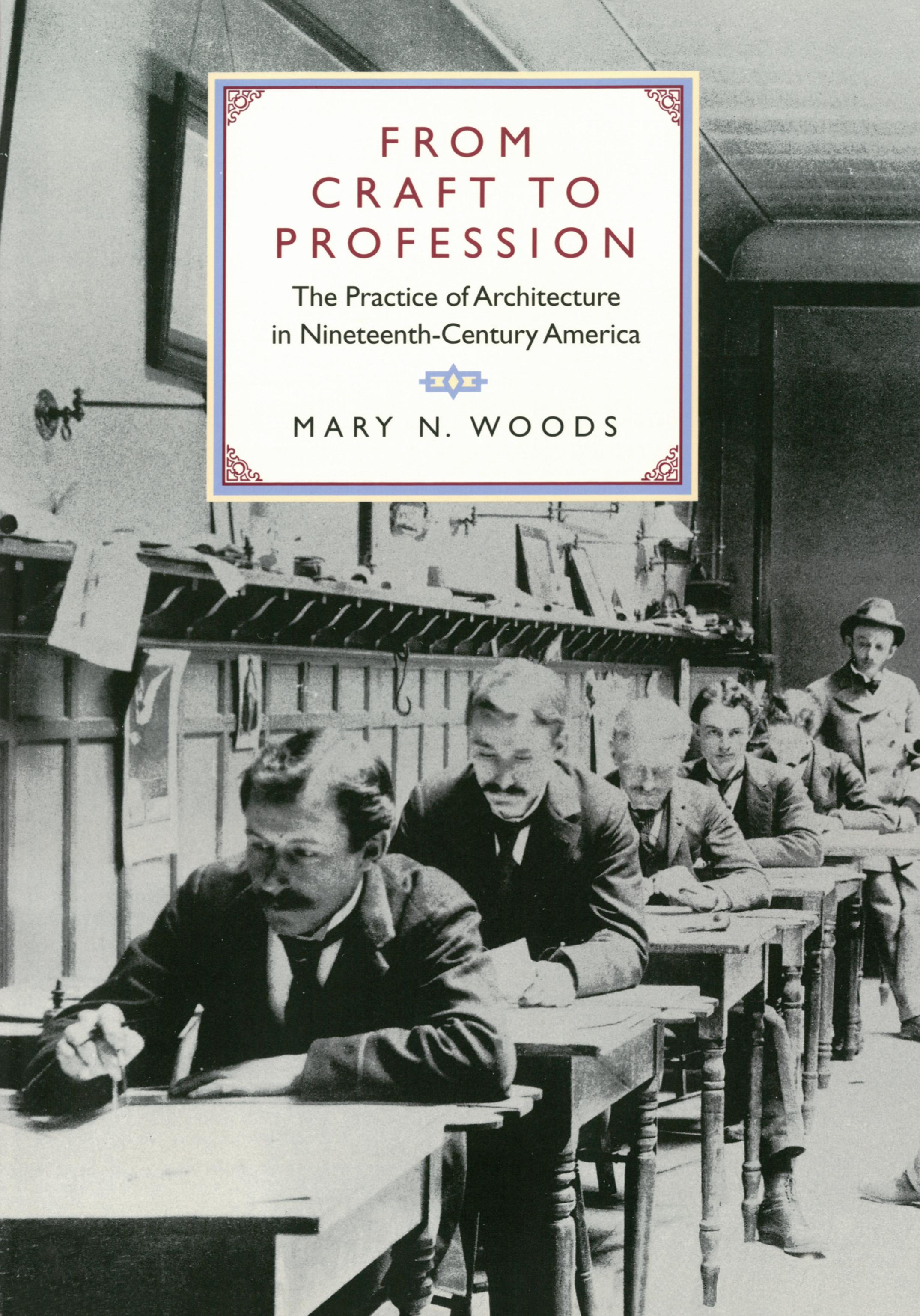
This is the first in-depth study of how the architectural profession emerged in early American history. Mary Woods dispels the prevailing notion that the profession developed under the leadership of men formally schooled in architecture as an art during the late nineteenth century. Instead, she cites several instances in the early 1800s of craftsmen-builders who shifted their identity to that of professional architects. While struggling to survive as designers and supervisors of construction projects, these men organized professional societies and worked for architectural education, appropriate compensation, and accreditation.
In such leading architectural practitioners as B. Henry Latrobe, Alexander J. Davis, H. H. Richardson, Louis Sullivan, and Stanford White, Woods sees collaborators, partners, merchandisers, educators, and lobbyists rather than inspired creators. She documents their contributions as well as those, far less familiar, of women architects and people of color in the profession's early days.
Woods's extensive research yields a remarkable range of archival materials: correspondence among carpenters; 200-year-old lawsuits; architect-client spats; the organization of craft guilds, apprenticeships, university programs, and correspondence schools; and the structure of architectural practices, labor unions, and the building industry. In presenting a more accurate composite of the architectural profession's history, Woods lays a foundation for reclaiming the profession's past and recasting its future. Her study will appeal not only to architects, but also to historians, sociologists, and readers with an interest in architecture's place in America today.
This is the first in-depth study of how the architectural profession emerged in early American history. Mary Woods dispels the prevailing notion that the profession developed under the leadership of men formally schooled in architecture as an art during t
In such leading architectural practitioners as B. Henry Latrobe, Alexander J. Davis, H. H. Richardson, Louis Sullivan, and Stanford White, Woods sees collaborators, partners, merchandisers, educators, and lobbyists rather than inspired creators. She documents their contributions as well as those, far less familiar, of women architects and people of color in the profession's early days.
Woods's extensive research yields a remarkable range of archival materials: correspondence among carpenters; 200-year-old lawsuits; architect-client spats; the organization of craft guilds, apprenticeships, university programs, and correspondence schools; and the structure of architectural practices, labor unions, and the building industry. In presenting a more accurate composite of the architectural profession's history, Woods lays a foundation for reclaiming the profession's past and recasting its future. Her study will appeal not only to architects, but also to historians, sociologists, and readers with an interest in architecture's place in America today.
This is the first in-depth study of how the architectural profession emerged in early American history. Mary Woods dispels the prevailing notion that the profession developed under the leadership of men formally schooled in architecture as an art during t
Maksa helposti kortilla, Klarnalla, Apple Paylla tai Google Paylla. Etkö ole tyytyväinen? Sinulla on aina 14 päivän palautusoikeus. Lue lisää ehdoistamme. Jos sinulla on kysyttävää, lähetä meille sähköpostia osoitteeseen hello@memmo.org.
Memmo tekee opiskelusta helpompaa – missä päin maailmaa ikinä oletkin. Meillä yhdistät kurssikirjat ja fiksut opiskelutyökalut yhteen paikkaan: tiivistelmät, visat, podcastit ja muistikortit. Ja sitten Ted, opiskelukaverisi, joka vastaa kaikkeen, mitä ikinä mietitkin. Yli 50 000 opiskelijaa opiskelee jo täällä – rakennettu auttamaan sinua oppimaan nopeammin ja stressaamaan vähemmän.
Saatat pitää myös näistä
Osta kirja0