
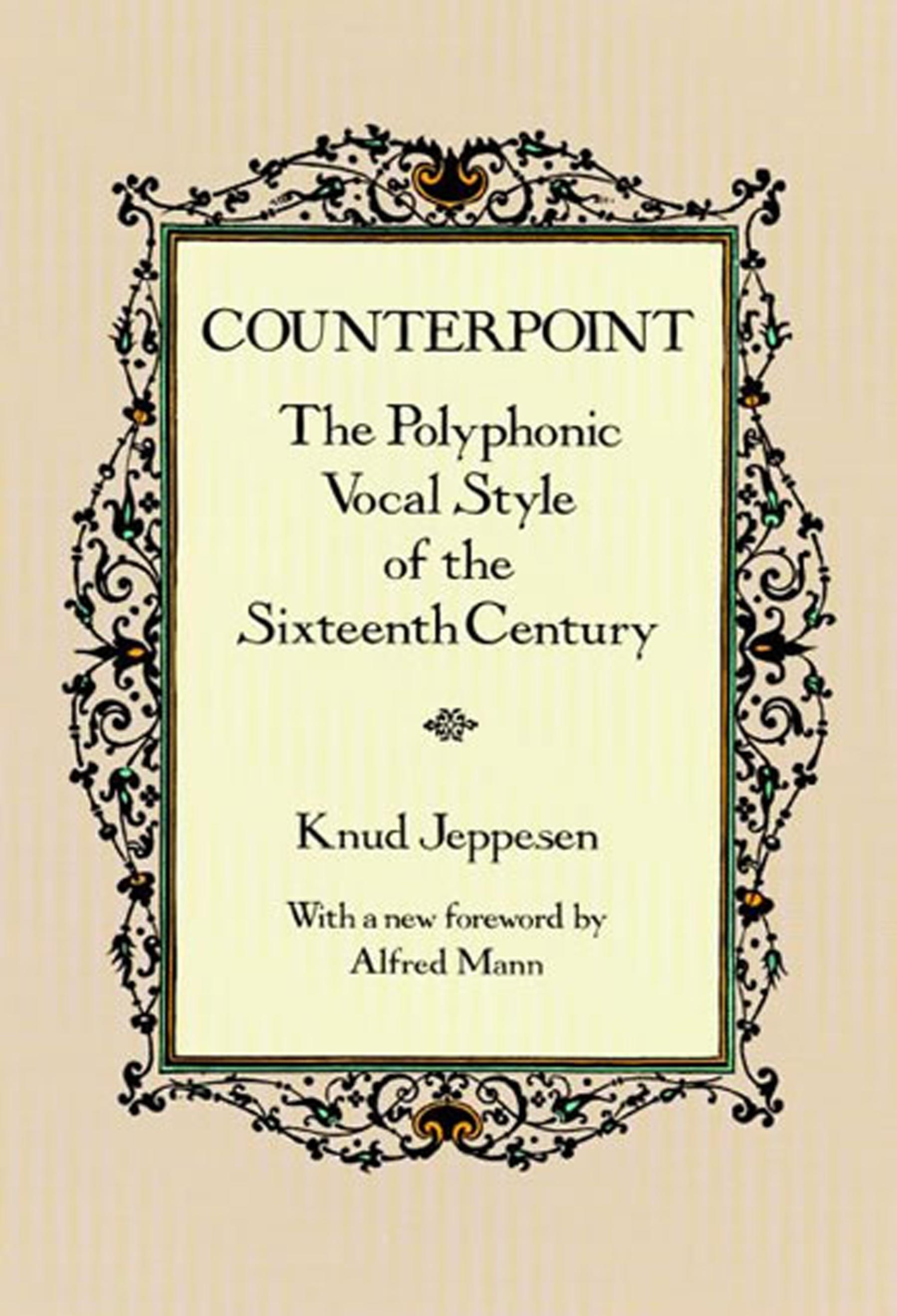
This classic introductory text focuses on the polyphonic vocal style perfected by Palestrina. Unlike many other texts, it maintains a careful balance between theoretical and practical problems, between historical and systematic methodology. The result is an exceptionally useful resource, ideal for classroom use in teaching modal counterpoint.
In Part One, Knud Jeppesen (1892–1974), the world-renowned musicologist and leading authority on Palestrina, offers a superb outline history of contrapuntal theory. He begins by exploring the beginnings of contrapuntal theory from the ninth to the fourteenth centuries. This is followed by separate discussions of each succeeding century, the styles of Palestrina and Bach, the "Palestrina Movement" after Fux, and more. The section ends with illuminating coverage of notation, the ecclesiastical modes, melody, and harmony.
The second part of the book contains an extended treatment of "species" counterpoint in two, three, and four parts, as well as counterpoint in more than four parts, and specific discussions of the canon, the motet, and the Mass. Throughout, the text is generously supplied with musical examples―exercises, solutions, and illustrations, including many by the great composers. For this edition, the distinguished scholar Alfred Mann has contributed a new foreword to Jeppesen's classic study. Now available in paperback for the first time, it will be welcomed by musicians, composers, theorists, musicologists―any student of counterpoint and the Western musical tradition.
In Part One, Knud Jeppesen (1892–1974), the world-renowned musicologist and leading authority on Palestrina, offers a superb outline history of contrapuntal theory. He begins by exploring the beginnings of contrapuntal theory from the ninth to the fourteenth centuries. This is followed by separate discussions of each succeeding century, the styles of Palestrina and Bach, the "Palestrina Movement" after Fux, and more. The section ends with illuminating coverage of notation, the ecclesiastical modes, melody, and harmony.
The second part of the book contains an extended treatment of "species" counterpoint in two, three, and four parts, as well as counterpoint in more than four parts, and specific discussions of the canon, the motet, and the Mass. Throughout, the text is generously supplied with musical examples―exercises, solutions, and illustrations, including many by the great composers. For this edition, the distinguished scholar Alfred Mann has contributed a new foreword to Jeppesen's classic study. Now available in paperback for the first time, it will be welcomed by musicians, composers, theorists, musicologists―any student of counterpoint and the Western musical tradition.
Maksa helposti kortilla, Klarnalla, Apple Paylla tai Google Paylla. Etkö ole tyytyväinen? Sinulla on aina 14 päivän palautusoikeus. Lue lisää ehdoistamme. Jos sinulla on kysyttävää, lähetä meille sähköpostia osoitteeseen hello@memmo.org.
Memmo tekee opiskelusta helpompaa – missä päin maailmaa ikinä oletkin. Meillä yhdistät kurssikirjat ja fiksut opiskelutyökalut yhteen paikkaan: tiivistelmät, visat, podcastit ja muistikortit. Ja sitten Ted, opiskelukaverisi, joka vastaa kaikkeen, mitä ikinä mietitkin. Yli 50 000 opiskelijaa opiskelee jo täällä – rakennettu auttamaan sinua oppimaan nopeammin ja stressaamaan vähemmän.
Saatat pitää myös näistä
Osta kirja0