
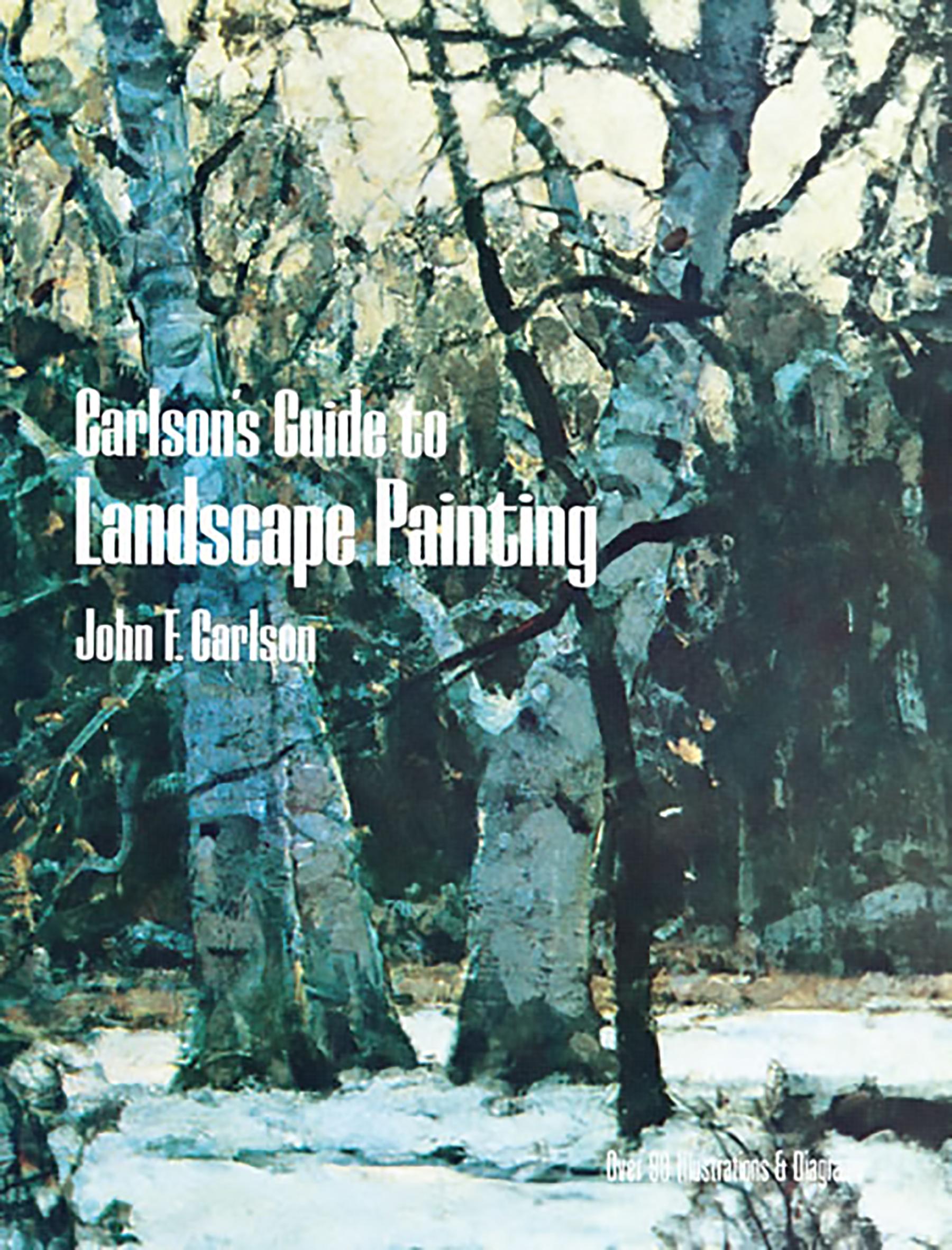
Written by a famous American painter and teacher, whose landscapes are found in many of the world's most noted museums, this book is known as one of the art student's most helpful guides. It provides a wealth of advice on the choice of subject; it tells what to look for and aim for, and explains the mysteries of color, atmospheric conditions, and other phenomena to be found in nature.
Through his profound understanding of the physical nature of landscapes and his highly developed artistic sense, John Carlson is able to explain both the whys and the hows of the various aspects of landscape painting. Among the subjects covered are angles and consequent values (an insightful concept necessary for strong overall unity of design), aerial and linear perspective, the painting of trees, the emotional properties of line and mass in composition, light, unity of tone, choice of subject, and memory work. In the beginning chapters, the author tells how to make the best of canvas, palette, colors, brushes, and other materials and gives valuable advice about texture, glazing, varnishing, bleaching, retouching, and framing. Thirty-four reproductions of Mr. Carlson's own work and 58 of his explanatory diagrams are shown on pages adjoining the text.
As Howard Simon says in the introduction: "Crammed into its pages are the thoughts and experiences of a lifetime of painting and teaching. Undoubtedly it is a good book for the beginner, but the old hand at art will appreciate its honesty and broadness of viewpoint. It confines itself to the mechanics of landscape painting but, philosophically, it roams far and wide. . . . This is a book to keep, to read at leisure, and to look into for the solution of problems as they arise, when the need for an experienced hand is felt."
Through his profound understanding of the physical nature of landscapes and his highly developed artistic sense, John Carlson is able to explain both the whys and the hows of the various aspects of landscape painting. Among the subjects covered are angles and consequent values (an insightful concept necessary for strong overall unity of design), aerial and linear perspective, the painting of trees, the emotional properties of line and mass in composition, light, unity of tone, choice of subject, and memory work. In the beginning chapters, the author tells how to make the best of canvas, palette, colors, brushes, and other materials and gives valuable advice about texture, glazing, varnishing, bleaching, retouching, and framing. Thirty-four reproductions of Mr. Carlson's own work and 58 of his explanatory diagrams are shown on pages adjoining the text.
As Howard Simon says in the introduction: "Crammed into its pages are the thoughts and experiences of a lifetime of painting and teaching. Undoubtedly it is a good book for the beginner, but the old hand at art will appreciate its honesty and broadness of viewpoint. It confines itself to the mechanics of landscape painting but, philosophically, it roams far and wide. . . . This is a book to keep, to read at leisure, and to look into for the solution of problems as they arise, when the need for an experienced hand is felt."
Sivuja: 144
Kategoria: Konst, Design & Fotografi
e-ISBN: 9780486317458
Lähetyspaino: 1.2 kg
Toimitusaika: 1-2 päivää
Maksa helposti kortilla, Klarnalla, Apple Paylla tai Google Paylla. Etkö ole tyytyväinen? Sinulla on aina 14 päivän palautusoikeus. Lue lisää ehdoistamme. Jos sinulla on kysyttävää, lähetä meille sähköpostia osoitteeseen hello@memmo.org.
Memmo tekee opiskelusta helpompaa – missä päin maailmaa ikinä oletkin. Meillä yhdistät kurssikirjat ja fiksut opiskelutyökalut yhteen paikkaan: tiivistelmät, visat, podcastit ja muistikortit. Ja sitten Ted, opiskelukaverisi, joka vastaa kaikkeen, mitä ikinä mietitkin. Yli 50 000 opiskelijaa opiskelee jo täällä – rakennettu auttamaan sinua oppimaan nopeammin ja stressaamaan vähemmän.
Saatat pitää myös näistä
Osta kirja0