
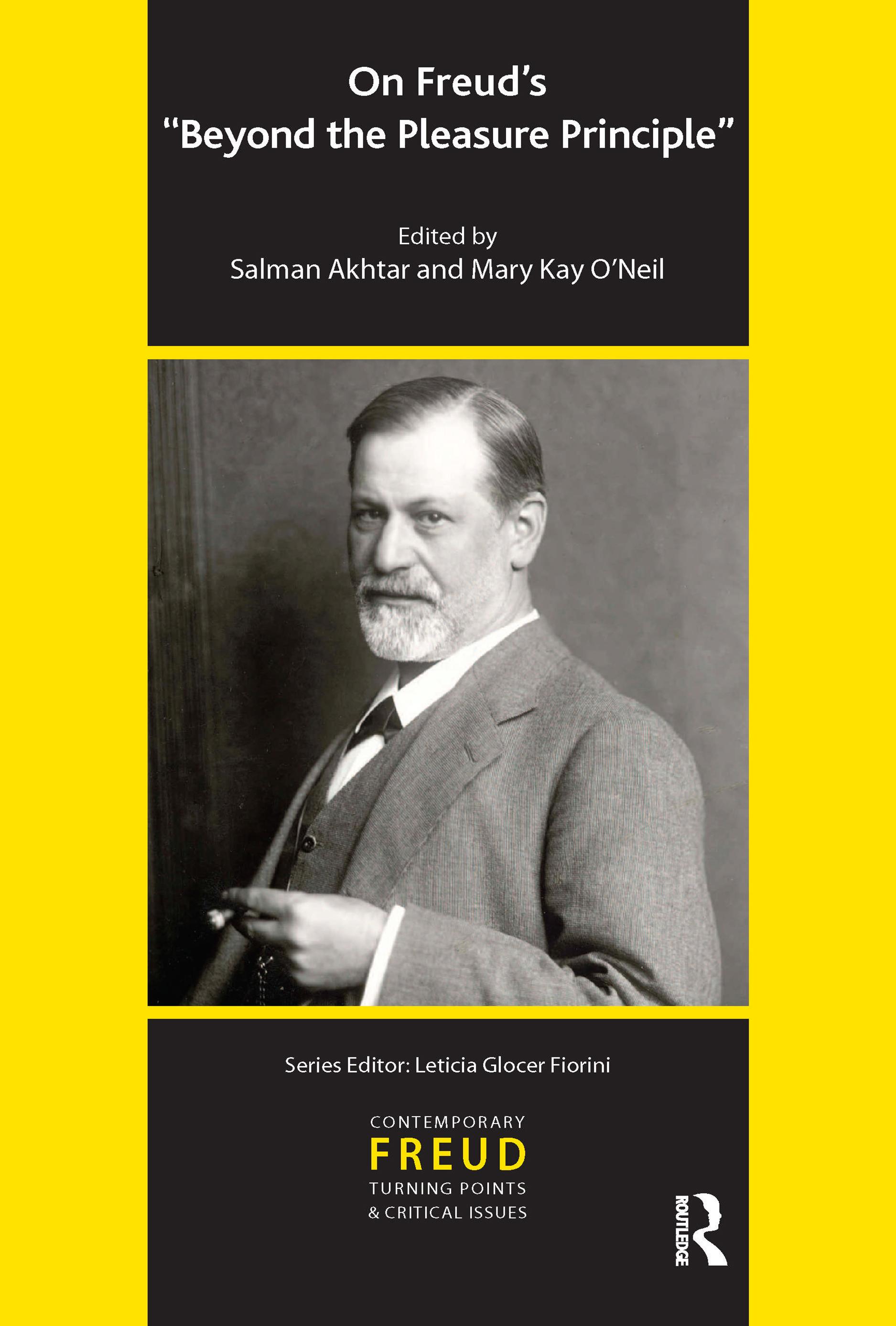
Freud's Beyond the Pleasure Principle constitutes a major landmark and a real turning point in the evolution of psychoanalytic theory. Pushing aside the primacy of the tension-discharge-gratification model of mental dynamics, this work introduced the notion of a "daemonic force" within all human beings that slowly but insistently seeks psychic inactivity, inertia, and death. Politely dismissed by some as a pseudo-biological speculation and rapturously espoused by others as a bold conceptual advance, "death instinct" became a stepping stone to the latter conceptualizations of mind's attacks on itself, negative narcissism, addiction to near-death, and the utter destruction of meaning in some clinical situations. The concept also served as a bridge between the quintessentially Western psychoanalysis and the Eastern perspectives on life and death. These diverse and rich connotations of the proposal are elucidated in On Freud's "Beyond the Pleasure Principle". Other consequences of Freud's 1920 paper - namely, the marginalization of ego instincts and the "upgrading" of aggression in the scheme of things - are also addressed.
Maksa helposti kortilla, Klarnalla, Apple Paylla tai Google Paylla. Etkö ole tyytyväinen? Sinulla on aina 14 päivän palautusoikeus. Lue lisää ehdoistamme. Jos sinulla on kysyttävää, lähetä meille sähköpostia osoitteeseen hello@memmo.org.
Memmo tekee opiskelusta helpompaa – missä päin maailmaa ikinä oletkin. Meillä yhdistät kurssikirjat ja fiksut opiskelutyökalut yhteen paikkaan: tiivistelmät, visat, podcastit ja muistikortit. Ja sitten Ted, opiskelukaverisi, joka vastaa kaikkeen, mitä ikinä mietitkin. Yli 50 000 opiskelijaa opiskelee jo täällä – rakennettu auttamaan sinua oppimaan nopeammin ja stressaamaan vähemmän.
Saatat pitää myös näistä
Osta kirja0