
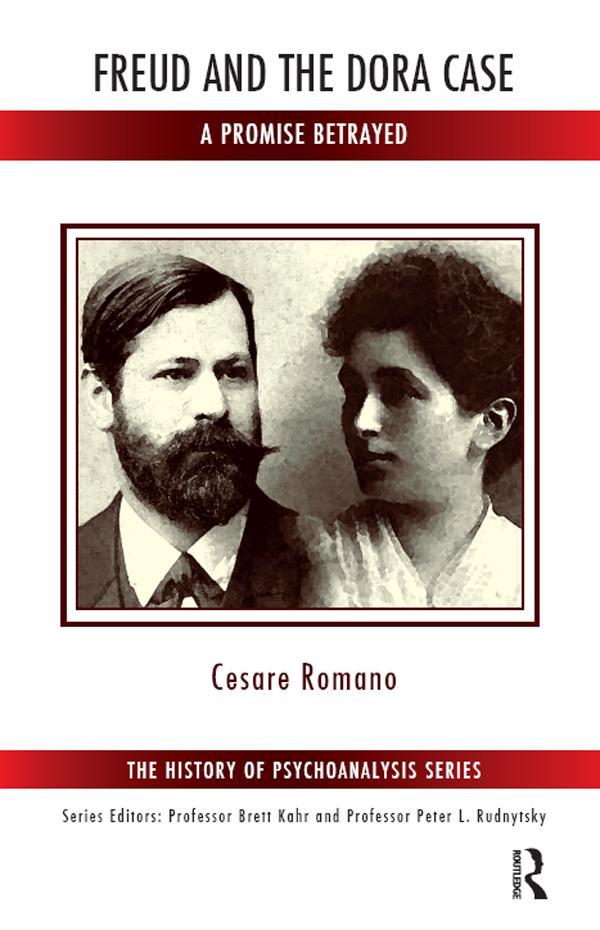
Cesare Romano revisits Dora's clinical case in light of Freud's own seduction theory. His central thesis is that Freud failed to follow through with his initial proposition of confirming his theories on the traumatic aetiology of hysteria. He also suggests a new dating for the duration of Dora's therapy, placing the beginning of the analysis within the context of Freud's concurrent and recent life events. A detailed analysis of Dora's first dream shows that Freud did not go back to Dora's first infantile traumas, but stopped instead at the period of her infantile masturbation. In analysing this dream, Romano's theory begins to take shape around the idea that Dora suffered an early trauma: possibly, a sexual abuse inflicted by her father. Drawing on Ferenczi, the author uses the notion of the 'traumatolytic function of the dream' to show that Dora, through her two dreams, was elaborating her early sexual trauma. Dora's analysis is investigated alongside what was happening in Freud's life at the time of the therapy.
Maksa helposti kortilla, Klarnalla, Apple Paylla tai Google Paylla. Etkö ole tyytyväinen? Sinulla on aina 14 päivän palautusoikeus. Lue lisää ehdoistamme. Jos sinulla on kysyttävää, lähetä meille sähköpostia osoitteeseen hello@memmo.org.
Memmo tekee opiskelusta helpompaa – missä päin maailmaa ikinä oletkin. Meillä yhdistät kurssikirjat ja fiksut opiskelutyökalut yhteen paikkaan: tiivistelmät, visat, podcastit ja muistikortit. Ja sitten Ted, opiskelukaverisi, joka vastaa kaikkeen, mitä ikinä mietitkin. Yli 50 000 opiskelijaa opiskelee jo täällä – rakennettu auttamaan sinua oppimaan nopeammin ja stressaamaan vähemmän.
Saatat pitää myös näistä
Osta kirja0