
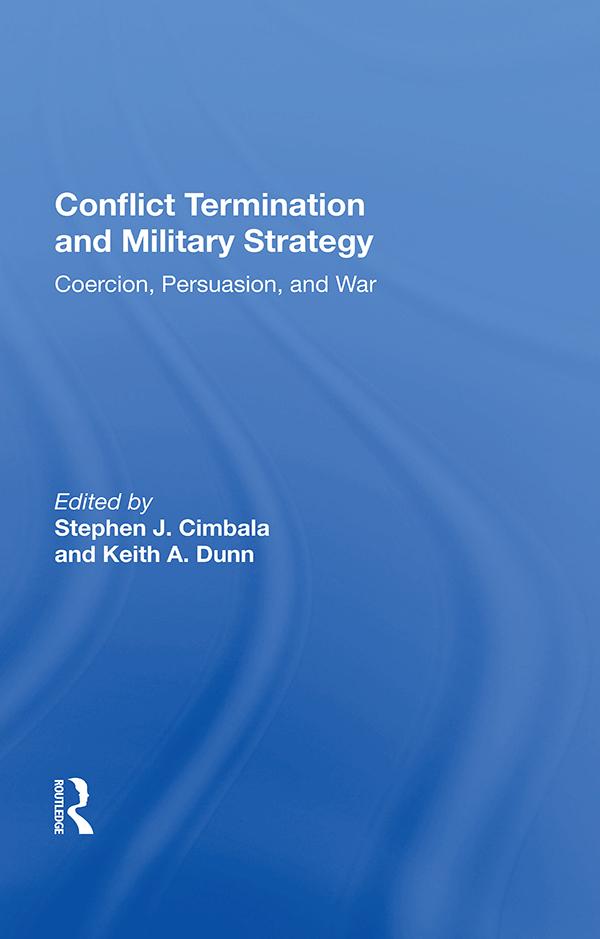
Although considerable attention has been paid to deterrence theory and crisis management, the equally important topic of ending wars has been virtually ignored. Conflict termination is the stepchild of U.S. strategy for a number of reasons. Thinking about how wars should end presupposes acceptance of the fact that war—especially nuclear war— is possible. Further, analyzing options for ending conflicts implies less-than-total victory, a concept that not only runs counter to the U.S. approach to warfare but also raises the specter of “limited war,†an approach that fell into disfavor following Korea and Vietnam. Finally, defining conflict termination objectives assumes that we think more about ends than means, that we know what is important to us and why, and thus understand the risks we will accept to defend specific interests and objectives. The contributors examine a wide variety of topics, ranging from Soviet and U.S. views on conflict termination to past, present, and future U.S. military service contributions. Their aim is to demonstrate the importance of careful evaluation of conflict termination goals during peacetime because when war begins passions and emotions will cloud decisionmaking.
Maksa helposti kortilla, Klarnalla, Apple Paylla tai Google Paylla. Etkö ole tyytyväinen? Sinulla on aina 14 päivän palautusoikeus. Lue lisää ehdoistamme. Jos sinulla on kysyttävää, lähetä meille sähköpostia osoitteeseen hello@memmo.org.
Memmo tekee opiskelusta helpompaa – missä päin maailmaa ikinä oletkin. Meillä yhdistät kurssikirjat ja fiksut opiskelutyökalut yhteen paikkaan: tiivistelmät, visat, podcastit ja muistikortit. Ja sitten Ted, opiskelukaverisi, joka vastaa kaikkeen, mitä ikinä mietitkin. Yli 50 000 opiskelijaa opiskelee jo täällä – rakennettu auttamaan sinua oppimaan nopeammin ja stressaamaan vähemmän.
Saatat pitää myös näistä
Osta kirja0