
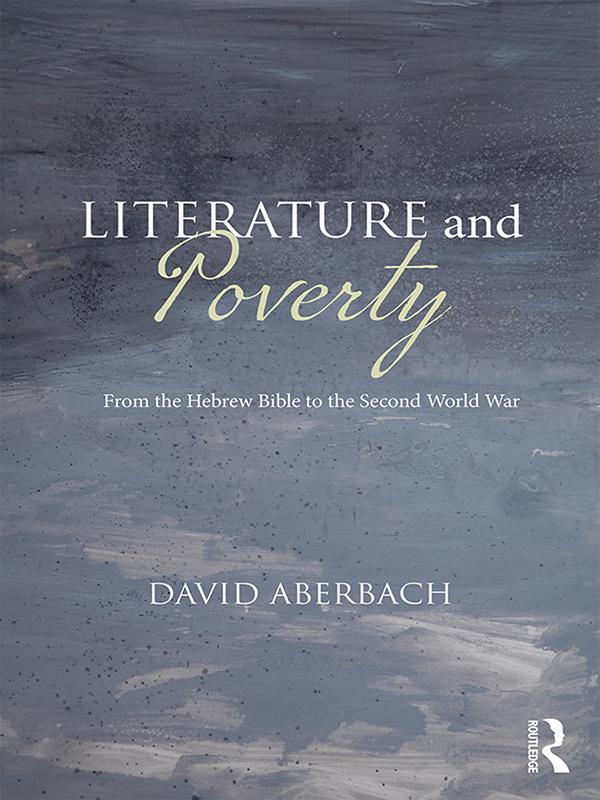
Literature and Poverty offers an engaging overview of changes in literary perceptions of poverty and the poor. Part I of the book, from the Hebrew Bible to the French Revolution, provides essential background information. It introduces the Scriptural ideal of the ‘holy poor’ and the process by which biblical love of the poor came to be contested and undermined in European legislation and public opinion as capitalism grew and the state took over from the Church; Part II, from the French Revolution to World War II, shows how post-1789 problems of industrialization, population growth, war, and urbanization came to dominate much European literature, as poverty and the poor became central concerns of major writers such as Dickens, Dostoyevsky, and Hugo.
David Aberbach uses literature – from the Bible, through Shakespeare, Wordsworth, Zola, Pushkin, and Orwell – to show how poverty changed from being an endemic and unavoidable fact of life, to a challenge for equality that might be attainable through a moral and rational society. As a literary and social history of poverty, this book argues for the vital importance of literature and the arts in understanding current problems in International Development.
Maksa helposti kortilla, Klarnalla, Apple Paylla tai Google Paylla. Etkö ole tyytyväinen? Sinulla on aina 14 päivän palautusoikeus. Lue lisää ehdoistamme. Jos sinulla on kysyttävää, lähetä meille sähköpostia osoitteeseen hello@memmo.org.
Memmo tekee opiskelusta helpompaa – missä päin maailmaa ikinä oletkin. Meillä yhdistät kurssikirjat ja fiksut opiskelutyökalut yhteen paikkaan: tiivistelmät, visat, podcastit ja muistikortit. Ja sitten Ted, opiskelukaverisi, joka vastaa kaikkeen, mitä ikinä mietitkin. Yli 50 000 opiskelijaa opiskelee jo täällä – rakennettu auttamaan sinua oppimaan nopeammin ja stressaamaan vähemmän.