
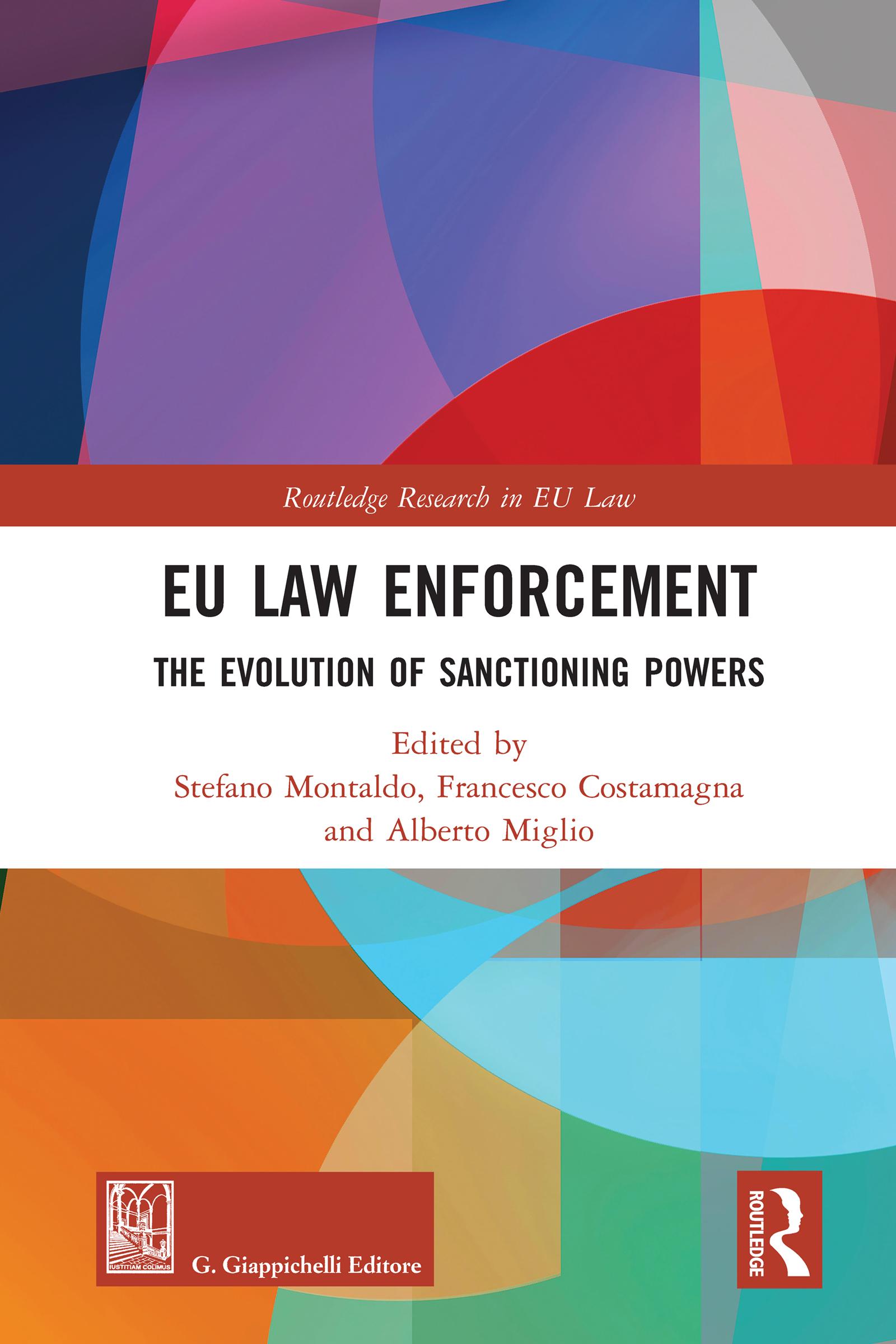
The existence of a structured enforcement system is an inherent feature of national legal orders and one of the core elements of State sovereignty. The very limited power to issue sanctions has often been deemed a gap in the EC legal order. Over the years, the situation has progressively changed. The Union’s institutional setting is growing in complexity and a variety of agencies has been or is expected to be endowed with law enforcement responsibilities. In addition, the so-called competence creep has led the EU to play an increasingly prominent role in several areas of EU law enforcement, including the issuing of sanctions.
This book examines these developments, focusing on both the general features of the EU legal order and the analysis of key-substantive areas, such as banking and monetary union, environmental law, and data protection. The work thus presents a general framework for understanding EU sanctioning based on structural features and general legal principles. Part I develops an analytical framework, tracking the most significant evolutive patterns of EU sanctioning powers. Part II adopts a more practical approach focusing on specific issues and policy areas. The book bridges a gap in existing literature and sheds new light on the relationship between the exercise of jus puniendi and the evolution of EU integration.
Maksa helposti kortilla, Klarnalla, Apple Paylla tai Google Paylla. Etkö ole tyytyväinen? Sinulla on aina 14 päivän palautusoikeus. Lue lisää ehdoistamme. Jos sinulla on kysyttävää, lähetä meille sähköpostia osoitteeseen hello@memmo.org.
Memmo tekee opiskelusta helpompaa – missä päin maailmaa ikinä oletkin. Meillä yhdistät kurssikirjat ja fiksut opiskelutyökalut yhteen paikkaan: tiivistelmät, visat, podcastit ja muistikortit. Ja sitten Ted, opiskelukaverisi, joka vastaa kaikkeen, mitä ikinä mietitkin. Yli 50 000 opiskelijaa opiskelee jo täällä – rakennettu auttamaan sinua oppimaan nopeammin ja stressaamaan vähemmän.