
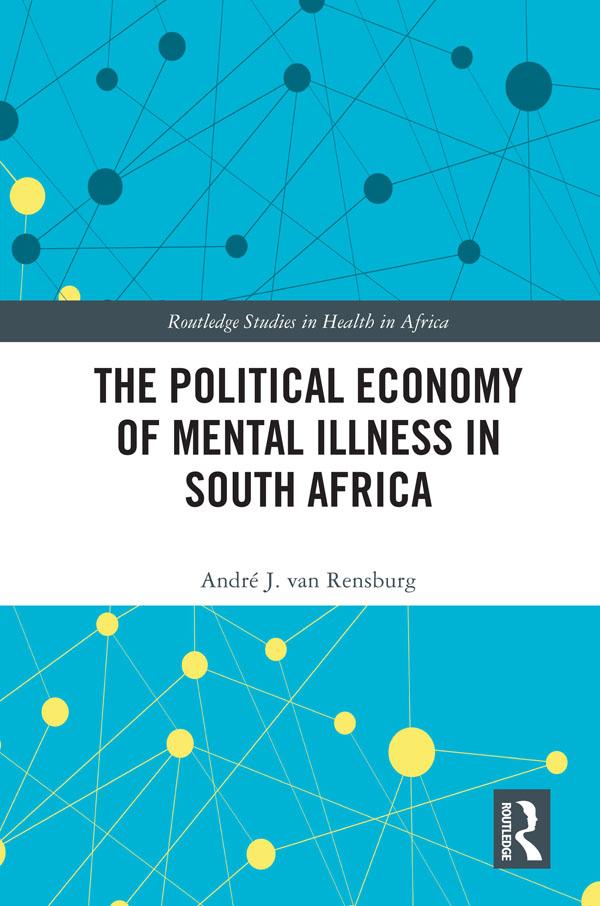
The book describes key socio-political reforms that helped shape post-apartheid South Africa’s mental health system.
The author interrogates how reforms shaped public, community-based services for people living with severe mental illness, and how features of this care has been determined, in part at least, by the relations between actors and structures in the state, private for-profit health care, and civil society spheres. A description of the development of South Africa’s post-apartheid health system, and the contentions that emerge therein, sets the stage for an analysis of the country’s most tragic human rights failure during its democratic period, namely the Life Esidimeni tragedy. The roots of the tragedy are not only framed as a loss of life and dignity as a result of political corruption and administrative mismanagement, but as a power differential that ultimately highlights an unjust system that relegates its most vulnerable citizens to commodities, without voice and without agency. The book concludes that the commodification of severe mental illness has been a product of neoliberal discourses that have shaped the economistic ways in which the post-apartheid South African state have governed poverty and severe mental illness.
This book will be of interest to scholars of health, social and economic policy in South Africa.
Maksa helposti kortilla, Klarnalla, Apple Paylla tai Google Paylla. Etkö ole tyytyväinen? Sinulla on aina 14 päivän palautusoikeus. Lue lisää ehdoistamme. Jos sinulla on kysyttävää, lähetä meille sähköpostia osoitteeseen hello@memmo.org.
Memmo tekee opiskelusta helpompaa – missä päin maailmaa ikinä oletkin. Meillä yhdistät kurssikirjat ja fiksut opiskelutyökalut yhteen paikkaan: tiivistelmät, visat, podcastit ja muistikortit. Ja sitten Ted, opiskelukaverisi, joka vastaa kaikkeen, mitä ikinä mietitkin. Yli 50 000 opiskelijaa opiskelee jo täällä – rakennettu auttamaan sinua oppimaan nopeammin ja stressaamaan vähemmän.