
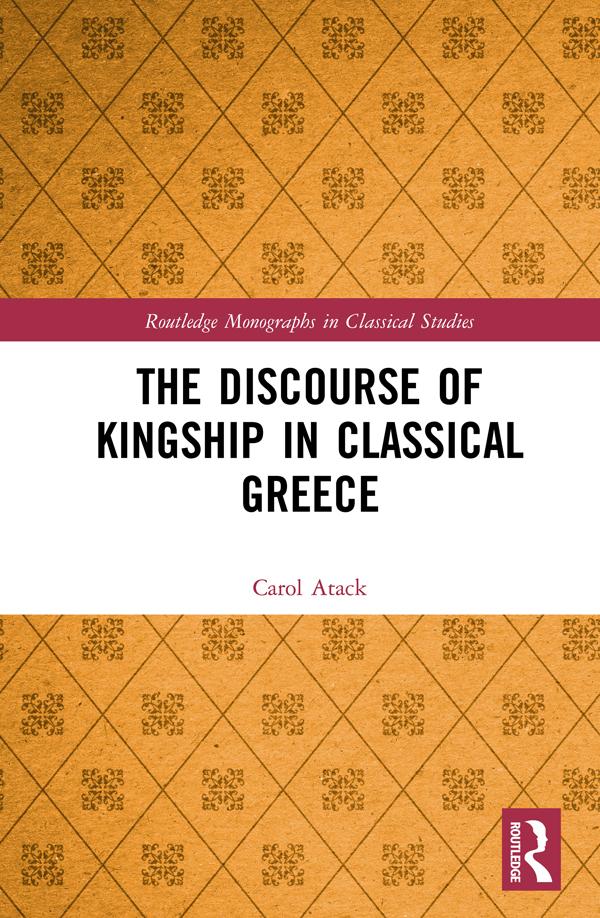
This book examines how ancient authors explored ideas of kingship as a political role fundamental to the construction of civic unity, the use of kingship stories to explain the past and present unity of the polis and the distinctive function or status attributed to kings in such accounts.
It explores the notion of kingship offered by historians such as Herodotus, as well as dramatists writing for the Athenian stage, paying particular attention to dramatic depictions of the unique capabilities of Theseus in uniting the city in the figure of the ‘democratic king’. It also discusses kingship in Greek philosophy: the Socratics’ identification of an ‘art of kingship’, and Xenophon and Isocrates’ model of ‘virtue monarchy’. In turn, these allow a rereading of explorations of kingship and excellence in Plato’s later political thought, seen as a critique of these models, and also in Aristotle’s account of total kingship or pambasileia, treated here as a counterfactual device developed to explore the epistemic benefits of democracy.
This book offers a fascinating insight into the institution of monarchy in classical Greek thought and society, both for those working on Greek philosophy and politics, and also for students of the history of political thought.
Maksa helposti kortilla, Klarnalla, Apple Paylla tai Google Paylla. Etkö ole tyytyväinen? Sinulla on aina 14 päivän palautusoikeus. Lue lisää ehdoistamme. Jos sinulla on kysyttävää, lähetä meille sähköpostia osoitteeseen hello@memmo.org.
Memmo tekee opiskelusta helpompaa – missä päin maailmaa ikinä oletkin. Meillä yhdistät kurssikirjat ja fiksut opiskelutyökalut yhteen paikkaan: tiivistelmät, visat, podcastit ja muistikortit. Ja sitten Ted, opiskelukaverisi, joka vastaa kaikkeen, mitä ikinä mietitkin. Yli 50 000 opiskelijaa opiskelee jo täällä – rakennettu auttamaan sinua oppimaan nopeammin ja stressaamaan vähemmän.