
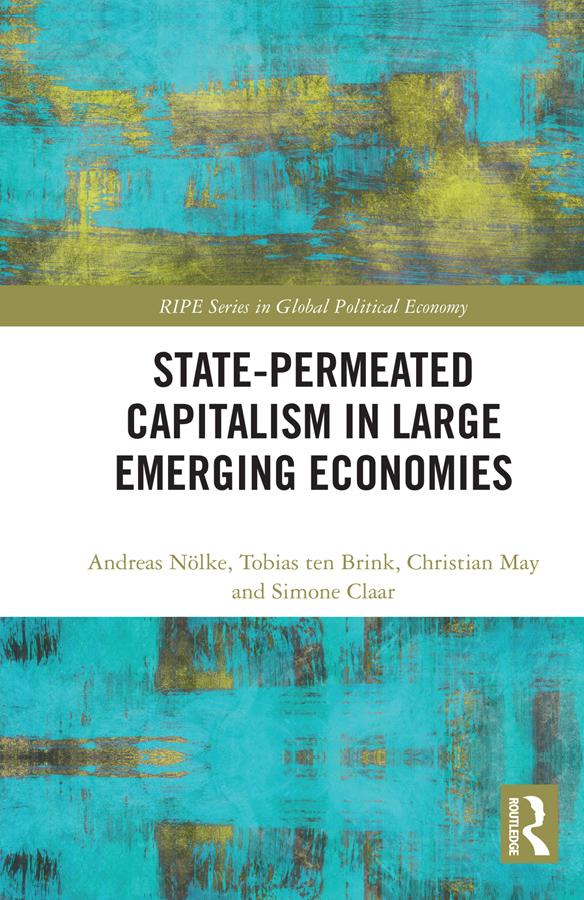
This book systematically analyzes the economic dynamics of large emerging economies from an extended Comparative Capitalisms perspective. Coining the phrase ‘state-permeated capitalism’, the authors shift the focus of research from economic policy alone, towards the real world of corporate and state behaviour.
On the basis of four empirical case studies (Brazil, India, China, South Africa), the main drivers for robust economic growth in these countries from the 2000s until the 2010s are revealed. These are found, in particular, in mutual institutional compatibilities of ‘state-permeated capitalism’, in their large domestic markets, and beneficial global economic constellations. Differences in their institutional arrangements are explored to explain why China and India have been more economically successful than Brazil and South Africa. The authors highlight substantial challenges for the stability of state-permeated capitalism and assess the potential future growth, sustainability and likely pitfalls for these large emerging economies.
Opening further avenues for empirical and theoretical research, this book raises questions for the future of the global economic order and should appeal to academics, graduate students and advanced undergraduates in politics, economics, economic sociology and development studies. It should also prove a worthwhile and provocative read for development practitioners and policy-makers.
Maksa helposti kortilla, Klarnalla, Apple Paylla tai Google Paylla. Etkö ole tyytyväinen? Sinulla on aina 14 päivän palautusoikeus. Lue lisää ehdoistamme. Jos sinulla on kysyttävää, lähetä meille sähköpostia osoitteeseen hello@memmo.org.
Memmo tekee opiskelusta helpompaa – missä päin maailmaa ikinä oletkin. Meillä yhdistät kurssikirjat ja fiksut opiskelutyökalut yhteen paikkaan: tiivistelmät, visat, podcastit ja muistikortit. Ja sitten Ted, opiskelukaverisi, joka vastaa kaikkeen, mitä ikinä mietitkin. Yli 50 000 opiskelijaa opiskelee jo täällä – rakennettu auttamaan sinua oppimaan nopeammin ja stressaamaan vähemmän.