
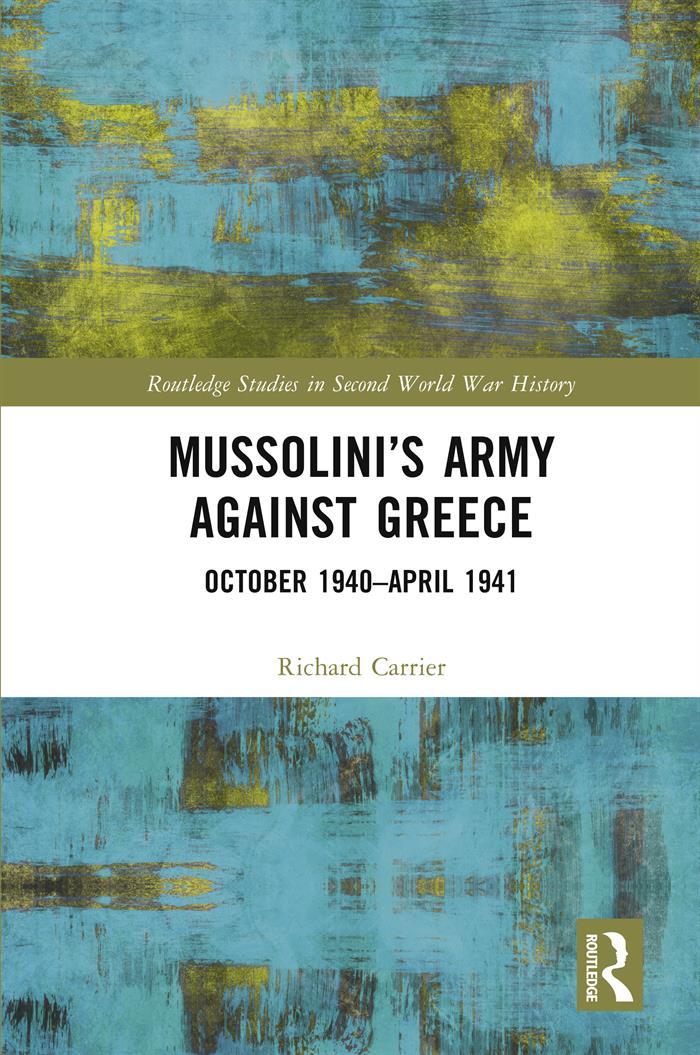
This book analyses why the Italian army failed to defeat its Greek opponent between October 1940 and April 1941. It thoroughly examines the multiple forms of ineffectiveness that plagued the political leadership as well as the military organisation.
Mussolini’s aggression of Greece ranks among the most neglected campaigns of the Second World War. Initiated on 28 October 1940, the offensive came to a halt less than ten days later; by mid-November, the Greek counter-offensive put the Italian armies on the defensive, and back in Albania. From then on, the fatal interaction between failing command structures, inadequate weapons and equipment, unprepared and unmotivated combatants, and terrible logistics lowered to a dangerous level the fighting power of Italian combatants. This essay proposes that compared to the North African and Russian campaigns where the Regio Esercito achieved a decent level of military effectiveness, the operation against Greece was a military fiasco. Only the courage of its soldiers and the German intervention saved the dictator’s army from complete disaster.
This book would appeal to anyone interested in the history of the world war, and to those involved in the study of military effectiveness and intrigued by why armies fail.
Maksa helposti kortilla, Klarnalla, Apple Paylla tai Google Paylla. Etkö ole tyytyväinen? Sinulla on aina 14 päivän palautusoikeus. Lue lisää ehdoistamme. Jos sinulla on kysyttävää, lähetä meille sähköpostia osoitteeseen hello@memmo.org.
Memmo tekee opiskelusta helpompaa – missä päin maailmaa ikinä oletkin. Meillä yhdistät kurssikirjat ja fiksut opiskelutyökalut yhteen paikkaan: tiivistelmät, visat, podcastit ja muistikortit. Ja sitten Ted, opiskelukaverisi, joka vastaa kaikkeen, mitä ikinä mietitkin. Yli 50 000 opiskelijaa opiskelee jo täällä – rakennettu auttamaan sinua oppimaan nopeammin ja stressaamaan vähemmän.