
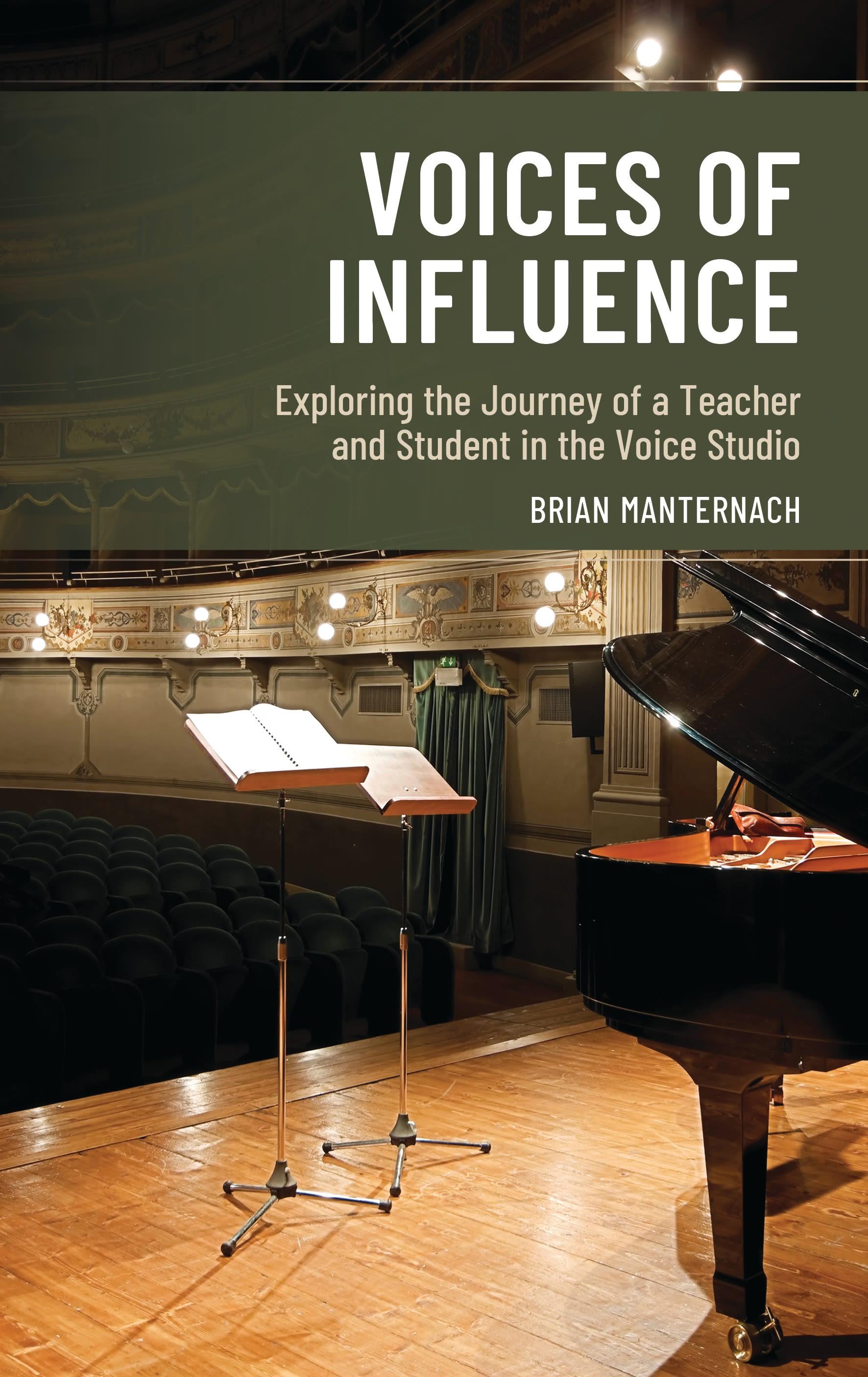
Brian Manternach examines the dynamic relationship of influence between teacher and student in the voice studio. Relating personal stories and formative experiences, the book is part pedagogical guide, part memoir, and part exploration of how vocal philosophies and practices evolve as they are passed from teacher to student.
Part One introduces readers to noted voice professor Robert J. Harrison, exploring biographical elements that have formed how he thinks, what he believes, and how that has informed his life as an artist and as a teacher. Part Two examines Harrison's teaching approaches, including tactics he used in the voice studio to address aspects of respiration, phonation, resonance, registration, and articulation. It also discusses how Harrison taught artistry, from how he defines his own musical tastes and sensibilities to how he taught communicative singing. Part Three presents the complicated idea of “legacy,” considering how we might remember teachers and their influence once their formal instruction has concluded. Manternach also considers how to contextualize the work of teachers from previous generations to fairly assess their contributions.
Along the way, Manternach describes how he has been influenced by Harrison now that he is a teacher himself. He outlines areas of pedagogical agreement as well as disagreement and indicates how-through the educational chain of succession-some of Harrison's practices are passed on practically verbatim while others have necessarily evolved in order to serve the current generation of students.
Part One introduces readers to noted voice professor Robert J. Harrison, exploring biographical elements that have formed how he thinks, what he believes, and how that has informed his life as an artist and as a teacher. Part Two examines Harrison's teaching approaches, including tactics he used in the voice studio to address aspects of respiration, phonation, resonance, registration, and articulation. It also discusses how Harrison taught artistry, from how he defines his own musical tastes and sensibilities to how he taught communicative singing. Part Three presents the complicated idea of “legacy,” considering how we might remember teachers and their influence once their formal instruction has concluded. Manternach also considers how to contextualize the work of teachers from previous generations to fairly assess their contributions.
Along the way, Manternach describes how he has been influenced by Harrison now that he is a teacher himself. He outlines areas of pedagogical agreement as well as disagreement and indicates how-through the educational chain of succession-some of Harrison's practices are passed on practically verbatim while others have necessarily evolved in order to serve the current generation of students.
Paga fácilmente con tarjeta, Klarna, Apple Pay o Google Pay. ¿No estás contento? Siempre tienes 14 días de garantía de devolución. Lee más en nuestros términos. Si tienes preguntas, escríbenos a hello@memmo.org.
Memmo hace que estudiar sea más fácil, estés donde estés. Aquí tienes tus libros de texto y herramientas de estudio inteligentes en un solo lugar: resúmenes, quizzes, podcasts y flashcards. Y también a Ted, tu compañero de estudio que responde a todo lo que te preguntes. Más de 50 000 estudiantes ya estudian aquí. Está hecho para que aprendas más rápido y te estreses menos.