
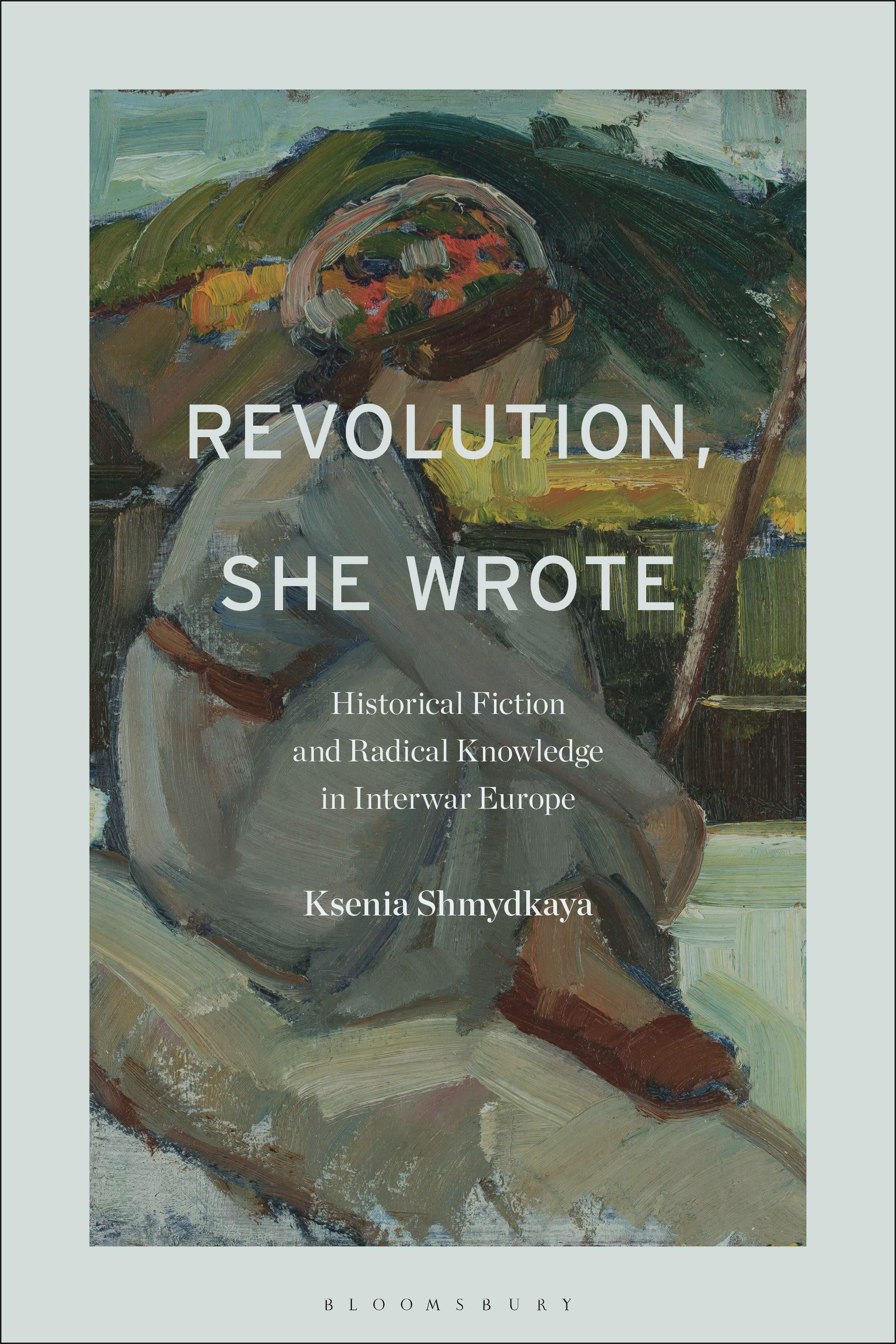
This intellectual and literary history explores the entanglement of historical imagination and left-wing politics in interwar Europe.
Contrary to the popular perception of historical continuity and revolutionary action as incompatible, the connections between the two phenomena prove to be as vital and productive as they are messy and complicated. Revolution, She Wrote offers a novel way of studying these phenomena by focussing on three cases from interwar Europe whence the revolutions and revolutionary figures of the past became the subject of historical fiction authored by women. It argues that these works, despite their fictional status, functioned as carriers of radical knowledge.
Stanislawa Przybyszewska (1901–1935) wrote plays about the French Revolution of 1789 that caused unexpected agitation in Poland's theatrical world and beyond. Sylvia Townsend Warner (1893–1978) made a transgressive contribution to the British Cultural Front with her novel set in 1848 Paris. And Olga Forsh (1873–1961) carved out her place among the cultural workers of the new Soviet state by writing histories of the Bolshevik revolution's ancestors. All three authors belonged on the left side of the political spectrum and remained at the periphery to the cultural markets and intellectual milieus in their countries. Their fictionalized revolutions are thus marked, on the one hand, by sympathy and engagement, and on the other, by their ex-centric positions.
Revolution, She Wrote demonstrates the dynamic entanglement of national and pan-European historical cultures, breaking with the defeatist perception of interwar left-wing intellectual activism to advance historical writing as a locus of hope and resistance.
Contrary to the popular perception of historical continuity and revolutionary action as incompatible, the connections between the two phenomena prove to be as vital and productive as they are messy and complicated. Revolution, She Wrote offers a novel way of studying these phenomena by focussing on three cases from interwar Europe whence the revolutions and revolutionary figures of the past became the subject of historical fiction authored by women. It argues that these works, despite their fictional status, functioned as carriers of radical knowledge.
Stanislawa Przybyszewska (1901–1935) wrote plays about the French Revolution of 1789 that caused unexpected agitation in Poland's theatrical world and beyond. Sylvia Townsend Warner (1893–1978) made a transgressive contribution to the British Cultural Front with her novel set in 1848 Paris. And Olga Forsh (1873–1961) carved out her place among the cultural workers of the new Soviet state by writing histories of the Bolshevik revolution's ancestors. All three authors belonged on the left side of the political spectrum and remained at the periphery to the cultural markets and intellectual milieus in their countries. Their fictionalized revolutions are thus marked, on the one hand, by sympathy and engagement, and on the other, by their ex-centric positions.
Revolution, She Wrote demonstrates the dynamic entanglement of national and pan-European historical cultures, breaking with the defeatist perception of interwar left-wing intellectual activism to advance historical writing as a locus of hope and resistance.
Páginas: 272
Categoría: Kultur-, Genus- & Postkoloniala studier
e-ISBN: 9798765133866
Peso de envío: 1.2 kg
Envío en: 1-2 días
Paga fácilmente con tarjeta, Klarna, Apple Pay o Google Pay. ¿No estás contento? Siempre tienes 14 días de garantía de devolución. Lee más en nuestros términos. Si tienes preguntas, escríbenos a hello@memmo.org.
Memmo hace que estudiar sea más fácil, estés donde estés. Aquí tienes tus libros de texto y herramientas de estudio inteligentes en un solo lugar: resúmenes, quizzes, podcasts y flashcards. Y también a Ted, tu compañero de estudio que responde a todo lo que te preguntes. Más de 50 000 estudiantes ya estudian aquí. Está hecho para que aprendas más rápido y te estreses menos.