
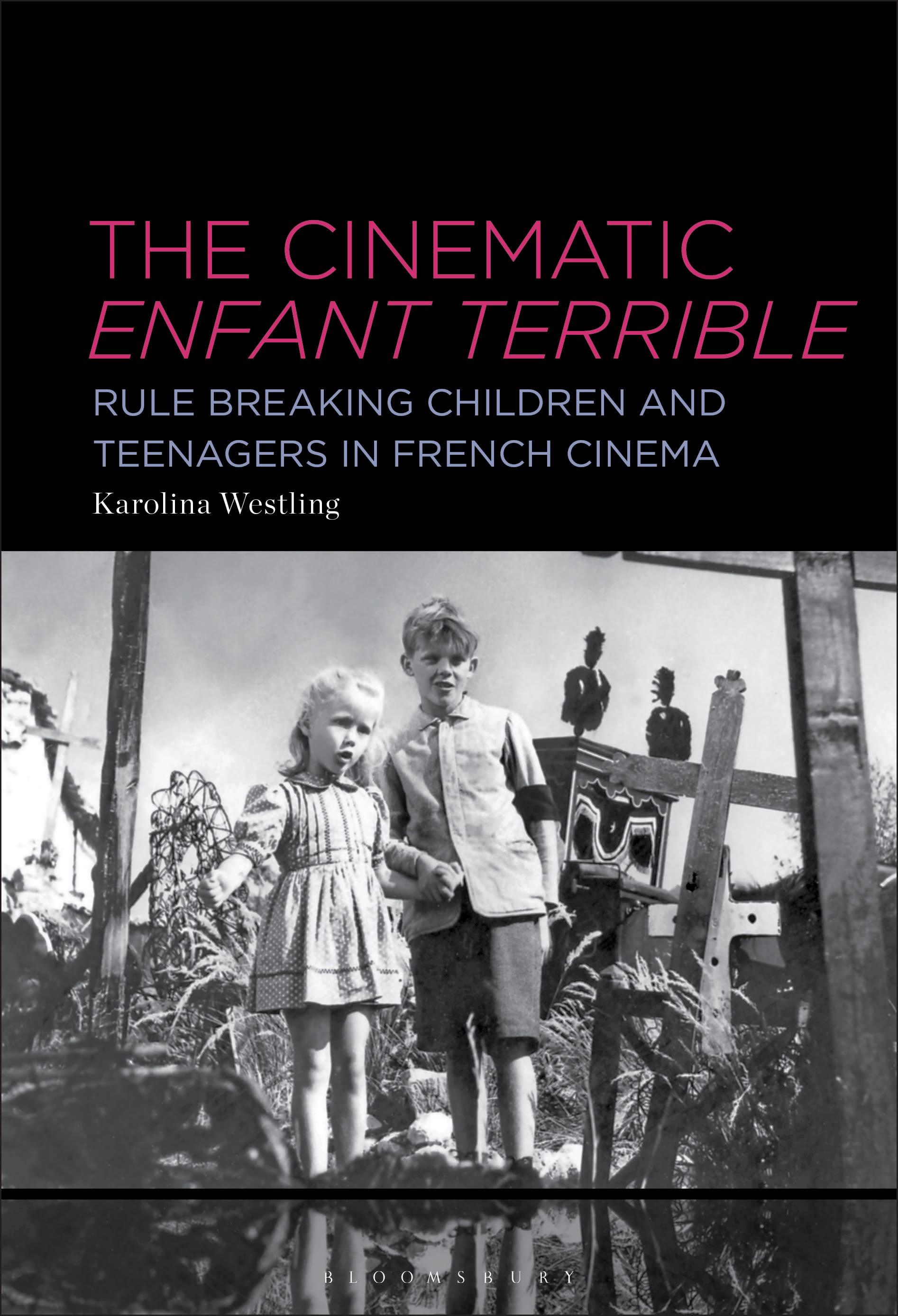
The Cinematic Enfant Terrible is a groundbreaking study of rule breakers in French cinema.
The book approaches the concept of the enfant terrible in the literal sense of the term – young people labelled 'terrible' (awful) by the adult generation. It explores a rich cinematic tradition from Jean Vigo's Zéro de conduite (1933) and François Truffaut's Les Quatre cents coups (1959), to Catherine Breillat's 36 fillette (1988) and Ladj Ly's Les Misérables (2019). The book encompasses the cinematic enfants terribles across age groups and genders, addressing the differences between unruly boys and rebellious teenage girls. The early post-war focus on juvenile delinquency and sexual provocations diversifies into filles fatales and angry girls, but also precarious boys and parents terribles.
The book charts the evolution of the enfant terrible concept from a negative label to a sympathetically-viewed figure of anti-authoritarian resistance, reflecting the changing position of children within the family in post-war France. The films address the ethical paradox of democratic upbringing – the dilemma of raising children to become obedient individuals with a mind of their own. The asymmetrical relationship between children and parents is seen as a tacit family contract that highlights the importance of an intergenerational perspective for the understanding of generational conflicts.
Rebellious children and teenagers on screen are seen in the light of wider social transformations. The book clarifies the interplay between individual protests and cultural currents such as existentialism, feminism and ethnic conflicts. This book will be of interest to scholars and students of French culture and cinema, childhood and youth studies, gender studies and cultural studies.
The book approaches the concept of the enfant terrible in the literal sense of the term – young people labelled 'terrible' (awful) by the adult generation. It explores a rich cinematic tradition from Jean Vigo's Zéro de conduite (1933) and François Truffaut's Les Quatre cents coups (1959), to Catherine Breillat's 36 fillette (1988) and Ladj Ly's Les Misérables (2019). The book encompasses the cinematic enfants terribles across age groups and genders, addressing the differences between unruly boys and rebellious teenage girls. The early post-war focus on juvenile delinquency and sexual provocations diversifies into filles fatales and angry girls, but also precarious boys and parents terribles.
The book charts the evolution of the enfant terrible concept from a negative label to a sympathetically-viewed figure of anti-authoritarian resistance, reflecting the changing position of children within the family in post-war France. The films address the ethical paradox of democratic upbringing – the dilemma of raising children to become obedient individuals with a mind of their own. The asymmetrical relationship between children and parents is seen as a tacit family contract that highlights the importance of an intergenerational perspective for the understanding of generational conflicts.
Rebellious children and teenagers on screen are seen in the light of wider social transformations. The book clarifies the interplay between individual protests and cultural currents such as existentialism, feminism and ethnic conflicts. This book will be of interest to scholars and students of French culture and cinema, childhood and youth studies, gender studies and cultural studies.
Páginas: 288
Categoría: Film- & Medievetenskap
e-ISBN: 9798765105443
Peso de envío: 1.2 kg
Envío en: 1-2 días
Paga fácilmente con tarjeta, Klarna, Apple Pay o Google Pay. ¿No estás contento? Siempre tienes 14 días de garantía de devolución. Lee más en nuestros términos. Si tienes preguntas, escríbenos a hello@memmo.org.
Memmo hace que estudiar sea más fácil, estés donde estés. Aquí tienes tus libros de texto y herramientas de estudio inteligentes en un solo lugar: resúmenes, quizzes, podcasts y flashcards. Y también a Ted, tu compañero de estudio que responde a todo lo que te preguntes. Más de 50 000 estudiantes ya estudian aquí. Está hecho para que aprendas más rápido y te estreses menos.