
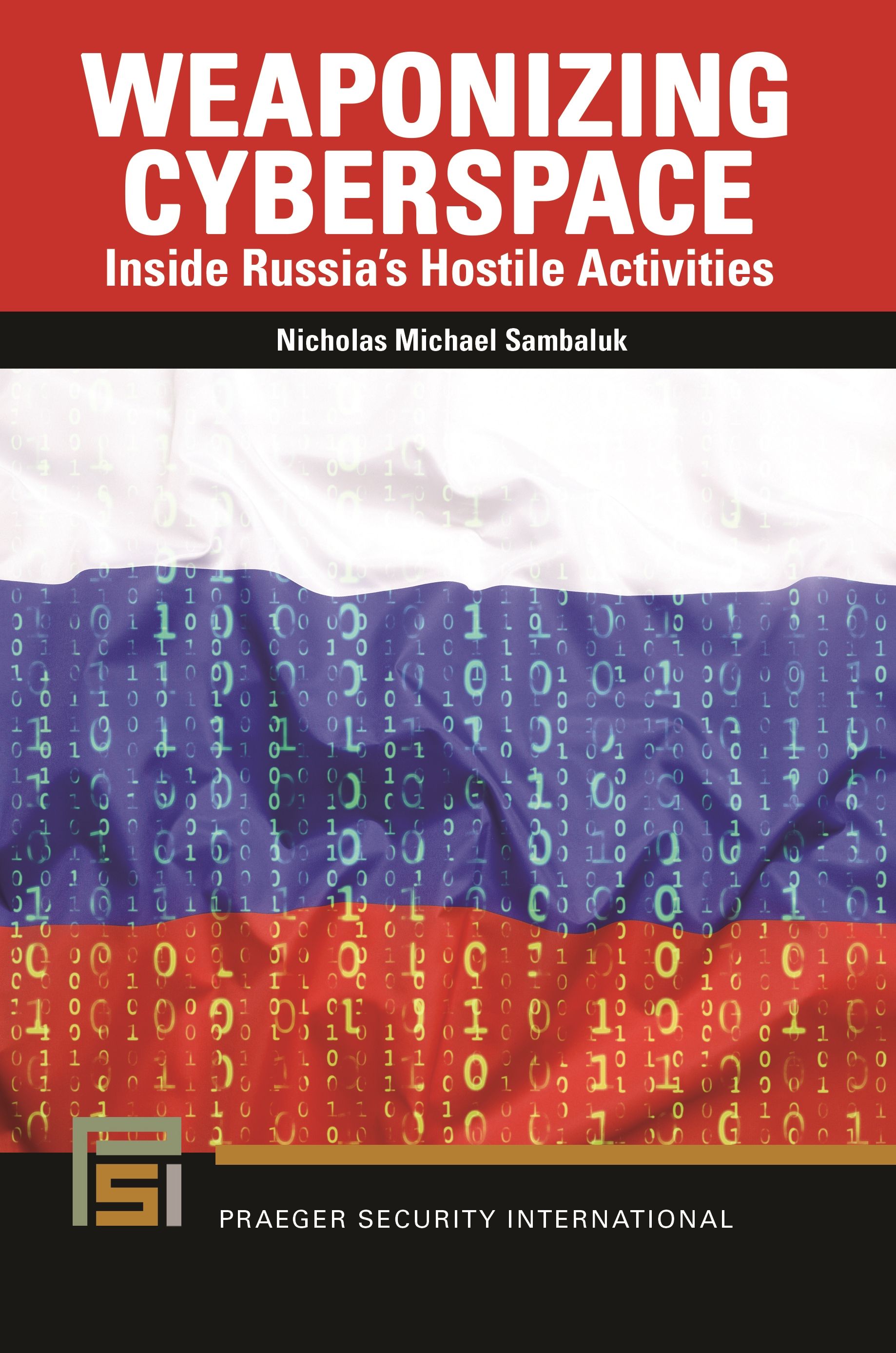
The Russian regime's struggle for internal control drives multifaceted actions in cyberspace that do not stop at national borders. Cybercrime, technical hacking, and disinformation are complementary tools to preserve national power internally while projecting effects onto myriad neighbors and rivals.
Russian activity in the cyber domain is infamous in the United States and other Western countries. Weaponizing Cyberspace explores the Russian proclivity, particularly in the 21st century, for using cyberspace as an environment in which to launch technical attacks and disinformation campaigns that sow chaos and distraction in ways that provide short-term advantage to autocrats in the Kremlin.
Arguing that Russia's goal is to divide people, Sambaluk explains that Russia's modus operandi in disinformation campaigning is specifically to find and exploit existing sore spots in other countries. In the U.S., this often means inflaming political tensions among people on the far left and far right. Russia's actions have taken different forms, including the sophisticated surveillance and sabotage of critical infrastructure, the ransoming of data by criminal groups, and a welter of often mutually contradictory disinformation messages that pollute online discourse within and beyond Russia. Whether deployed to contribute to hybrid war or to psychological fracture and disillusionment in targeted societies, the threat is real and must be understood and effectively addressed.
Russian activity in the cyber domain is infamous in the United States and other Western countries. Weaponizing Cyberspace explores the Russian proclivity, particularly in the 21st century, for using cyberspace as an environment in which to launch technical attacks and disinformation campaigns that sow chaos and distraction in ways that provide short-term advantage to autocrats in the Kremlin.
Arguing that Russia's goal is to divide people, Sambaluk explains that Russia's modus operandi in disinformation campaigning is specifically to find and exploit existing sore spots in other countries. In the U.S., this often means inflaming political tensions among people on the far left and far right. Russia's actions have taken different forms, including the sophisticated surveillance and sabotage of critical infrastructure, the ransoming of data by criminal groups, and a welter of often mutually contradictory disinformation messages that pollute online discourse within and beyond Russia. Whether deployed to contribute to hybrid war or to psychological fracture and disillusionment in targeted societies, the threat is real and must be understood and effectively addressed.
Paga fácilmente con tarjeta, Klarna, Apple Pay o Google Pay. ¿No estás contento? Siempre tienes 14 días de garantía de devolución. Lee más en nuestros términos. Si tienes preguntas, escríbenos a hello@memmo.org.
Memmo hace que estudiar sea más fácil, estés donde estés. Aquí tienes tus libros de texto y herramientas de estudio inteligentes en un solo lugar: resúmenes, quizzes, podcasts y flashcards. Y también a Ted, tu compañero de estudio que responde a todo lo que te preguntes. Más de 50 000 estudiantes ya estudian aquí. Está hecho para que aprendas más rápido y te estreses menos.