
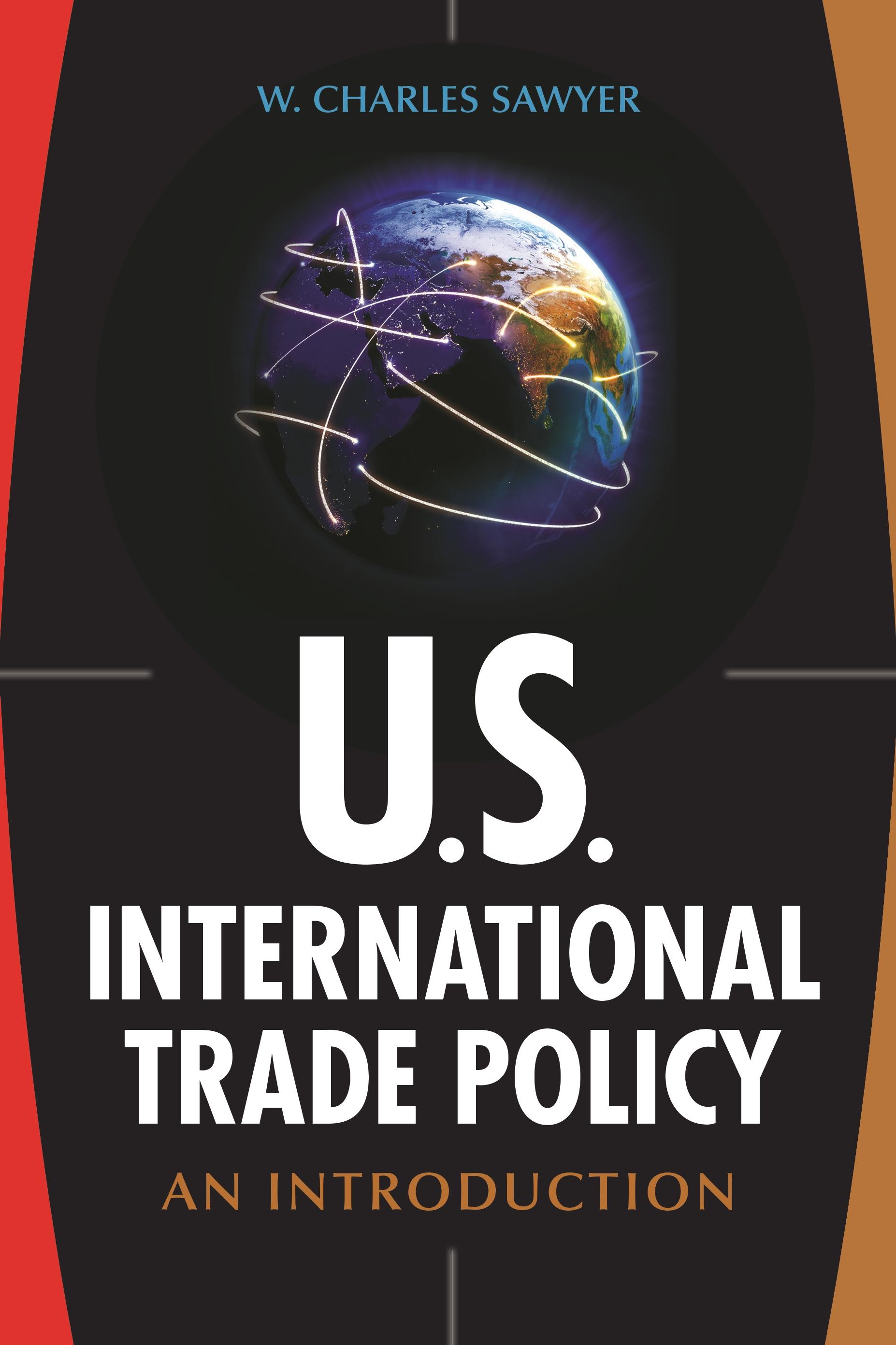
To understand trade policy, one needs to understand the basics of international economics. This book provides nonspecialists with accessible explanations of international trade, enabling readers to appreciate the importance of current events in international trade policy.
Due to the ever-increasing globalization of the U.S. economy, articles that involve international trade policy—both here and abroad—are increasingly common in publications such as The New York Times, The Wall Street Journal, and The Economist. In many cases, it is apparent that the authors of such articles lack a sound understanding of the basics of international trade policy. Similarly, many nonspecialist readers do not have the necessary background to grasp the meaning of current events in international economics. This book serves both writers and readers, providing concise, easy-to-understand overviews of the key topics necessary for journalists to write understandable articles on trade policy and for readers to understand what they are reading.
The book begins with coverage of the basic framework of international economics that readers need to grasp in order to understand trade policy. The next two sections cover the tools of trade policy and the political factors that drive their use. The author discusses the history of trade policy, describes how it has evolved over time, and explains where it is headed in the future. Readers will come away with a working understanding of topics such as balance of payments, the current account, comparative advantage, government export subsidies, the World Trade Organization (WTO), the Doha Round, the North American Free Trade Agreement (NAFTA), the European Union (EU), and the U.S. Trade Representative.
Due to the ever-increasing globalization of the U.S. economy, articles that involve international trade policy—both here and abroad—are increasingly common in publications such as The New York Times, The Wall Street Journal, and The Economist. In many cases, it is apparent that the authors of such articles lack a sound understanding of the basics of international trade policy. Similarly, many nonspecialist readers do not have the necessary background to grasp the meaning of current events in international economics. This book serves both writers and readers, providing concise, easy-to-understand overviews of the key topics necessary for journalists to write understandable articles on trade policy and for readers to understand what they are reading.
The book begins with coverage of the basic framework of international economics that readers need to grasp in order to understand trade policy. The next two sections cover the tools of trade policy and the political factors that drive their use. The author discusses the history of trade policy, describes how it has evolved over time, and explains where it is headed in the future. Readers will come away with a working understanding of topics such as balance of payments, the current account, comparative advantage, government export subsidies, the World Trade Organization (WTO), the Doha Round, the North American Free Trade Agreement (NAFTA), the European Union (EU), and the U.S. Trade Representative.
Páginas: 272
Categoría: Ekonomi & Utveckling
e-ISBN: 9798216158417
Peso de envío: 1.2 kg
Envío en: 1-2 días
Paga fácilmente con tarjeta, Klarna, Apple Pay o Google Pay. ¿No estás contento? Siempre tienes 14 días de garantía de devolución. Lee más en nuestros términos. Si tienes preguntas, escríbenos a hello@memmo.org.
Memmo hace que estudiar sea más fácil, estés donde estés. Aquí tienes tus libros de texto y herramientas de estudio inteligentes en un solo lugar: resúmenes, quizzes, podcasts y flashcards. Y también a Ted, tu compañero de estudio que responde a todo lo que te preguntes. Más de 50 000 estudiantes ya estudian aquí. Está hecho para que aprendas más rápido y te estreses menos.