
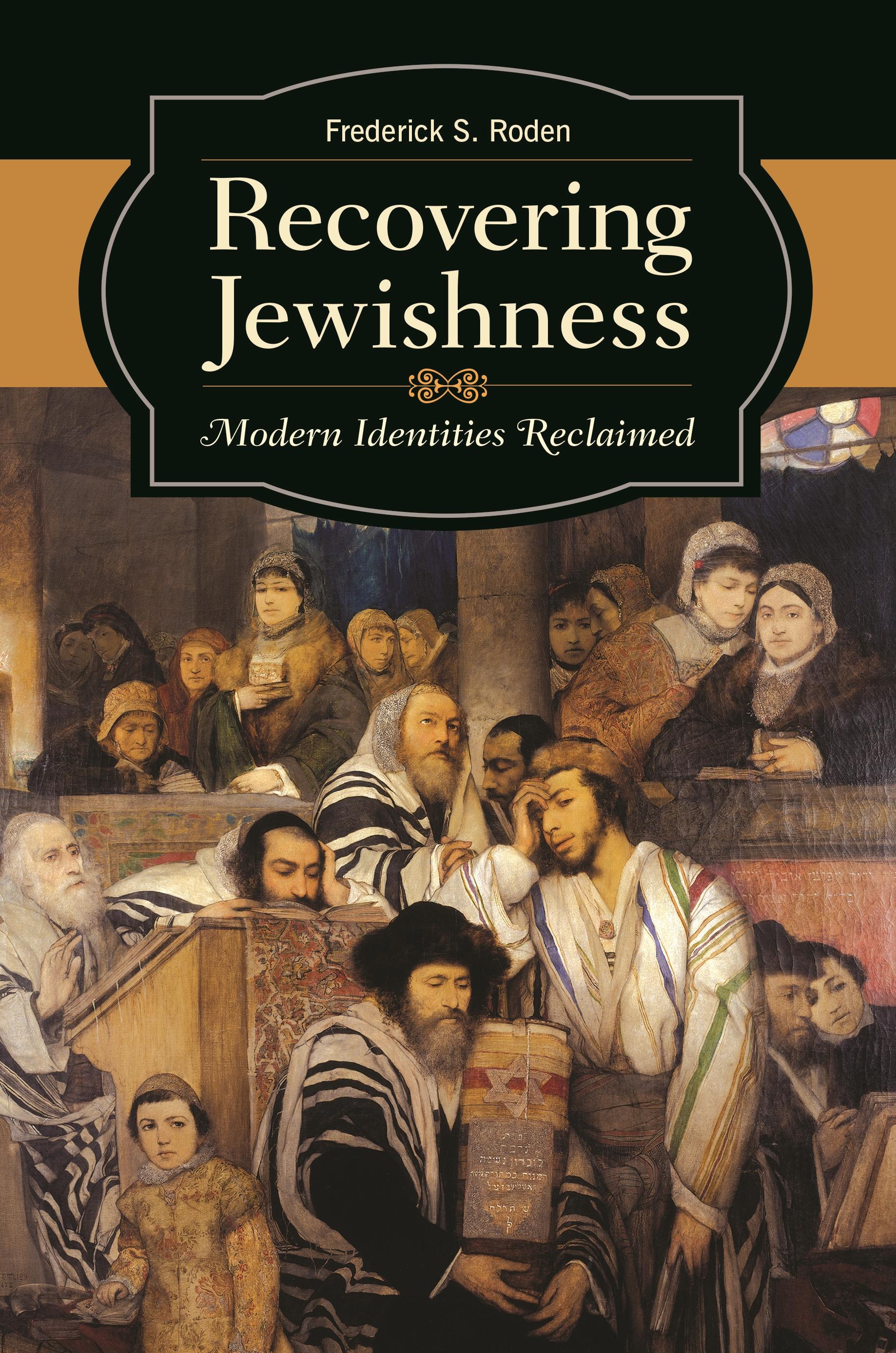
Judaism and Jewish life reflect a diversity of identity after the past two centuries of modernization. This work examines how the early reformers of the 19th century and their legacy into the 20th century created a livable, liberal Jewish identity that allowed a reinvention of what it meant to be Jewish—a process that continues today.
Many scholars of the modern Jewish identity focus on the ways in which the past two centuries have resulted in the loss of Jewishness: through "assimilation," intermarriage, conversion to other faiths, genocide (in the Holocaust), and decline in religious observance. In this work, author Frederick S. Roden presents a decidedly different perspective: that the changes in Judaism throughout the 19th and 20th centuries resulted in a malleable, welcoming, and expanded Jewish identity—one that has benefited from intermarriage and converts to Judaism.
The book examines key issues in the modern definition of Jewish identity: who is and is not considered a Jew, and why; issues of Jewish "authenticity"; and the recent history of the debate. Attention is paid to the experiences of individuals who came to Judaism from outside the tradition: through marrying into Jewish families and/or choosing Judaism as a religion. In his consideration of the tragedy of the Holocaust, the author examines how a totalitarian regime's racial policing of Jewish identity served to awaken a connection with and reconfiguration of what that Jewish identity meant for those who retrospectively realized their Jewishness in the postwar era.
Many scholars of the modern Jewish identity focus on the ways in which the past two centuries have resulted in the loss of Jewishness: through "assimilation," intermarriage, conversion to other faiths, genocide (in the Holocaust), and decline in religious observance. In this work, author Frederick S. Roden presents a decidedly different perspective: that the changes in Judaism throughout the 19th and 20th centuries resulted in a malleable, welcoming, and expanded Jewish identity—one that has benefited from intermarriage and converts to Judaism.
The book examines key issues in the modern definition of Jewish identity: who is and is not considered a Jew, and why; issues of Jewish "authenticity"; and the recent history of the debate. Attention is paid to the experiences of individuals who came to Judaism from outside the tradition: through marrying into Jewish families and/or choosing Judaism as a religion. In his consideration of the tragedy of the Holocaust, the author examines how a totalitarian regime's racial policing of Jewish identity served to awaken a connection with and reconfiguration of what that Jewish identity meant for those who retrospectively realized their Jewishness in the postwar era.
Paga fácilmente con tarjeta, Klarna, Apple Pay o Google Pay. ¿No estás contento? Siempre tienes 14 días de garantía de devolución. Lee más en nuestros términos. Si tienes preguntas, escríbenos a hello@memmo.org.
Memmo hace que estudiar sea más fácil, estés donde estés. Aquí tienes tus libros de texto y herramientas de estudio inteligentes en un solo lugar: resúmenes, quizzes, podcasts y flashcards. Y también a Ted, tu compañero de estudio que responde a todo lo que te preguntes. Más de 50 000 estudiantes ya estudian aquí. Está hecho para que aprendas más rápido y te estreses menos.