
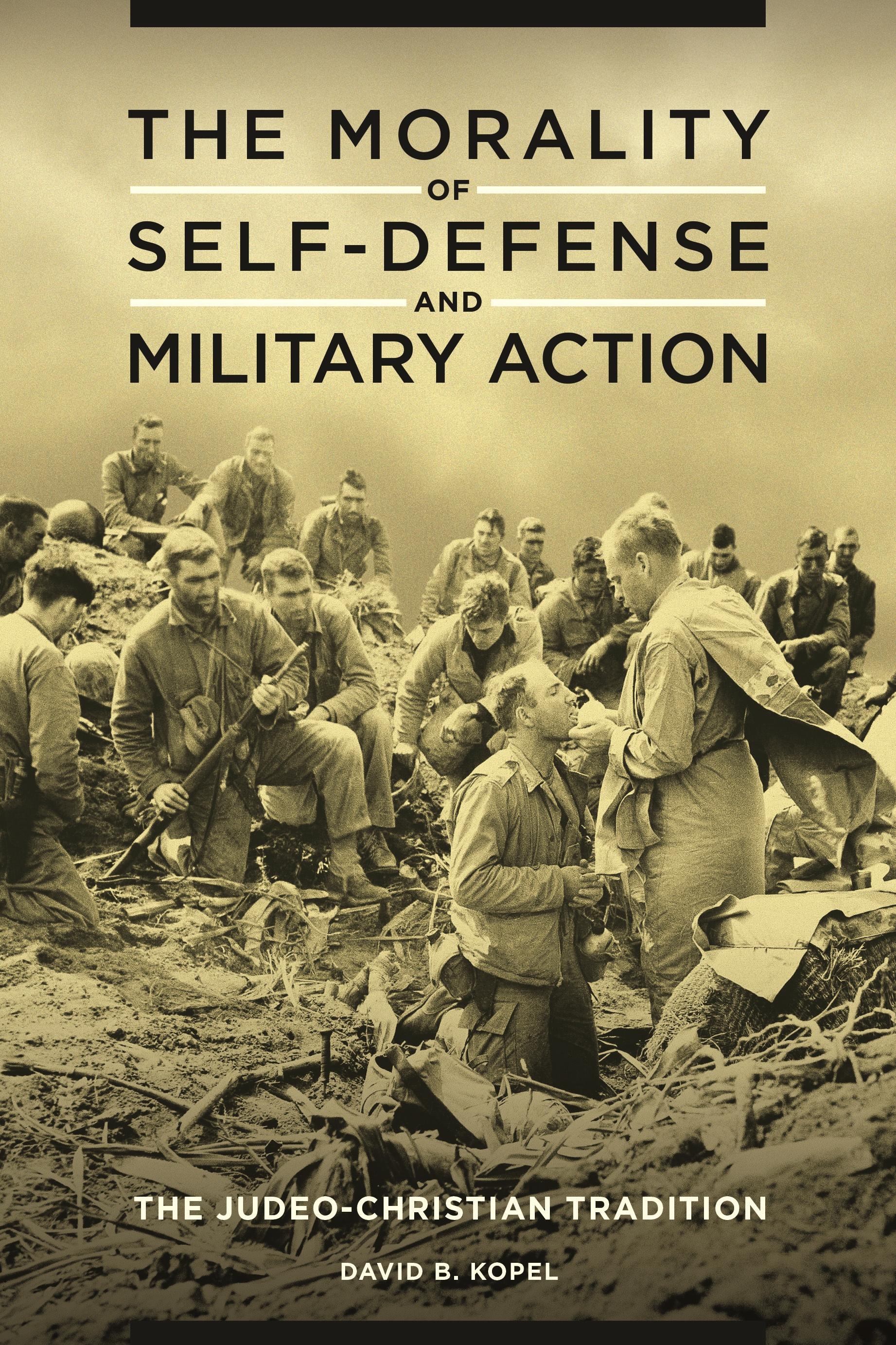
Shedding new light on a controversial and intriguing issue, this book will reshape the debate on how the Judeo-Christian tradition views the morality of personal and national self-defense.
Are self-defense, national warfare, and revolts against tyranny holy duties—or violations of God's will? Pacifists insist these actions are the latter, forbidden by Judeo-Christian morality. This book maintains that the pacifists are wrong. To make his case, the author analyzes the full sweep of Judeo-Christian history from earliest times to the present, combining history, scriptural analysis, and philosophy to describe the changes and continuity of Jewish and Christian doctrine about the use of lethal force. He reveals the shifting patterns of thought in both religions and presents the strongest arguments on both sides of the issue.
The book begins with the ancient Hebrews and Genesis and covers Jewish history through the Holocaust and beyond. The analysis then shifts to the story of Christianity from its origins, through the Middle Ages and the Reformation, up the present day. Based on this scrutiny, the author concludes that—contrary to popular belief—the legitimacy of self-defense is strongly supported by Judeo-Christian scripture and commentary, by philosophical analysis, and by the respect for human dignity and human rights on which both Judaism and Christianity are based.
Are self-defense, national warfare, and revolts against tyranny holy duties—or violations of God's will? Pacifists insist these actions are the latter, forbidden by Judeo-Christian morality. This book maintains that the pacifists are wrong. To make his case, the author analyzes the full sweep of Judeo-Christian history from earliest times to the present, combining history, scriptural analysis, and philosophy to describe the changes and continuity of Jewish and Christian doctrine about the use of lethal force. He reveals the shifting patterns of thought in both religions and presents the strongest arguments on both sides of the issue.
The book begins with the ancient Hebrews and Genesis and covers Jewish history through the Holocaust and beyond. The analysis then shifts to the story of Christianity from its origins, through the Middle Ages and the Reformation, up the present day. Based on this scrutiny, the author concludes that—contrary to popular belief—the legitimacy of self-defense is strongly supported by Judeo-Christian scripture and commentary, by philosophical analysis, and by the respect for human dignity and human rights on which both Judaism and Christianity are based.
Paga fácilmente con tarjeta, Klarna, Apple Pay o Google Pay. ¿No estás contento? Siempre tienes 14 días de garantía de devolución. Lee más en nuestros términos. Si tienes preguntas, escríbenos a hello@memmo.org.
Memmo hace que estudiar sea más fácil, estés donde estés. Aquí tienes tus libros de texto y herramientas de estudio inteligentes en un solo lugar: resúmenes, quizzes, podcasts y flashcards. Y también a Ted, tu compañero de estudio que responde a todo lo que te preguntes. Más de 50 000 estudiantes ya estudian aquí. Está hecho para que aprendas más rápido y te estreses menos.