
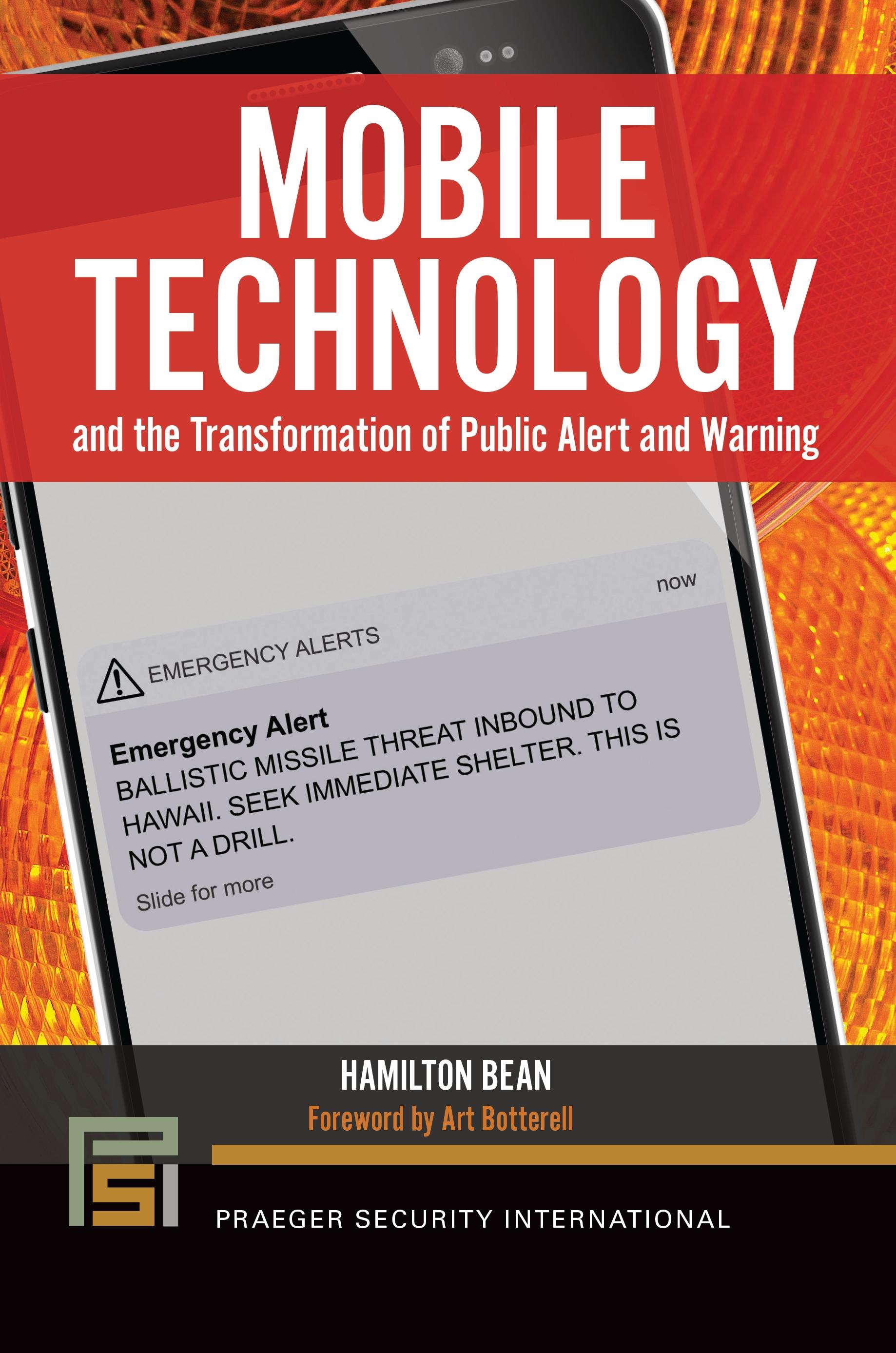
This timely book provides the inside story of the development of mobile public alert and warning technology in the United States and addresses similar systems being used in Australia, Canada, Japan, and the Netherlands.
This book provides a comprehensive account of how mobile-smartphone systems are transforming the practice of public alert and warning in the United States. Recent events have vaulted mobile alert and warning technology to the forefront of public debates concerning the hazards of the digital age. False alarms of ballistic missile attacks on Hawaii and Japan, the non-use of mobile alerts during the Northern California wildfires, and the role this technology plays in supporting police manhunts and counterterrorism efforts have prompted reconsideration of how these systems are used.
Drawing upon interviews with officials, executives, experts, and citizens, the book provides an in-depth analysis of the events and contexts influencing the trajectory of mobile public alert and warning and charts a course for its improvement. The book first introduces readers to the high stakes involved in the transformation of public alert and warning, explaining how new research is revealing the benefits, limitations, and risks of mobile technology in the disaster communication context. Three case studies then illustrate issues of risk, trust, and appropriateness in mobile public alert and warning.
This book provides a comprehensive account of how mobile-smartphone systems are transforming the practice of public alert and warning in the United States. Recent events have vaulted mobile alert and warning technology to the forefront of public debates concerning the hazards of the digital age. False alarms of ballistic missile attacks on Hawaii and Japan, the non-use of mobile alerts during the Northern California wildfires, and the role this technology plays in supporting police manhunts and counterterrorism efforts have prompted reconsideration of how these systems are used.
Drawing upon interviews with officials, executives, experts, and citizens, the book provides an in-depth analysis of the events and contexts influencing the trajectory of mobile public alert and warning and charts a course for its improvement. The book first introduces readers to the high stakes involved in the transformation of public alert and warning, explaining how new research is revealing the benefits, limitations, and risks of mobile technology in the disaster communication context. Three case studies then illustrate issues of risk, trust, and appropriateness in mobile public alert and warning.
Paga fácilmente con tarjeta, Klarna, Apple Pay o Google Pay. ¿No estás contento? Siempre tienes 14 días de garantía de devolución. Lee más en nuestros términos. Si tienes preguntas, escríbenos a hello@memmo.org.
Memmo hace que estudiar sea más fácil, estés donde estés. Aquí tienes tus libros de texto y herramientas de estudio inteligentes en un solo lugar: resúmenes, quizzes, podcasts y flashcards. Y también a Ted, tu compañero de estudio que responde a todo lo que te preguntes. Más de 50 000 estudiantes ya estudian aquí. Está hecho para que aprendas más rápido y te estreses menos.