
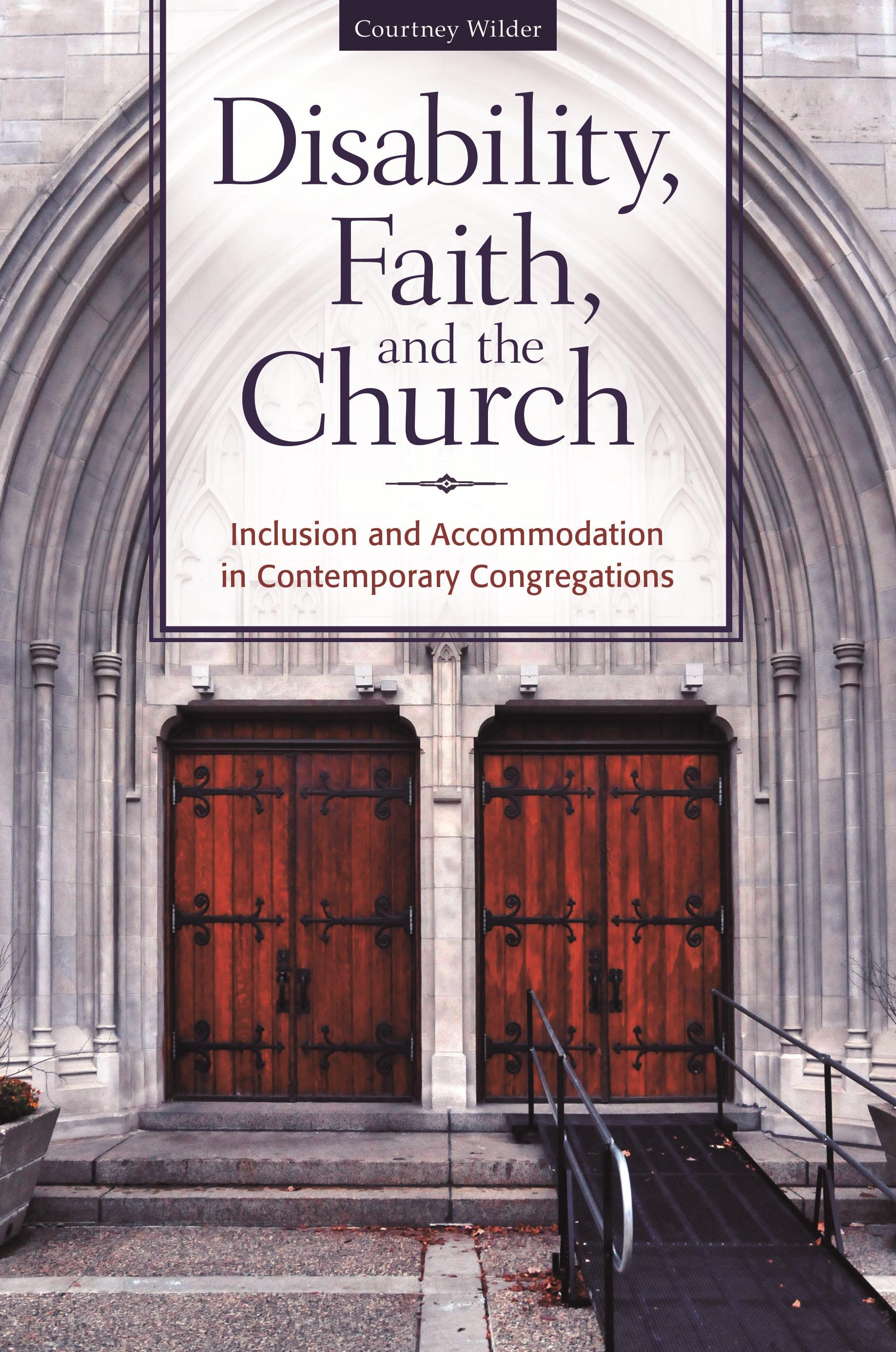
Including both theoretical discussions and practical information for congregational use or pastoral use, this rich, accessible book explores biblical text, historical and theological issues of disability, and examples of successful ministry by people with disabilities.
Disability, Faith, and the Church: Inclusion and Accommodation in Contemporary Congregations draws from a range of Christian theologians, denominational statements, writings of people with disabilities, and experiences of successful ministries for people with disabilities to answer the deep need of many Christian communities: to live out their calling by welcoming all people. By focusing on 20th- and 21st-century thinkers and political and religious practices, the book outlines best practices for congregations and supplies practical information that readers can apply in classroom or church settings.
The author draws on thinkers from a variety of Christian traditions—including Roman Catholicism, Episcopalianism, Lutheranism, and the Reform traditions—to provide a theologically robust discussion that remains accessible to churchgoers without formal theological training. Emphasis is placed on connecting formal theological reflection and the experiences of ordinary people with disabilities to existing congregational practices and denominational statements, thereby enabling readers to decide on the best ways to successfully include people with disabilities into their communities within the rich and diverse Christian theological tradition.
Disability, Faith, and the Church: Inclusion and Accommodation in Contemporary Congregations draws from a range of Christian theologians, denominational statements, writings of people with disabilities, and experiences of successful ministries for people with disabilities to answer the deep need of many Christian communities: to live out their calling by welcoming all people. By focusing on 20th- and 21st-century thinkers and political and religious practices, the book outlines best practices for congregations and supplies practical information that readers can apply in classroom or church settings.
The author draws on thinkers from a variety of Christian traditions—including Roman Catholicism, Episcopalianism, Lutheranism, and the Reform traditions—to provide a theologically robust discussion that remains accessible to churchgoers without formal theological training. Emphasis is placed on connecting formal theological reflection and the experiences of ordinary people with disabilities to existing congregational practices and denominational statements, thereby enabling readers to decide on the best ways to successfully include people with disabilities into their communities within the rich and diverse Christian theological tradition.
Paga fácilmente con tarjeta, Klarna, Apple Pay o Google Pay. ¿No estás contento? Siempre tienes 14 días de garantía de devolución. Lee más en nuestros términos. Si tienes preguntas, escríbenos a hello@memmo.org.
Memmo hace que estudiar sea más fácil, estés donde estés. Aquí tienes tus libros de texto y herramientas de estudio inteligentes en un solo lugar: resúmenes, quizzes, podcasts y flashcards. Y también a Ted, tu compañero de estudio que responde a todo lo que te preguntes. Más de 50 000 estudiantes ya estudian aquí. Está hecho para que aprendas más rápido y te estreses menos.