
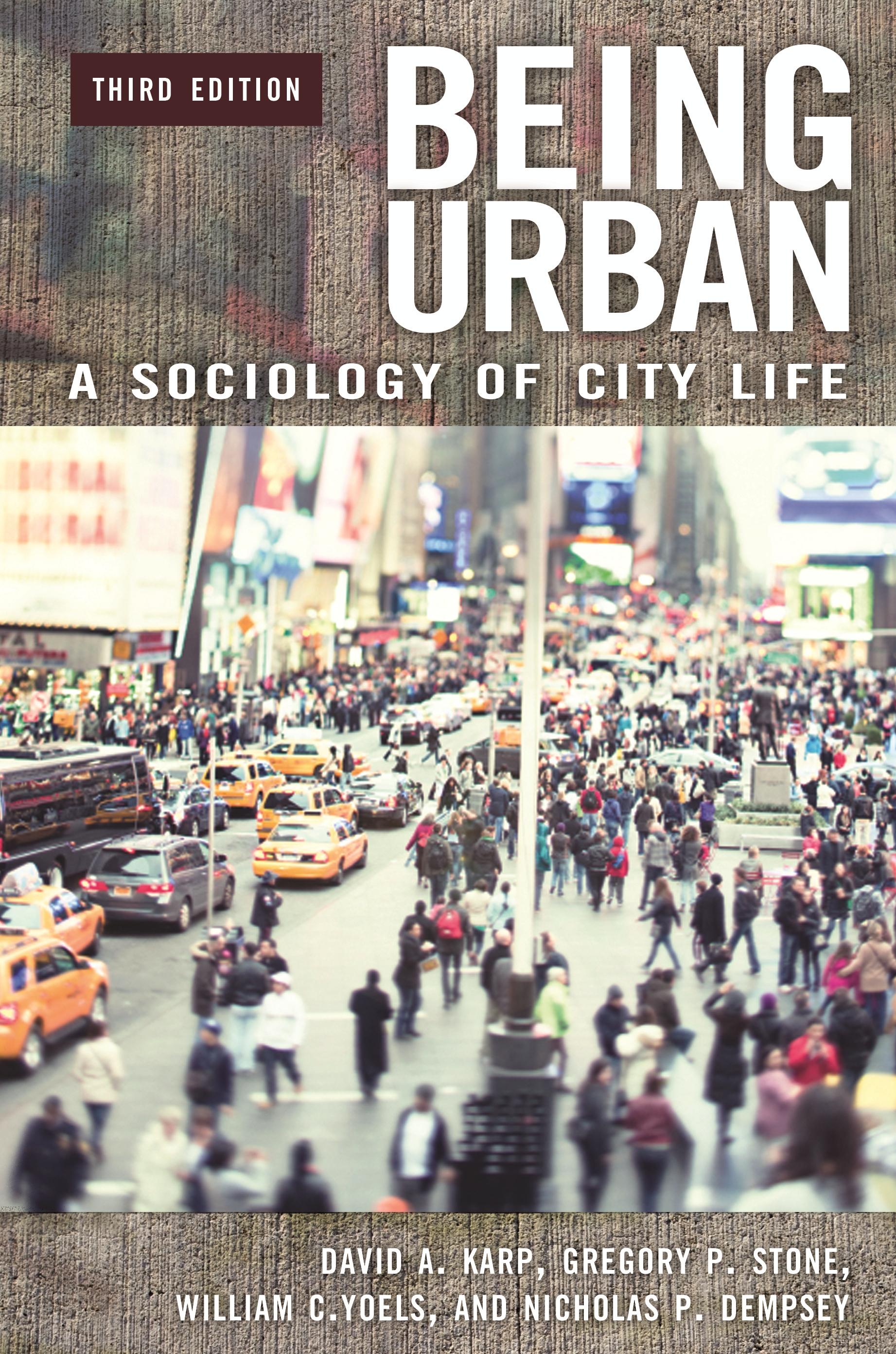
This third edition of a classic urban sociology text examines critical but often-neglected aspects of urban life from a social-psychological theoretical perspective.
Symbolic interaction is among the most central theoretical paradigms in sociology and the theory that most thoroughly attends to how individuals give meaning to their world—in this case, how city dwellers interpret and respond to their daily experiences as urbanites. This thoroughly updated edition of Being Urban: A Sociology of City Life remains true to this particular theoretical angle of vision—the symbolic interactionist approach—focusing on specific topics that are relatively neglected in other urban sociology texts, and that lend themselves to the kind of social-psychological analyses that define the distinctive conceptual core of the authors' efforts.
After the first two chapters supply readers with theoretical foundations of urban sociology, the next four chapters describe the various ways that individuals experience and make sense of key aspects of urban life. The final section—also composed of four chapters—addresses strategically chosen urban institutions and related processes of social change. Specific subject areas covered include sports, everyday public life, tolerance for diversity, women in cities, urban politics, and the arts. Readers will learn about how order is maintained in public urban places, understand why cities naturally breed a tolerance for diversity that may not be so easily achieved in less urban settings, and appreciate the delicate political and economic tensions between cities and their surrounding suburbs.
Symbolic interaction is among the most central theoretical paradigms in sociology and the theory that most thoroughly attends to how individuals give meaning to their world—in this case, how city dwellers interpret and respond to their daily experiences as urbanites. This thoroughly updated edition of Being Urban: A Sociology of City Life remains true to this particular theoretical angle of vision—the symbolic interactionist approach—focusing on specific topics that are relatively neglected in other urban sociology texts, and that lend themselves to the kind of social-psychological analyses that define the distinctive conceptual core of the authors' efforts.
After the first two chapters supply readers with theoretical foundations of urban sociology, the next four chapters describe the various ways that individuals experience and make sense of key aspects of urban life. The final section—also composed of four chapters—addresses strategically chosen urban institutions and related processes of social change. Specific subject areas covered include sports, everyday public life, tolerance for diversity, women in cities, urban politics, and the arts. Readers will learn about how order is maintained in public urban places, understand why cities naturally breed a tolerance for diversity that may not be so easily achieved in less urban settings, and appreciate the delicate political and economic tensions between cities and their surrounding suburbs.
Paga fácilmente con tarjeta, Klarna, Apple Pay o Google Pay. ¿No estás contento? Siempre tienes 14 días de garantía de devolución. Lee más en nuestros términos. Si tienes preguntas, escríbenos a hello@memmo.org.
Memmo hace que estudiar sea más fácil, estés donde estés. Aquí tienes tus libros de texto y herramientas de estudio inteligentes en un solo lugar: resúmenes, quizzes, podcasts y flashcards. Y también a Ted, tu compañero de estudio que responde a todo lo que te preguntes. Más de 50 000 estudiantes ya estudian aquí. Está hecho para que aprendas más rápido y te estreses menos.