
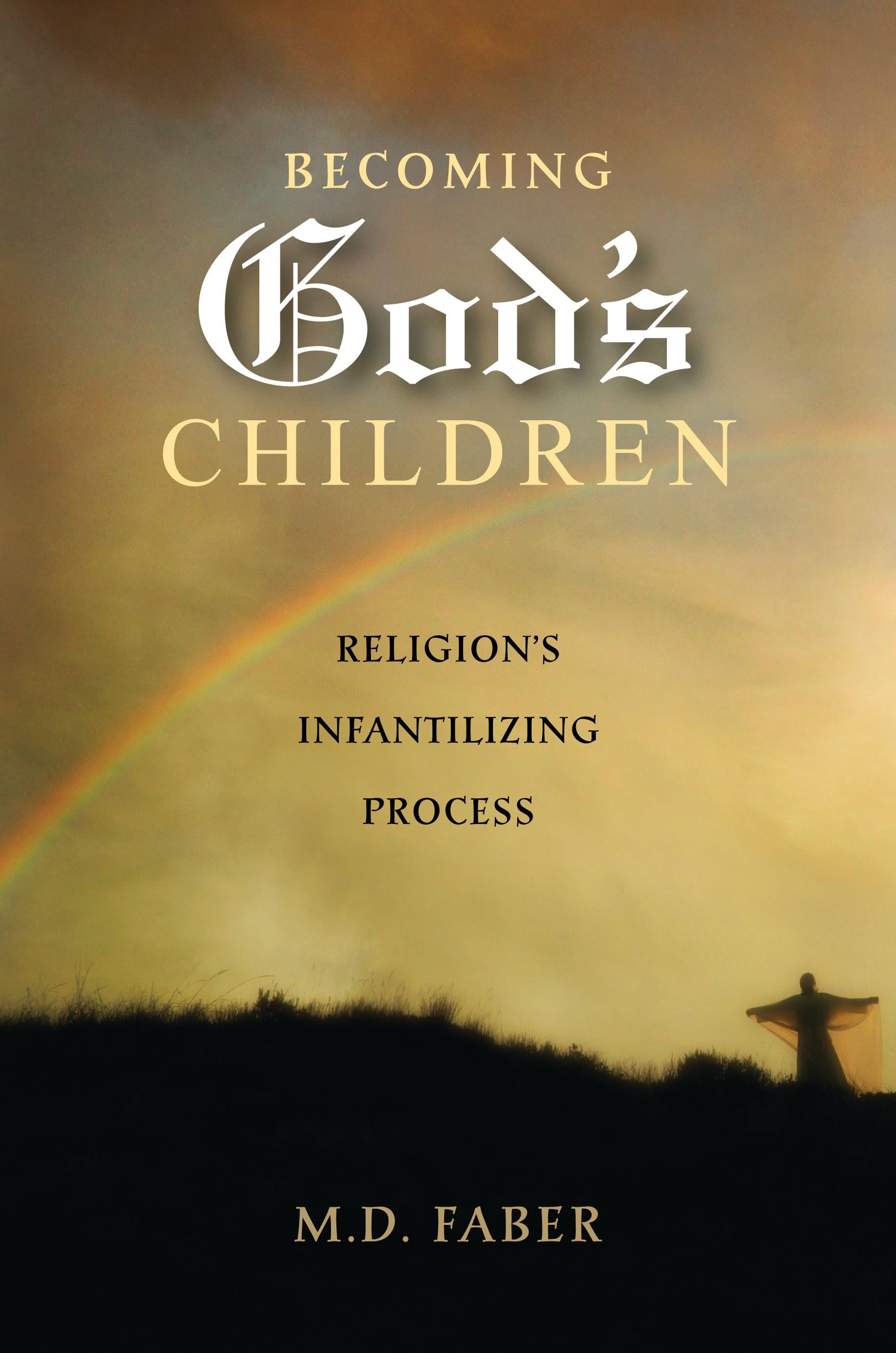
M. D. Faber presents a meticulous, unremitting inquiry into the psychological direction from which Christianity derives its power to attract and hold its followers.
Becoming God's Children: Religion's Infantilizing Process was written, its author says, to alert readers to the role of infantilization in the Judeo-Christian tradition generally and in Christian rite and doctrine particularly. Because religion plays such an important role in so may lives, it is essential to understand the underlying appeal and significance of religious doctrines.
To that end, Becoming God's Children offers the reader an in-depth account of human neuropsychological development, while unearthing the Judeo-Christian tradition's explicitly infantilizing doctrines and rites. This compelling perspective on the nature and meaning of religious behavior explores issues such as: to what extent religious faith is grounded in the mnemonic recesses of the worshipper's brain, whether believers are predisposed by both genetic makeup and environmental prompting to adhere to their religious convictions, and why some individuals are powerfully drawn to religious faith while others reject it. A final chapter explores the implications of religion's infantilizing process vis-a-vis the role of reason and scientific thought in the contemporary world.
Becoming God's Children: Religion's Infantilizing Process was written, its author says, to alert readers to the role of infantilization in the Judeo-Christian tradition generally and in Christian rite and doctrine particularly. Because religion plays such an important role in so may lives, it is essential to understand the underlying appeal and significance of religious doctrines.
To that end, Becoming God's Children offers the reader an in-depth account of human neuropsychological development, while unearthing the Judeo-Christian tradition's explicitly infantilizing doctrines and rites. This compelling perspective on the nature and meaning of religious behavior explores issues such as: to what extent religious faith is grounded in the mnemonic recesses of the worshipper's brain, whether believers are predisposed by both genetic makeup and environmental prompting to adhere to their religious convictions, and why some individuals are powerfully drawn to religious faith while others reject it. A final chapter explores the implications of religion's infantilizing process vis-a-vis the role of reason and scientific thought in the contemporary world.
Paga fácilmente con tarjeta, Klarna, Apple Pay o Google Pay. ¿No estás contento? Siempre tienes 14 días de garantía de devolución. Lee más en nuestros términos. Si tienes preguntas, escríbenos a hello@memmo.org.
Memmo hace que estudiar sea más fácil, estés donde estés. Aquí tienes tus libros de texto y herramientas de estudio inteligentes en un solo lugar: resúmenes, quizzes, podcasts y flashcards. Y también a Ted, tu compañero de estudio que responde a todo lo que te preguntes. Más de 50 000 estudiantes ya estudian aquí. Está hecho para que aprendas más rápido y te estreses menos.