
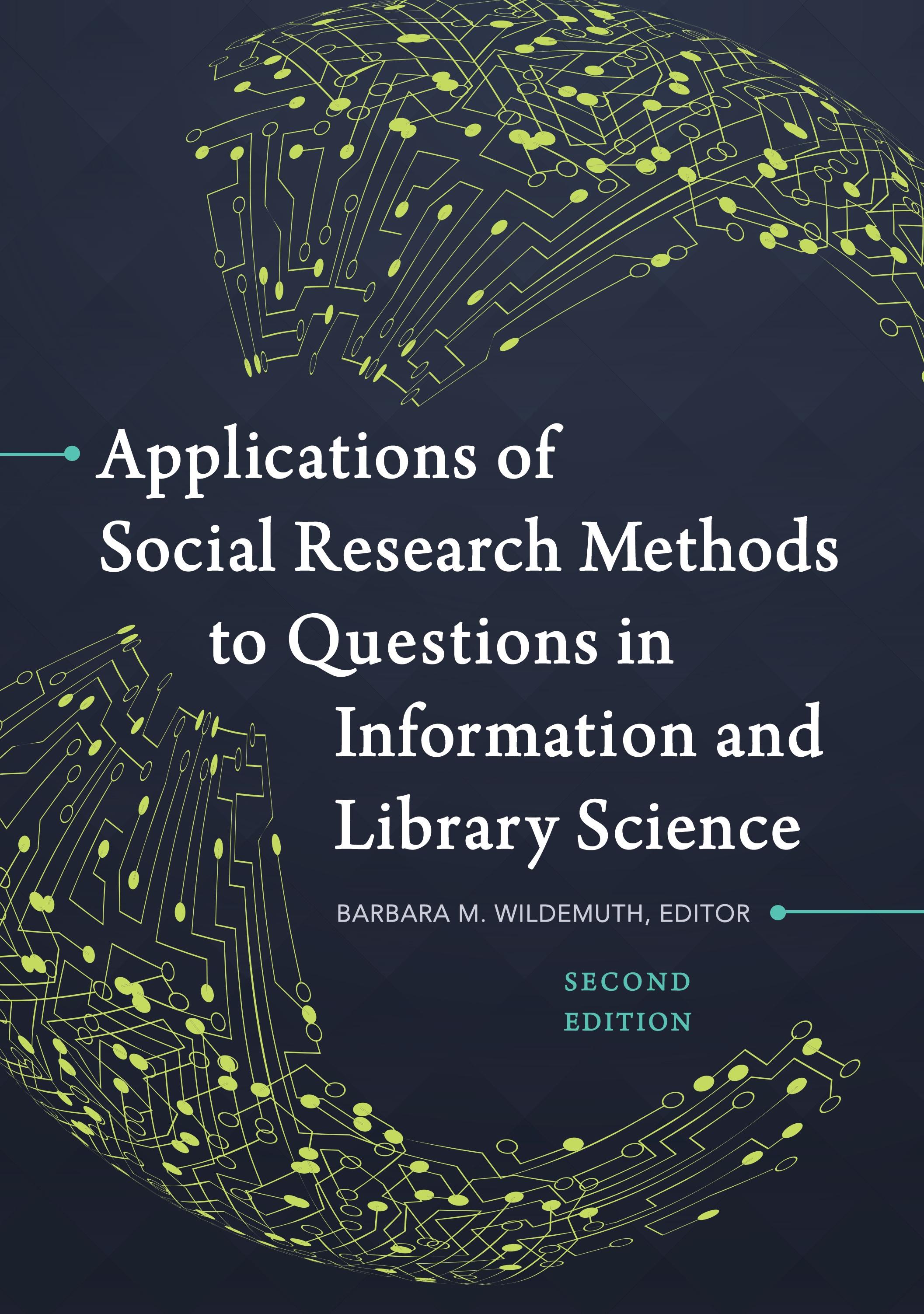
The second edition of this innovative textbook illustrates research methods for library and information science, describing the most appropriate approaches to a question—and showing you what makes research successful.
Written for the serious practicing librarian researcher and the LIS student, this volume fills the need for a guide focused specifically on information and library science research methods. By critically assessing existing studies from within library and information science, this book helps you acquire a deeper understanding of research methods so you will be able to design more effective studies yourself.
Section one considers research questions most often asked in information and library science and explains how they arise from practice or theory. Section two covers a variety of research designs and the sampling issues associated with them, while sections three and four look at methods for collecting and analyzing data. Each chapter introduces a particular research method, points out its relative strengths and weaknesses, and provides a critique of two or more exemplary studies.
For this second edition, three new chapters have been added, covering mixed methods, visual data collection methods, and social network analysis. The chapters on research diaries and transaction log analysis have been updated, and updated examples are provided in more than a dozen other chapters as well.
Written for the serious practicing librarian researcher and the LIS student, this volume fills the need for a guide focused specifically on information and library science research methods. By critically assessing existing studies from within library and information science, this book helps you acquire a deeper understanding of research methods so you will be able to design more effective studies yourself.
Section one considers research questions most often asked in information and library science and explains how they arise from practice or theory. Section two covers a variety of research designs and the sampling issues associated with them, while sections three and four look at methods for collecting and analyzing data. Each chapter introduces a particular research method, points out its relative strengths and weaknesses, and provides a critique of two or more exemplary studies.
For this second edition, three new chapters have been added, covering mixed methods, visual data collection methods, and social network analysis. The chapters on research diaries and transaction log analysis have been updated, and updated examples are provided in more than a dozen other chapters as well.
Paga fácilmente con tarjeta, Klarna, Apple Pay o Google Pay. ¿No estás contento? Siempre tienes 14 días de garantía de devolución. Lee más en nuestros términos. Si tienes preguntas, escríbenos a hello@memmo.org.
Memmo hace que estudiar sea más fácil, estés donde estés. Aquí tienes tus libros de texto y herramientas de estudio inteligentes en un solo lugar: resúmenes, quizzes, podcasts y flashcards. Y también a Ted, tu compañero de estudio que responde a todo lo que te preguntes. Más de 50 000 estudiantes ya estudian aquí. Está hecho para que aprendas más rápido y te estreses menos.