
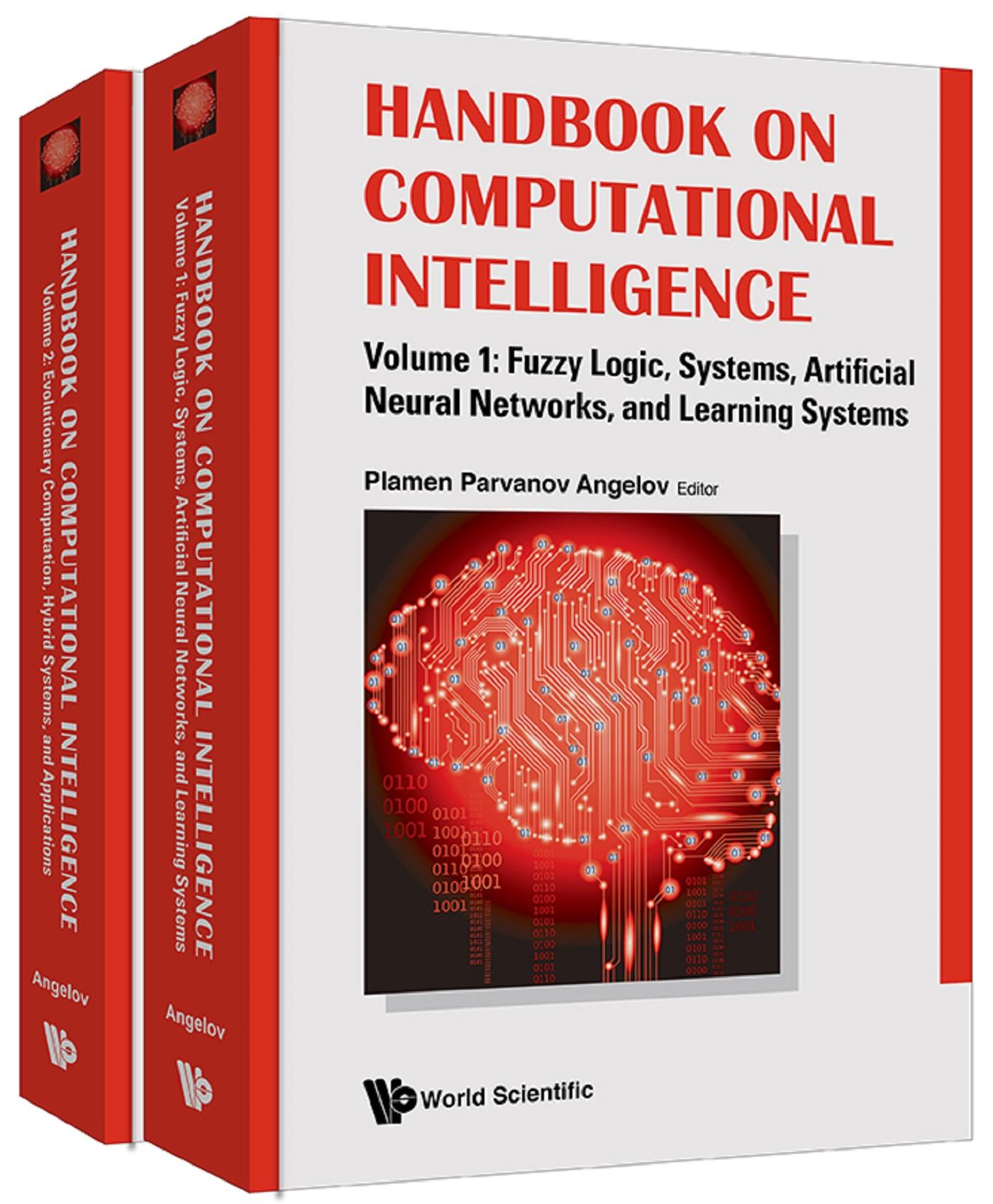
With the Internet, the proliferation of Big Data, and autonomous systems, mankind has entered into an era of 'digital obesity'. In this century, computational intelligence, such as thinking machines, have been brought forth to process complex human problems in a wide scope of areas — from social sciences, economics and biology, medicine and social networks, to cyber security.The Handbook of Computational Intelligence (in two volumes) prompts readers to look at these problems from a non-traditional angle. It takes a step by step approach, supported by case studies, to explore the issues that have arisen in the process. The Handbook covers many classic paradigms, as well as recent achievements and future promising developments to solve some of these very complex problems. Volume one explores the subjects of fuzzy logic and systems, artificial neural networks, and learning systems. Volume two delves into evolutionary computation, hybrid systems, as well as the applications of computational intelligence in decision making, the process industry, robotics, and autonomous systems.This work is a 'one-stop-shop' for beginners, as well as an inspirational source for more advanced researchers. It is a useful resource for lecturers and learners alike.
Paga fácilmente con tarjeta, Klarna, Apple Pay o Google Pay. ¿No estás contento? Siempre tienes 14 días de garantía de devolución. Lee más en nuestros términos. Si tienes preguntas, escríbenos a hello@memmo.org.
Memmo hace que estudiar sea más fácil, estés donde estés. Aquí tienes tus libros de texto y herramientas de estudio inteligentes en un solo lugar: resúmenes, quizzes, podcasts y flashcards. Y también a Ted, tu compañero de estudio que responde a todo lo que te preguntes. Más de 50 000 estudiantes ya estudian aquí. Está hecho para que aprendas más rápido y te estreses menos.
También te podría gustar
Comprar el libro0