
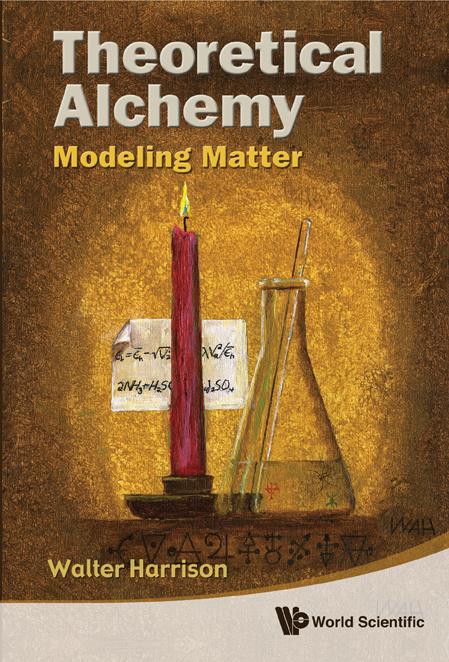
The best way to understand chemical bonding may be to take a view appropriate to each individual system, a view which may be quite different for various systems. Sometimes two very different views are appropriate for the same system, and then the combination may even give the parameters needed to estimate the bonding energy by hand. Density Functional Theory, on the other hand, generally tries to take one view as applicable to all systems, and proceeds computationally.
In contrast to the author's two previous well-known textbooks, Electronic Structure and the Properties of Solids (1989) and Elementary Electronic Structure (1999), in this book he tries to distill the essence of the representation of electronic structure in a much briefer description. It is shortened by focusing primarily on the bonding energies, the energy gained in assembling atoms as a molecule or a solid, or as a solid with a surface. A central point is that the same description of the electronic structure which gives this cohesion, can also be used to understand all of the other properties, though those other properties are not emphasized here. The effort is characterized by the title, which combines the modern word “theory” with the ancient effort of “alchemy” to make sense of the material world.
Paga fácilmente con tarjeta, Klarna, Apple Pay o Google Pay. ¿No estás contento? Siempre tienes 14 días de garantía de devolución. Lee más en nuestros términos. Si tienes preguntas, escríbenos a hello@memmo.org.
Memmo hace que estudiar sea más fácil, estés donde estés. Aquí tienes tus libros de texto y herramientas de estudio inteligentes en un solo lugar: resúmenes, quizzes, podcasts y flashcards. Y también a Ted, tu compañero de estudio que responde a todo lo que te preguntes. Más de 50 000 estudiantes ya estudian aquí. Está hecho para que aprendas más rápido y te estreses menos.