
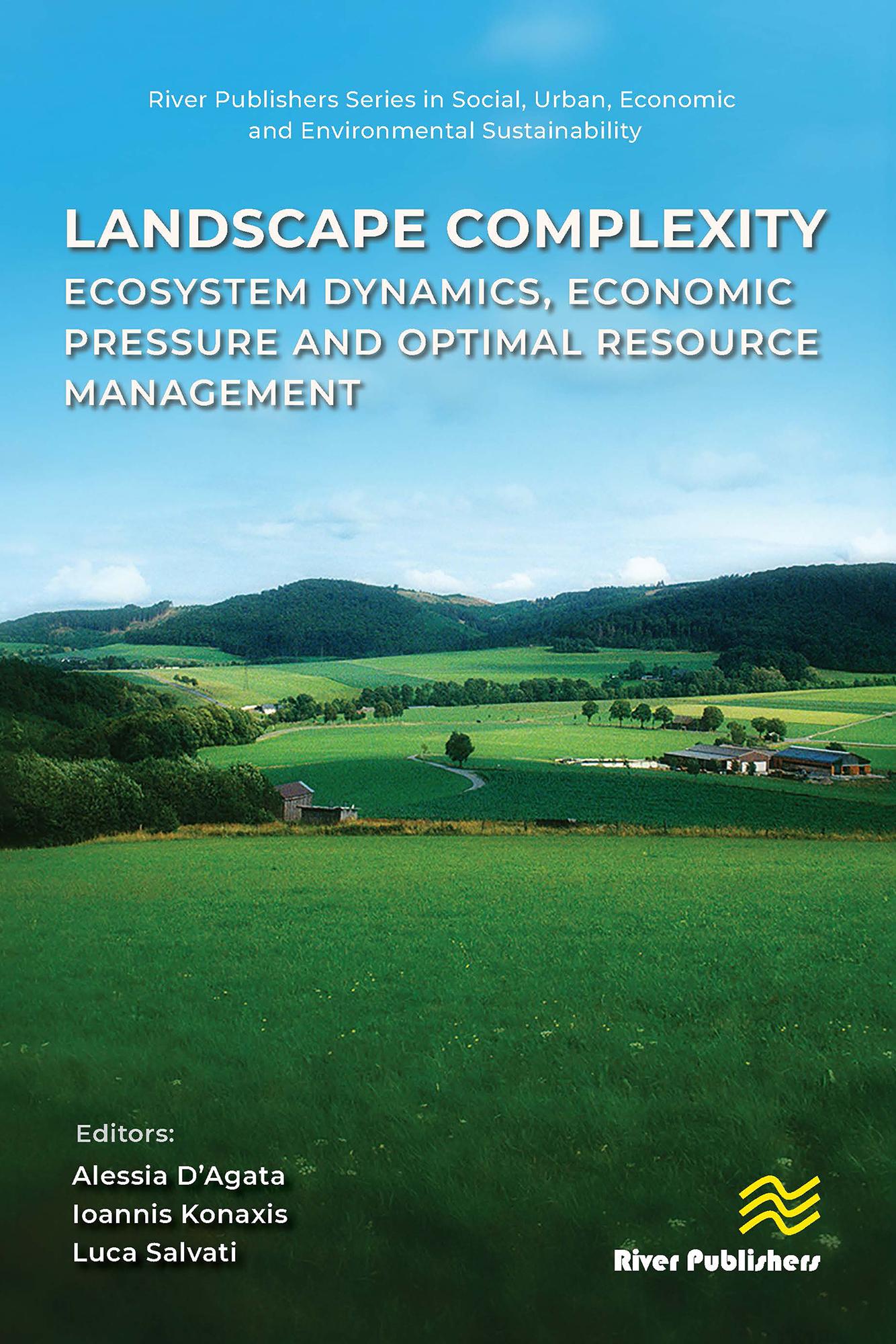
In advanced economies, landscapes have evolved into complex mosaics shaped by the dynamic interplay between forests, shrublands, agricultural fields, pastures, and urban or industrial areas. This intricate structure creates multiple layers of ecological and socioeconomic interactions that influence how land is used, valued, and managed.
Despite increasing awareness of environmental sustainability, the absence of comprehensive continental and national accounting systems for landscape evaluation has hindered the full recognition of landscapes as vital components of economic systems. Bridging this gap requires new methods to quantify and interpret landscape functions, services, and transformations.
This book proposes an integrative approach to landscape assessment—combining official statistics, field surveys, remote sensing, forest inventories, and spatial analysis. It demonstrates how these diverse tools can be harnessed to evaluate both quantitative and qualitative aspects of natural ecosystems, offering a clearer understanding of how landscapes contribute to environmental resilience and economic well-being.
Through practical examples and detailed case studies, this book provides an essential framework for scholars, environmental planners, policymakers, and practitioners seeking to connect ecological insights with sustainable regional development and policy design.
Paga fácilmente con tarjeta, Klarna, Apple Pay o Google Pay. ¿No estás contento? Siempre tienes 14 días de garantía de devolución. Lee más en nuestros términos. Si tienes preguntas, escríbenos a hello@memmo.org.
Memmo hace que estudiar sea más fácil, estés donde estés. Aquí tienes tus libros de texto y herramientas de estudio inteligentes en un solo lugar: resúmenes, quizzes, podcasts y flashcards. Y también a Ted, tu compañero de estudio que responde a todo lo que te preguntes. Más de 50 000 estudiantes ya estudian aquí. Está hecho para que aprendas más rápido y te estreses menos.