
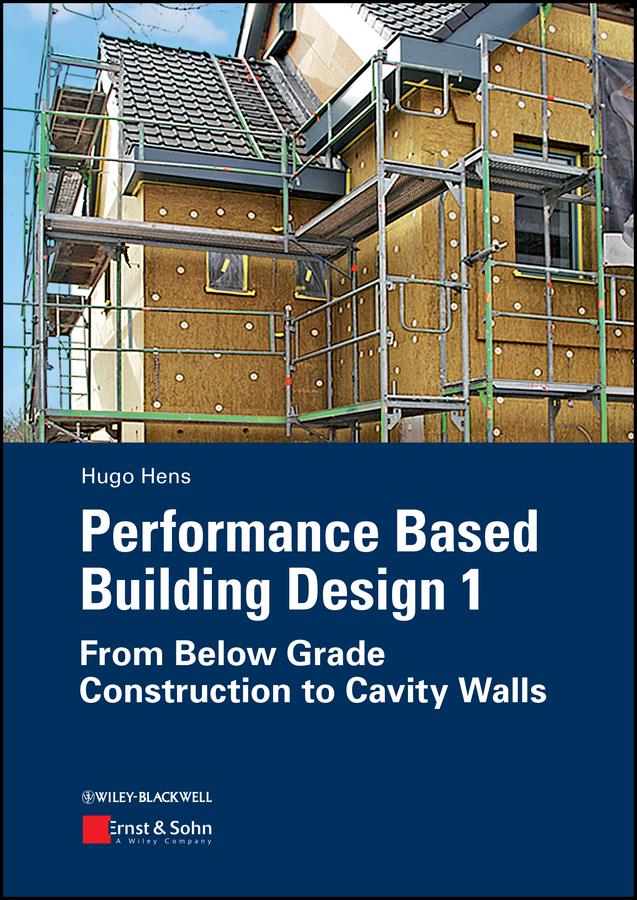
Just like building physics, performance based building design was hardly an issue before the energy crises of the 1970s. With the need to upgrade energy efficiency, the interest in overall building performance grew. The term "performance" encompasses all building-related physical properties and qualities that are predictable during the design stage and controllable during and after construction. The term "predictable" demands calculation tools and physical models that allow evaluating a design, whereas "controllable" presumes the existence of measuring methods available on site. The basis for a system of performance arrays are the functional demands, the needs for accessibility, safety, well-being, durability, energy efficiency and sustainability and the requirements imposed by the usage of a building.
As the first of two volumes, this book applies the performance rationale, advanced in applied building physics, to the design and construction of buildings. After an overview of materials for thermal insulation, water proofing, air tightening and vapour tightening and a discussion on joints, building construction is analysed, starting with the excavations. Then foundations, below and on grade constructions, typical load bearing systems and floors pass the review to end with massive outer walls insulated at the inside and the outside and cavity walls. Most chapters build on a same scheme: overview, overall performance evaluation, design and construction.
The book is absolutely recommended to undergraduates and graduates in architectural and building engineering, though also building engineers, who want to refresh their knowledge, may benefit. The level of discussion assumes the reader has a sound knowledge of building physics, along with a background in structural engineering, building materials and building construction. Where and when needed, input and literature from over the world was used, reason why each chapter ends listing references and literature.
As the first of two volumes, this book applies the performance rationale, advanced in applied building physics, to the design and construction of buildings. After an overview of materials for thermal insulation, water proofing, air tightening and vapour tightening and a discussion on joints, building construction is analysed, starting with the excavations. Then foundations, below and on grade constructions, typical load bearing systems and floors pass the review to end with massive outer walls insulated at the inside and the outside and cavity walls. Most chapters build on a same scheme: overview, overall performance evaluation, design and construction.
The book is absolutely recommended to undergraduates and graduates in architectural and building engineering, though also building engineers, who want to refresh their knowledge, may benefit. The level of discussion assumes the reader has a sound knowledge of building physics, along with a background in structural engineering, building materials and building construction. Where and when needed, input and literature from over the world was used, reason why each chapter ends listing references and literature.
Páginas: 276
Categoría: Arkitektur & Stadsplanering
e-ISBN: 9783433601976
Peso de envío: 1.2 kg
Envío en: 1-2 días
Paga fácilmente con tarjeta, Klarna, Apple Pay o Google Pay. ¿No estás contento? Siempre tienes 14 días de garantía de devolución. Lee más en nuestros términos. Si tienes preguntas, escríbenos a hello@memmo.org.
Memmo hace que estudiar sea más fácil, estés donde estés. Aquí tienes tus libros de texto y herramientas de estudio inteligentes en un solo lugar: resúmenes, quizzes, podcasts y flashcards. Y también a Ted, tu compañero de estudio que responde a todo lo que te preguntes. Más de 50 000 estudiantes ya estudian aquí. Está hecho para que aprendas más rápido y te estreses menos.