
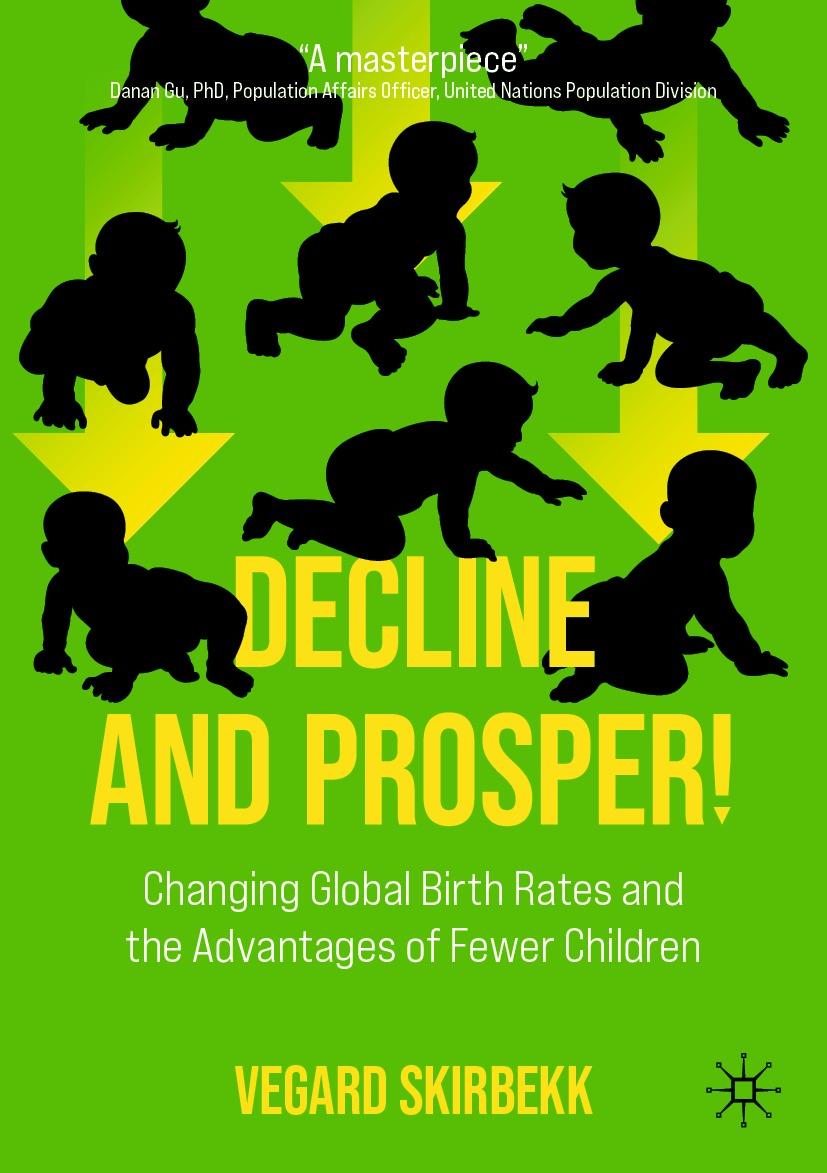
Globally, women are having half as many children as they had just fifty years ago. Why have birth rates fallen, and how will low fertility affect our shared future?
In Decline and Prosper!, demographic expert Vegard Skirbekk offers readers an accessible, comprehensive and evidence-based overview of human reproduction. Readers learn about the evolution of childbearing across different populations and how fertility is related to (changes in) our reproductive capacity, contraception, education, religion, partnering, policies, economics, assisted reproduction, and catastrophes. Readers will explore the future of family size and its impact on human welfare, women’s empowerment and the environment. Skirbekk argues that low fertility is on the whole a good thing, while recognizing the challenges of population aging and “coincidental” childlessness. A balanced, integrative examination of one of the most important issues of our time, Decline and Prosper! drives home the fact that we must ultimately adapt to a world with fewer children.
The book will be invaluable to anyone who is interested in the far-reaching effects of global fertility, including researchers and students of demography, social statistics, medical sociologists, family and childhood studies, human geographers, sociology of culture, social and public policy.
Paga fácilmente con tarjeta, Klarna, Apple Pay o Google Pay. ¿No estás contento? Siempre tienes 14 días de garantía de devolución. Lee más en nuestros términos. Si tienes preguntas, escríbenos a hello@memmo.org.
Memmo hace que estudiar sea más fácil, estés donde estés. Aquí tienes tus libros de texto y herramientas de estudio inteligentes en un solo lugar: resúmenes, quizzes, podcasts y flashcards. Y también a Ted, tu compañero de estudio que responde a todo lo que te preguntes. Más de 50 000 estudiantes ya estudian aquí. Está hecho para que aprendas más rápido y te estreses menos.