
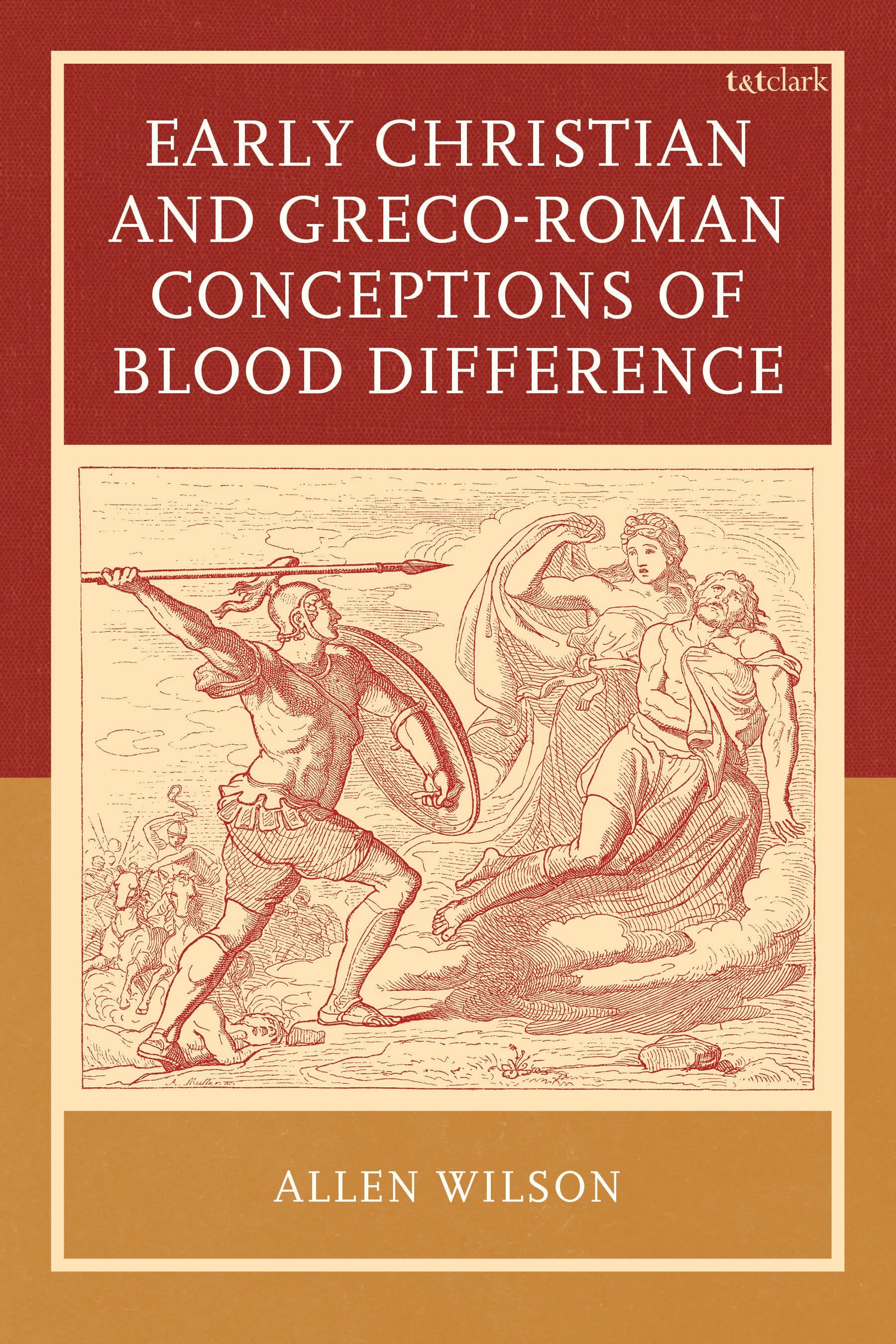
This book interrogates the historical contingency of the common idiom “blood is thicker than water,” asking what the role of Christianity is in the development of blood mythology lurking in everyday speech.
The author examines the concept of blood within Greco-Roman and early Christian contexts, investigating blood's significance beyond a mere biological substance. The analysis traces the evolution of blood's symbolic meaning in order to understand how it relates to conceptions of kinship, purity, and the divine. In the early chapters, the book surveys conceptions of blood and consanguinity in Greco-Roman thought, ranging from the mythologies of Homer and the histories of Livy to the medical descriptions of Galen and Soranus to the ritual descriptions of Jubilees and Ephrem the Syrian. By providing a general survey of Greco-Roman understandings of blood, the book shows, in the remaining chapters, the way specific early Christians drew upon Greco-Roman notions of blood. By outlining how the singularity of the blood of Christ produces different understandings of blood in the writings of Irenaeus, Tertullian, and Origen, the author argues that Christians did not invent blood differentiation but they do intensify the symbolic power of blood to make a difference.
The author examines the concept of blood within Greco-Roman and early Christian contexts, investigating blood's significance beyond a mere biological substance. The analysis traces the evolution of blood's symbolic meaning in order to understand how it relates to conceptions of kinship, purity, and the divine. In the early chapters, the book surveys conceptions of blood and consanguinity in Greco-Roman thought, ranging from the mythologies of Homer and the histories of Livy to the medical descriptions of Galen and Soranus to the ritual descriptions of Jubilees and Ephrem the Syrian. By providing a general survey of Greco-Roman understandings of blood, the book shows, in the remaining chapters, the way specific early Christians drew upon Greco-Roman notions of blood. By outlining how the singularity of the blood of Christ produces different understandings of blood in the writings of Irenaeus, Tertullian, and Origen, the author argues that Christians did not invent blood differentiation but they do intensify the symbolic power of blood to make a difference.
Paga fácilmente con tarjeta, Klarna, Apple Pay o Google Pay. ¿No estás contento? Siempre tienes 14 días de garantía de devolución. Lee más en nuestros términos. Si tienes preguntas, escríbenos a hello@memmo.org.
Memmo hace que estudiar sea más fácil, estés donde estés. Aquí tienes tus libros de texto y herramientas de estudio inteligentes en un solo lugar: resúmenes, quizzes, podcasts y flashcards. Y también a Ted, tu compañero de estudio que responde a todo lo que te preguntes. Más de 50 000 estudiantes ya estudian aquí. Está hecho para que aprendas más rápido y te estreses menos.