
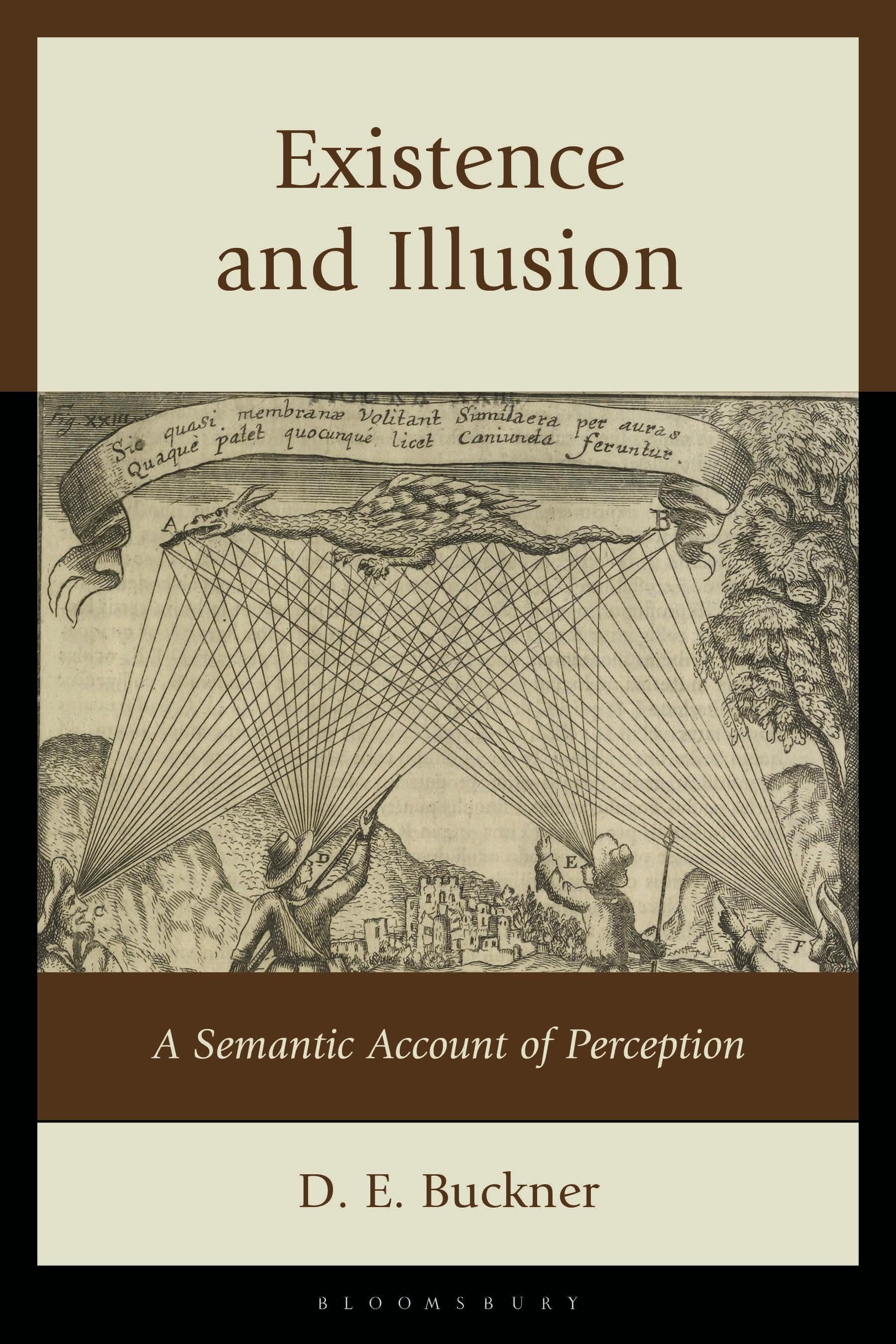
Illusion is a longstanding problem in the philosophy of perception: how can it perceptibly appear that something is the case, though nothing corresponds in reality?
A strong intuition – the Common Kind Assumption that the same account must apply to veridical perception as to illusion – seems to commit us to “weird” mental items like sense data, but an equally strong intuition is that weird items have no place in a parsimonious account of reality.
D.E. Buckner takes a novel approach to this problem, arguing that perceptual states are propositional. Just as the same proposition can be true or false, so the same perceptual state can be veridical or not. Sight tells us that the stick in water is bent, even when our understanding says it is not. This semantic account of perception satisfies the Common Kind Assumption without committing us to weird items.
The book is a fresh approach to the classic problem of illusion, informed by the core topics of philosophical logic: identity, existence, reference and predication. It brings together a number of disparate traditions, including twentieth-century sense datum theory and the subsequent reaction to it; Chastain's anaphoric theory of reference; the Aristotelian notion of a substance (the this of demonstrative reference) and its accidents.
A strong intuition – the Common Kind Assumption that the same account must apply to veridical perception as to illusion – seems to commit us to “weird” mental items like sense data, but an equally strong intuition is that weird items have no place in a parsimonious account of reality.
D.E. Buckner takes a novel approach to this problem, arguing that perceptual states are propositional. Just as the same proposition can be true or false, so the same perceptual state can be veridical or not. Sight tells us that the stick in water is bent, even when our understanding says it is not. This semantic account of perception satisfies the Common Kind Assumption without committing us to weird items.
The book is a fresh approach to the classic problem of illusion, informed by the core topics of philosophical logic: identity, existence, reference and predication. It brings together a number of disparate traditions, including twentieth-century sense datum theory and the subsequent reaction to it; Chastain's anaphoric theory of reference; the Aristotelian notion of a substance (the this of demonstrative reference) and its accidents.
Paga fácilmente con tarjeta, Klarna, Apple Pay o Google Pay. ¿No estás contento? Siempre tienes 14 días de garantía de devolución. Lee más en nuestros términos. Si tienes preguntas, escríbenos a hello@memmo.org.
Memmo hace que estudiar sea más fácil, estés donde estés. Aquí tienes tus libros de texto y herramientas de estudio inteligentes en un solo lugar: resúmenes, quizzes, podcasts y flashcards. Y también a Ted, tu compañero de estudio que responde a todo lo que te preguntes. Más de 50 000 estudiantes ya estudian aquí. Está hecho para que aprendas más rápido y te estreses menos.