
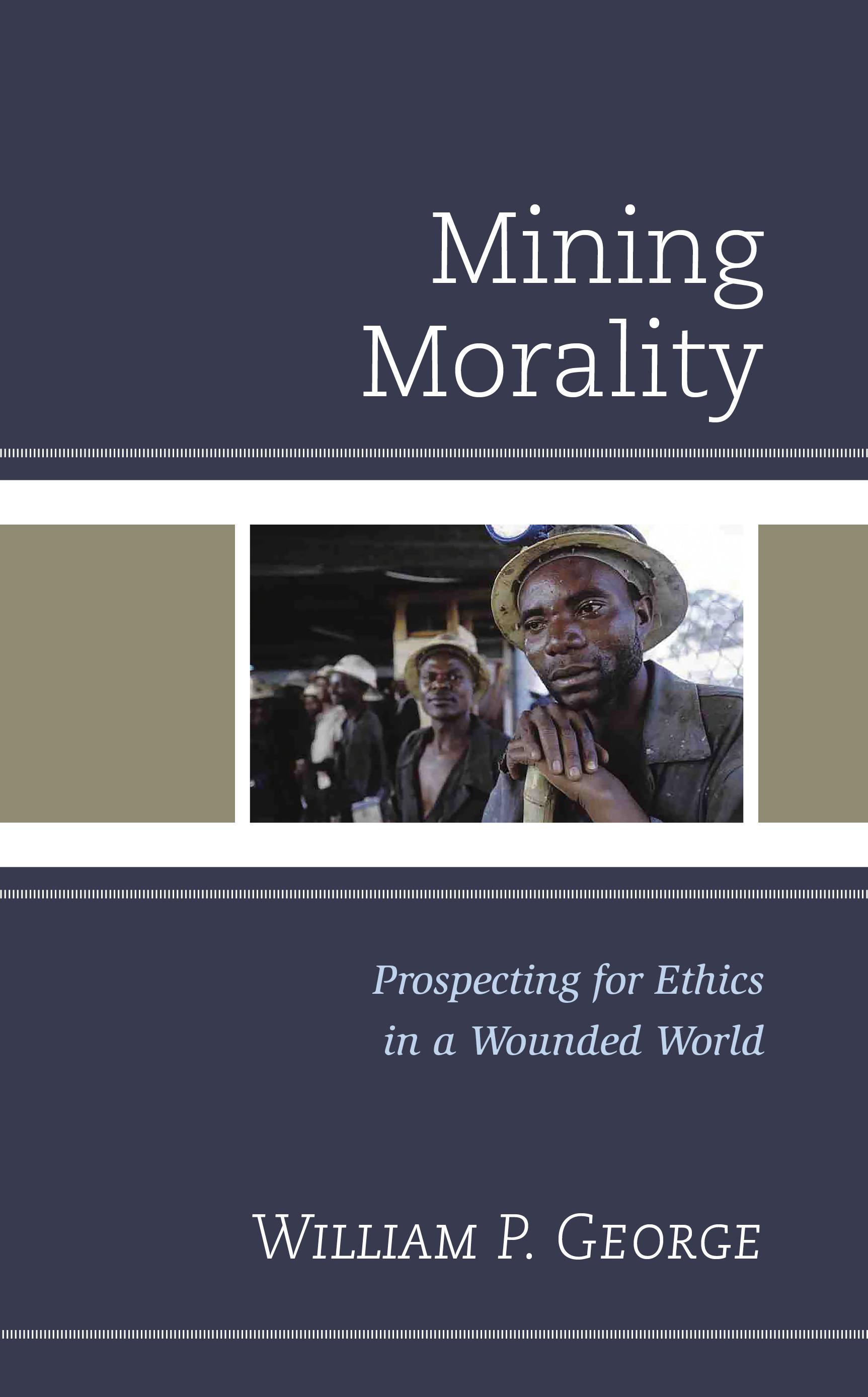
Employing “self-sharpening tools” found in the work of theologian and philosopher Bernard Lonergan, Pope Francis’ encyclical Laudato si’, and international law, William P. George brings mining to personal and collective moral awareness by “prospecting for ethics” at selected sites: (1) Butte, Montana, “the Richest Hill on Earth,” once bound to Chuquicamata, Chile, by a company that spanned two continents and nearly owned a state; (2) the tiny island nation of Nauru, called Pleasant Island until it was devastated by phosphate mining and the breaking of a sacred trust by foreign powers; (3) the deep seabed, governed by the United Nations Law of the Sea, a “constitution for the oceans” that regards much of the resource-rich seabed as humankind’s “common heritage”; (4) Africa, with its uranium mines but also its conflicts over what “being nuclear” means in the wake of colonialism, apartheid, and Hiroshima; and (5) mineral-rich asteroids speeding through space where mining rights are contested, even as space entrepreneurs look to become the world’s first trillionaires.
George introduces readers to remarkable moral miners––the women of Butte and Chuquicamata, a World Court judge from Sri Lanka, and the Rocket Boys of Coalwood, West Virginia, to name a few––and leads them to consider not only the morality of mining––what’s good and not so good about resource extraction––but also the mining of morality, a venture that Socrates called “the examined life.”
George introduces readers to remarkable moral miners––the women of Butte and Chuquicamata, a World Court judge from Sri Lanka, and the Rocket Boys of Coalwood, West Virginia, to name a few––and leads them to consider not only the morality of mining––what’s good and not so good about resource extraction––but also the mining of morality, a venture that Socrates called “the examined life.”
Paga fácilmente con tarjeta, Klarna, Apple Pay o Google Pay. ¿No estás contento? Siempre tienes 14 días de garantía de devolución. Lee más en nuestros términos. Si tienes preguntas, escríbenos a hello@memmo.org.
Memmo hace que estudiar sea más fácil, estés donde estés. Aquí tienes tus libros de texto y herramientas de estudio inteligentes en un solo lugar: resúmenes, quizzes, podcasts y flashcards. Y también a Ted, tu compañero de estudio que responde a todo lo que te preguntes. Más de 50 000 estudiantes ya estudian aquí. Está hecho para que aprendas más rápido y te estreses menos.