
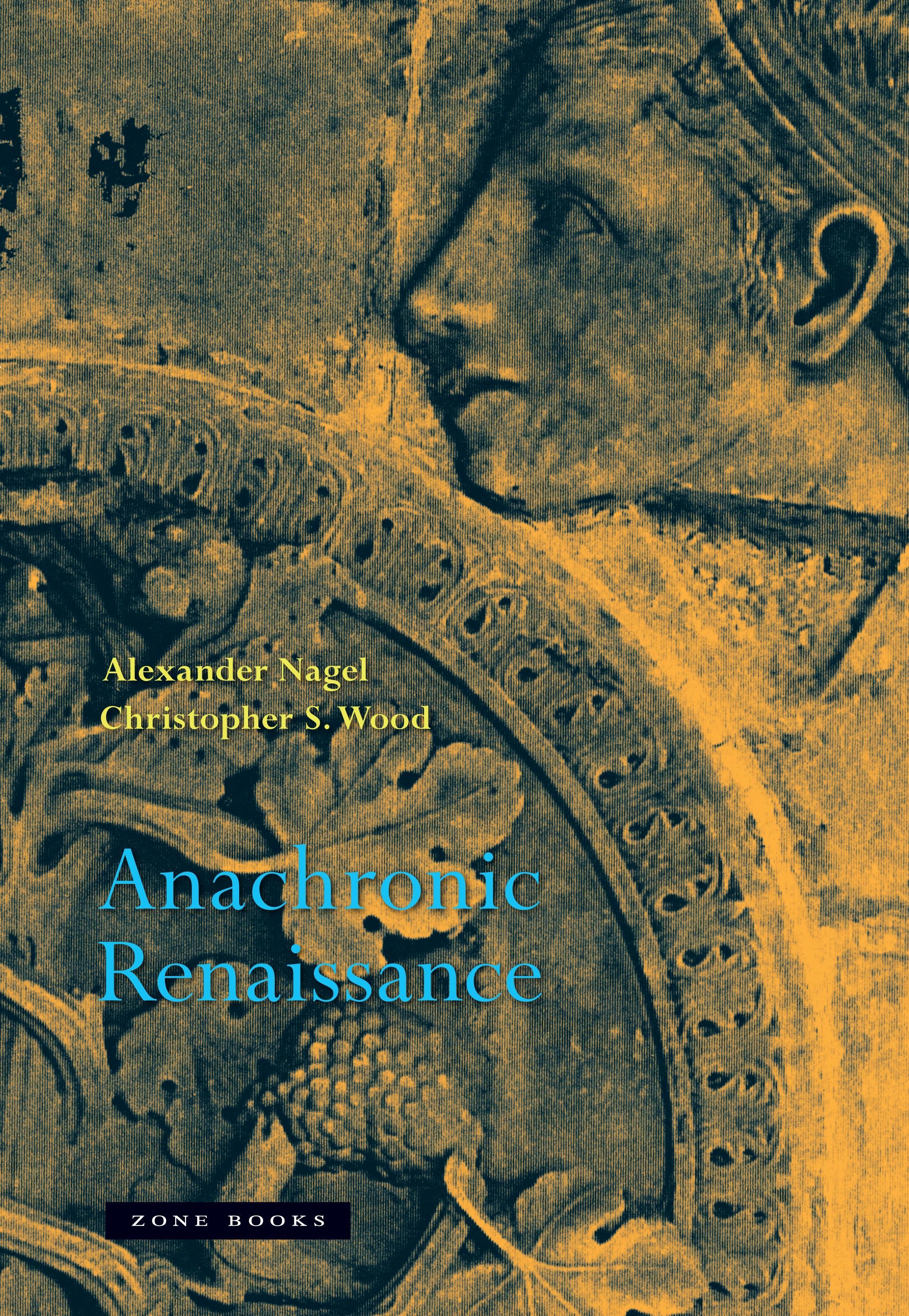
In this widely anticipated book, two leading contemporary art historians present a stunning reconsideration of the problem of time in the Renaissance. With intellectual brilliance, Alexander Nagel and Christopher S. Wood reexamine the meanings, uses, and effects of chronologies, models of temporality, and notions of originality and repetition in Renaissance images and artifacts.
Anachronic Renaissance reveals a web of paths traveled by works and artists, a landscape obscured by art history’s disciplinary compulsion to anchor its data securely in time. The buildings, paintings, drawings, prints, sculptures, and medals addressed in this book were shaped by concerns about authenticity, about reference to prestigious origins and precedents, and about the implications of transposition from one medium to another. Byzantine icons taken to be early Christian antiquities, the acheiropoeton or image made without hands, the activities of spoliation and citation, differing approaches to art restoration, legends about movable buildings, and forgeries and pastiches: all of these emerge as basic conceptual structures of Renaissance art. The authors show how the complex and layered temporalities of images offered a counterpoint to the linear chronologies that increasingly structured commerce, politics, travel, and everyday life in the fourteenth and fifteenth centuries.
While a work of art does bear witness to the moment of its fabrication, Nagel and Wood argue that it is equally important to understand its temporal instability: how it points away from that moment, backward to a remote ancestral origin, to a prior artifact or image, even to an origin outside of time, in divinity. The authors conclude with an analysis of Roman episodes and projects of the decades around 1500, culminating in Raphael’s Stanza della Segnatura. This book is not the story about the Renaissance, nor is it just a story. It imagines the infrastructure of many possible stories. Clearly, Anachronic Renaissance will be essential reading for historians of Western art and all those concerned with the historiography of material culture.
Paga fácilmente con tarjeta, Klarna, Apple Pay o Google Pay. ¿No estás contento? Siempre tienes 14 días de garantía de devolución. Lee más en nuestros términos. Si tienes preguntas, escríbenos a hello@memmo.org.
Memmo hace que estudiar sea más fácil, estés donde estés. Aquí tienes tus libros de texto y herramientas de estudio inteligentes en un solo lugar: resúmenes, quizzes, podcasts y flashcards. Y también a Ted, tu compañero de estudio que responde a todo lo que te preguntes. Más de 50 000 estudiantes ya estudian aquí. Está hecho para que aprendas más rápido y te estreses menos.