
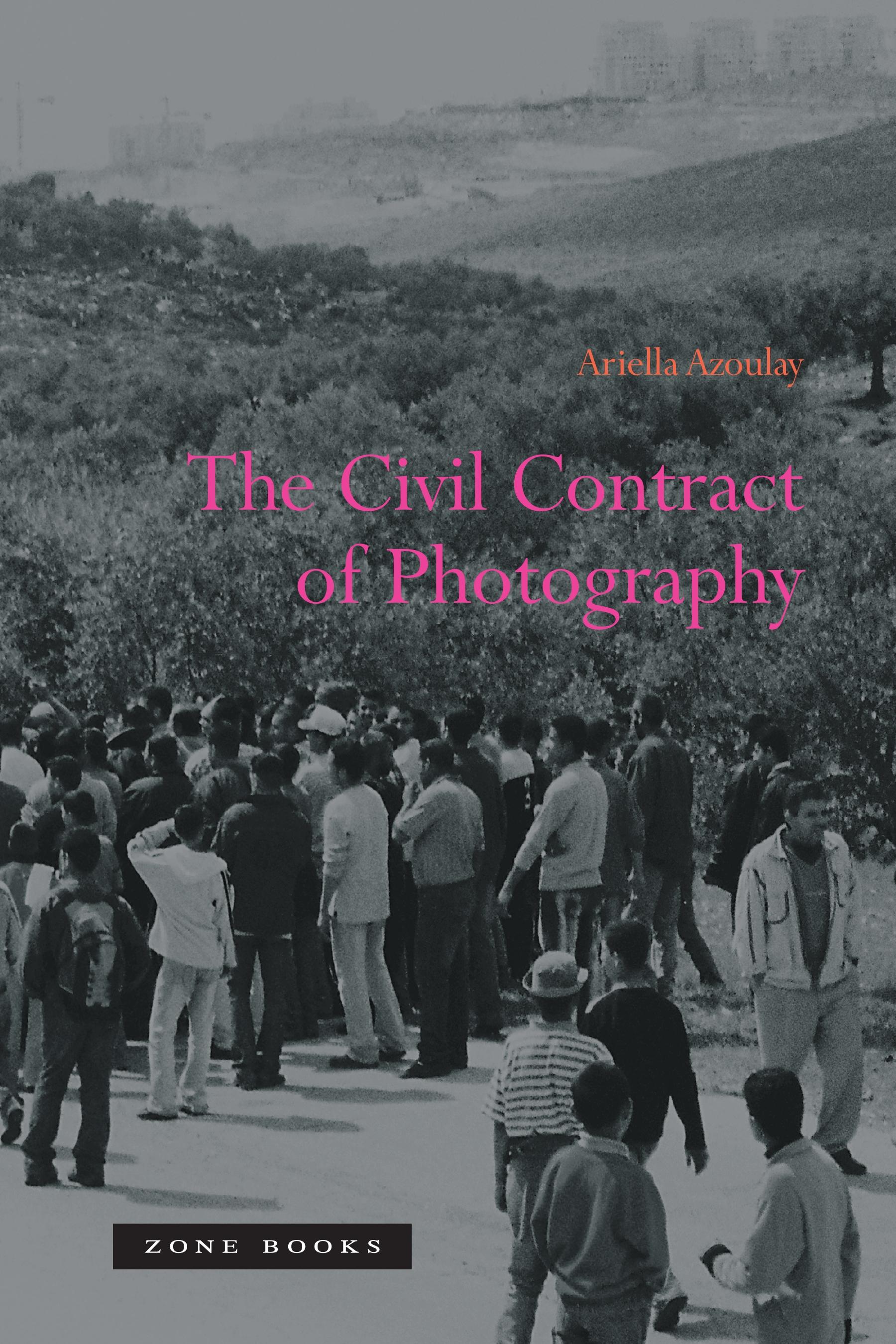
In this groundbreaking work, Ariella Azoulay thoroughly revises our understanding of the ethical status of photography. It must, she insists, be understood in its inseparability from the many catastrophes of recent history. She argues that photography is a particular set of relations between individuals and the powers that govern them and, at the same time, a form of relations among equals that constrains that power. Anyone, even a stateless person, who addresses others through photographs or occupies the position of a photograph’s addressee, is or can become a member of the citizenry of photography.
The crucial arguments of the book concern two groups that have been rendered invisible by their state of exception: the Palestinian noncitizens of Israel and women in Western societies. Azoulay’s leading question is: Under what legal, political, or cultural conditions does it become possible to see and show disaster that befalls those with flawed citizenship in a state of exception? The Civil Contract of Photography is an essential work for anyone seeking to understand the disasters of recent history and the consequences of how they and their victims are represented.
Paga fácilmente con tarjeta, Klarna, Apple Pay o Google Pay. ¿No estás contento? Siempre tienes 14 días de garantía de devolución. Lee más en nuestros términos. Si tienes preguntas, escríbenos a hello@memmo.org.
Memmo hace que estudiar sea más fácil, estés donde estés. Aquí tienes tus libros de texto y herramientas de estudio inteligentes en un solo lugar: resúmenes, quizzes, podcasts y flashcards. Y también a Ted, tu compañero de estudio que responde a todo lo que te preguntes. Más de 50 000 estudiantes ya estudian aquí. Está hecho para que aprendas más rápido y te estreses menos.