
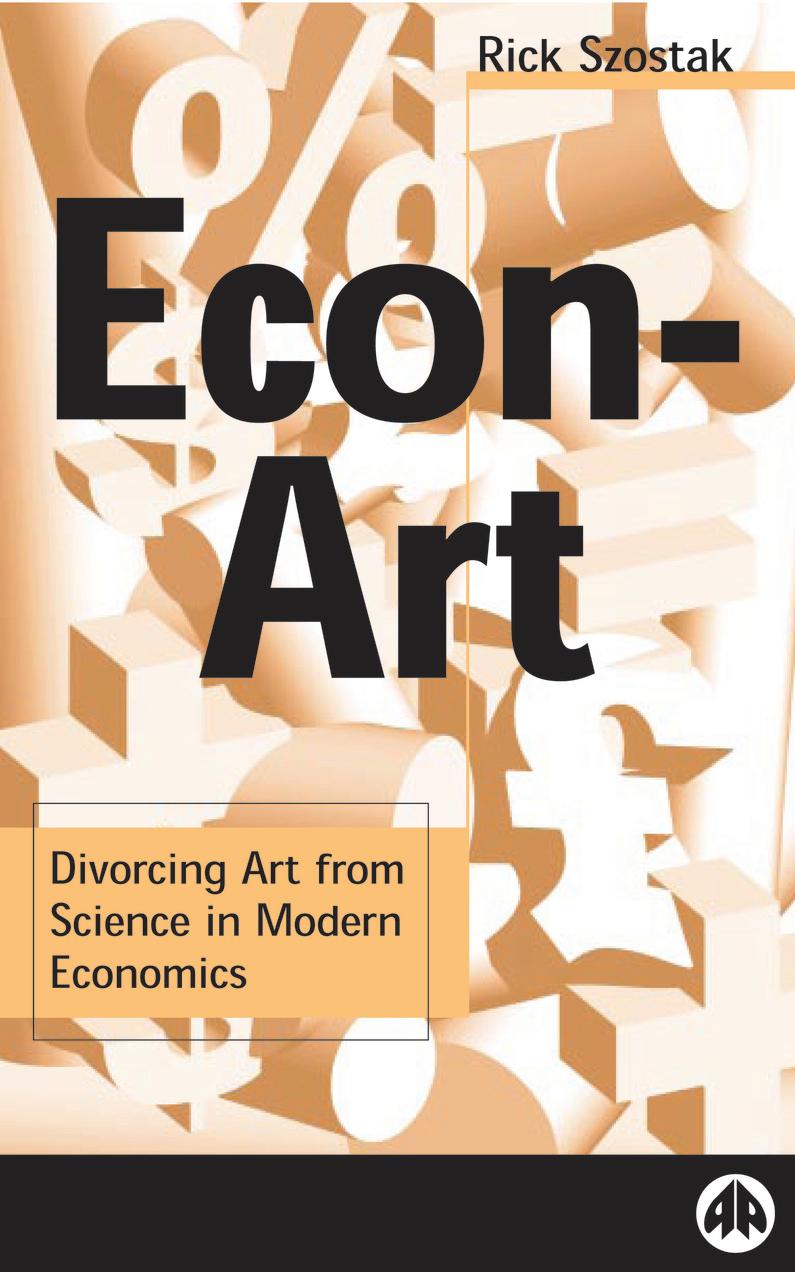
'While identifying two types of activity, namely econ-art and econ-science, he demonstrates why economists should acknowledge their artistic impulses and develop a more scientific conduct.' ARTbibliographies Modern
Historians of economic thought have long recognised the possibility that cultural influences might be important, but have never analysed them in any detail. In the first study of economics from the perspective of art history, Rick Szostak shows how the cultural influences identified by art historians have affected economic theory. He also reveals that not only has economic theory been informed by aesthetic considerations, but the very methods employed by economists are shown to serve primarily artistic goals.
Professor Szostak assesses the extent of these cultural and aesthetic effects through a wide-ranging study of the development of surrealism, cubism and abstract art, juxtaposed with examples drawn from virtually every field of economics. Two types of endeavour are identified, Econ-Art and Econ-Science. Szostak argues that the pursuit of econ-science would be much aided if economists first recognised their artistic impulses, and then developed more scientific standards of conduct. As the first economist to thoroughly address the question of whether Economics is Art, Professor Szostak raises some important philosophical issues with this volume. The result is a controversial and scholarly, yet accessible, examination of the influence of both culture and aesthetic considerations on economics.
Historians of economic thought have long recognised the possibility that cultural influences might be important, but have never analysed them in any detail. In the first study of economics from the perspective of art history, Rick Szostak shows how the cultural influences identified by art historians have affected economic theory. He also reveals that not only has economic theory been informed by aesthetic considerations, but the very methods employed by economists are shown to serve primarily artistic goals.
Professor Szostak assesses the extent of these cultural and aesthetic effects through a wide-ranging study of the development of surrealism, cubism and abstract art, juxtaposed with examples drawn from virtually every field of economics. Two types of endeavour are identified, Econ-Art and Econ-Science. Szostak argues that the pursuit of econ-science would be much aided if economists first recognised their artistic impulses, and then developed more scientific standards of conduct. As the first economist to thoroughly address the question of whether Economics is Art, Professor Szostak raises some important philosophical issues with this volume. The result is a controversial and scholarly, yet accessible, examination of the influence of both culture and aesthetic considerations on economics.
Páginas: 320
Categoría: Vetenskapsteori och forskningsmetod
e-ISBN: 9781849645348
Peso de envío: 1.2 kg
Envío en: 1-2 días
Paga fácilmente con tarjeta, Klarna, Apple Pay o Google Pay. ¿No estás contento? Siempre tienes 14 días de garantía de devolución. Lee más en nuestros términos. Si tienes preguntas, escríbenos a hello@memmo.org.
Memmo hace que estudiar sea más fácil, estés donde estés. Aquí tienes tus libros de texto y herramientas de estudio inteligentes en un solo lugar: resúmenes, quizzes, podcasts y flashcards. Y también a Ted, tu compañero de estudio que responde a todo lo que te preguntes. Más de 50 000 estudiantes ya estudian aquí. Está hecho para que aprendas más rápido y te estreses menos.
También te podría gustar
Comprar el libro0