
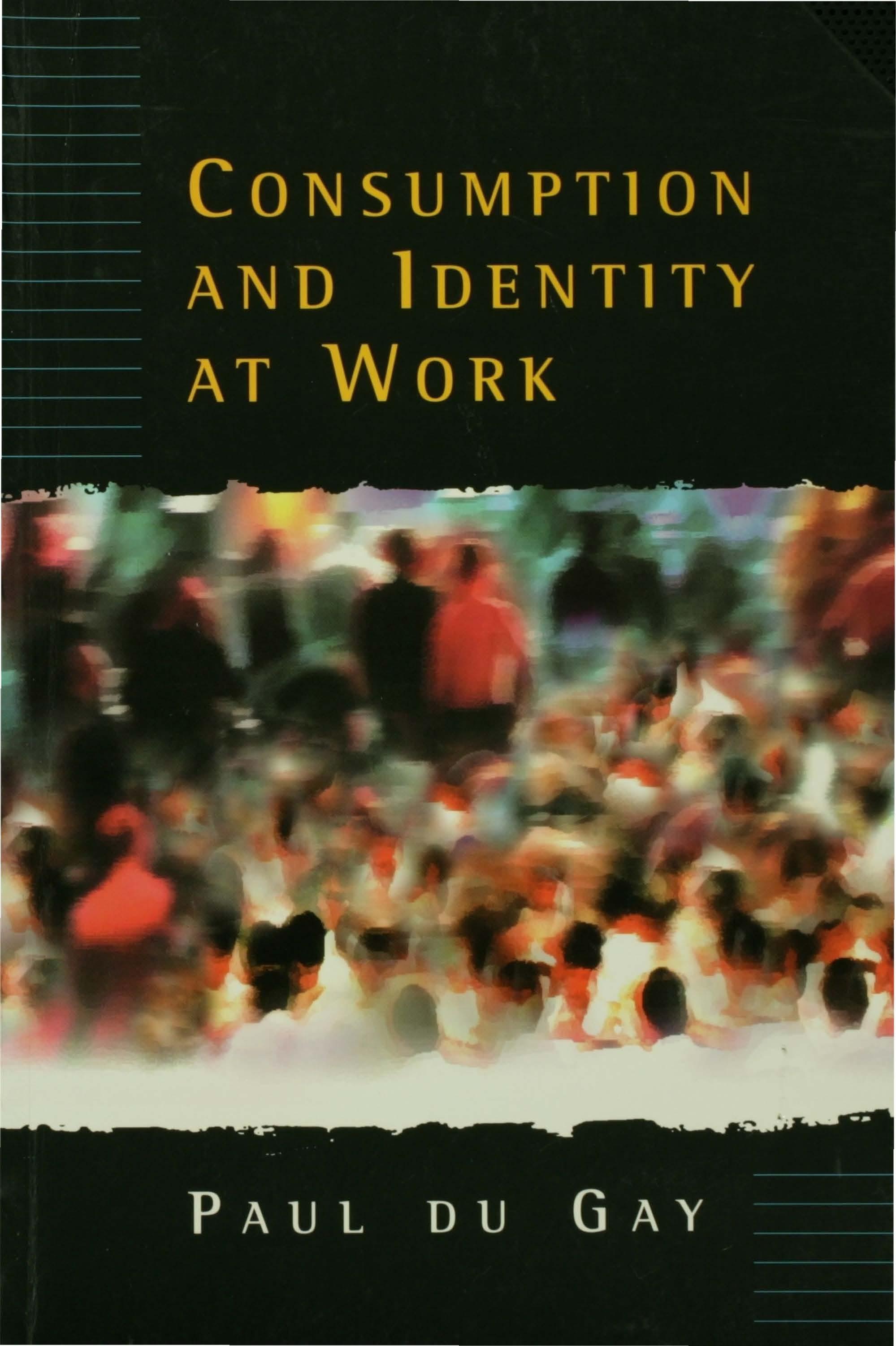
In particular, Paul du Gay shows how the capacities and predispositions required of consumers and those required of employees are increasingly difficult to distinguish. Both consumers and employees are represented as autonomous, responsible, calculating individuals. They are constituted as such in the language of consumer cultures and the all-pervasive discourses of enterprise whereby persons are required to be entrepreneurs of the self, at work, at play and in all aspects of their lives.
The first part of the book explores certain limitations in traditional approaches to the analysis of work identity. It presents an alternative, discursive framework in which to address contemporary `re-imaginings′ of organizational life within the `cult(ure)′ of the consumer. Part Two develops the analysis by looking at an arena where the blurring of the boundaries between work and consumption identities is most pronounced - retailing. The author builds a sophisticated picture of how discourses of reform take hold in particular contexts, how they construct particular subject positions for employees to occupy, and how employees negotiate these identities in their everyday working lives. He concludes by considering the ethical and other issues of `setting limits to enterprise′.
Paga fácilmente con tarjeta, Klarna, Apple Pay o Google Pay. ¿No estás contento? Siempre tienes 14 días de garantía de devolución. Lee más en nuestros términos. Si tienes preguntas, escríbenos a hello@memmo.org.
Memmo hace que estudiar sea más fácil, estés donde estés. Aquí tienes tus libros de texto y herramientas de estudio inteligentes en un solo lugar: resúmenes, quizzes, podcasts y flashcards. Y también a Ted, tu compañero de estudio que responde a todo lo que te preguntes. Más de 50 000 estudiantes ya estudian aquí. Está hecho para que aprendas más rápido y te estreses menos.