
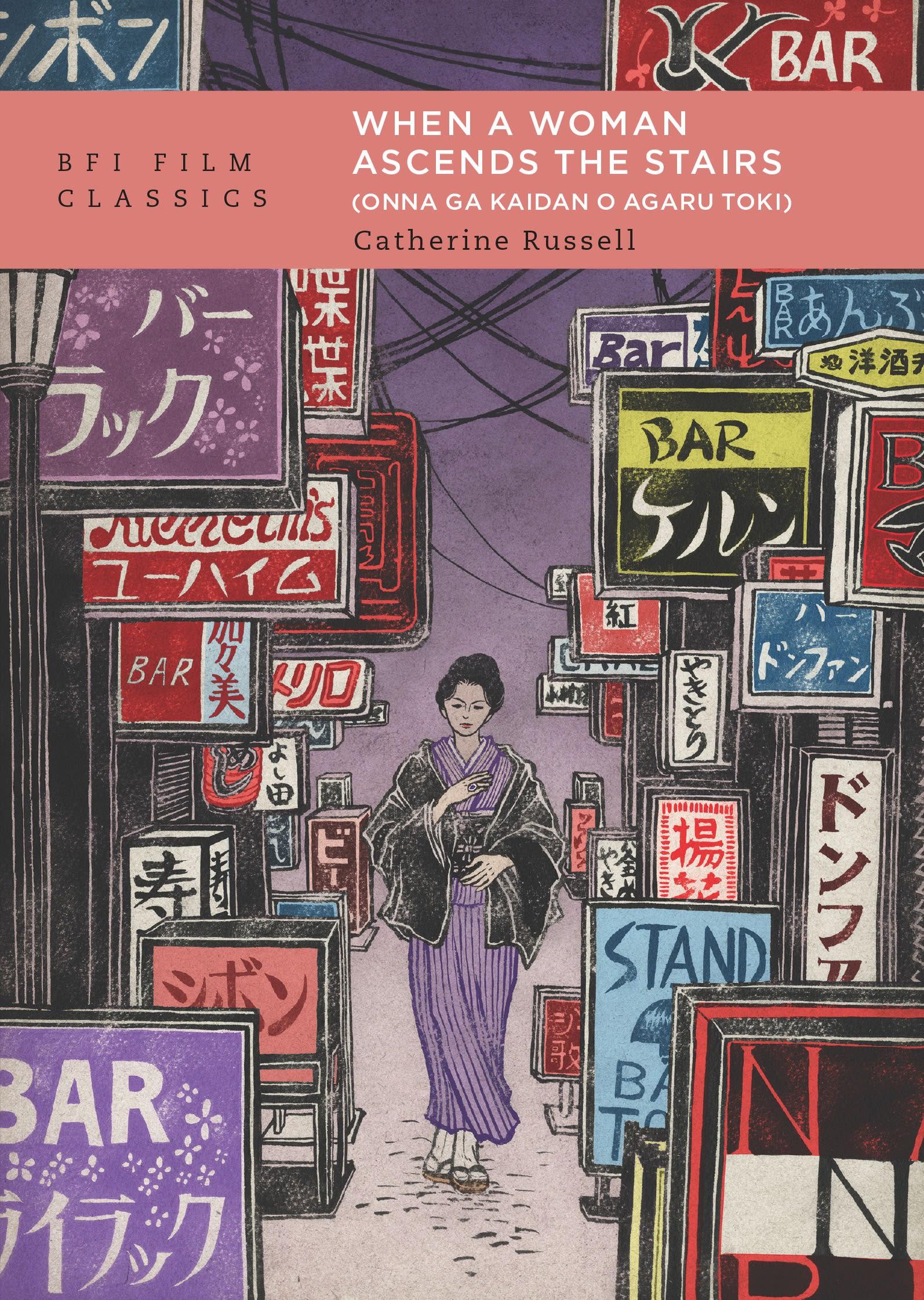
Mikio Naruse's When A Woman Ascends The Stairs (1960) combines high melodrama with modernist film language, telling the story of Keiko, a bar hostess struggling to succeed in Tokyo's Ginza district.
Catherine Russell's study of the film provides an in-depth analysis of Naruse's distinctive filmmaking, from his use of two-shots in confined spaces, unique lighting techniques, and his "invisible" and "rhythmic" editing style. She analyses the recurring motif of a woman's white-stockinged feet climbing stairs, considering how this symbolizes the social dynamics of the high-class Japanese sex industry that sustains hostess bar culture.
Russell goes on to argue that the film is a “late” woman's film which engages with the institutional barriers to woman's success in postwar Japan. She situates the film within the trajectory of Naruse's career and analyses how his social critique is balanced with an aestheticization of a harsh and brutally gendered world, creating an affective tension that is symptomatic of Naruse's own position as an industrial worker.
Catherine Russell's study of the film provides an in-depth analysis of Naruse's distinctive filmmaking, from his use of two-shots in confined spaces, unique lighting techniques, and his "invisible" and "rhythmic" editing style. She analyses the recurring motif of a woman's white-stockinged feet climbing stairs, considering how this symbolizes the social dynamics of the high-class Japanese sex industry that sustains hostess bar culture.
Russell goes on to argue that the film is a “late” woman's film which engages with the institutional barriers to woman's success in postwar Japan. She situates the film within the trajectory of Naruse's career and analyses how his social critique is balanced with an aestheticization of a harsh and brutally gendered world, creating an affective tension that is symptomatic of Naruse's own position as an industrial worker.
Páginas: 88
Categoría: Film- & Medievetenskap
e-ISBN: 9781839026447
Peso de envío: 1.2 kg
Envío en: 1-2 días
Paga fácilmente con tarjeta, Klarna, Apple Pay o Google Pay. ¿No estás contento? Siempre tienes 14 días de garantía de devolución. Lee más en nuestros términos. Si tienes preguntas, escríbenos a hello@memmo.org.
Memmo hace que estudiar sea más fácil, estés donde estés. Aquí tienes tus libros de texto y herramientas de estudio inteligentes en un solo lugar: resúmenes, quizzes, podcasts y flashcards. Y también a Ted, tu compañero de estudio que responde a todo lo que te preguntes. Más de 50 000 estudiantes ya estudian aquí. Está hecho para que aprendas más rápido y te estreses menos.